
Orsted's Strategic Divestment in Taiwan Wind Farm Signals Renewed Appetite for Renewable Energy Investments
Ørsted's recent divestment of a 50% stake in its 583 MW Greater Changhua 4 offshore wind farm to Cathay Life Insurance, paired with a robust $3 billion financing package for its Taiwan projects, marks a pivotal moment in the renewable energy sector. The deal underscores the growing confidence of institutional investors in large-scale offshore wind projects, even as it reflects a strategic shift in how developers balance capital efficiency and risk. For investors, this transaction offers a blueprint for how public-private partnerships and export credit support can unlock capital for green infrastructure, while signaling the sector's resilience to broader market volatility.
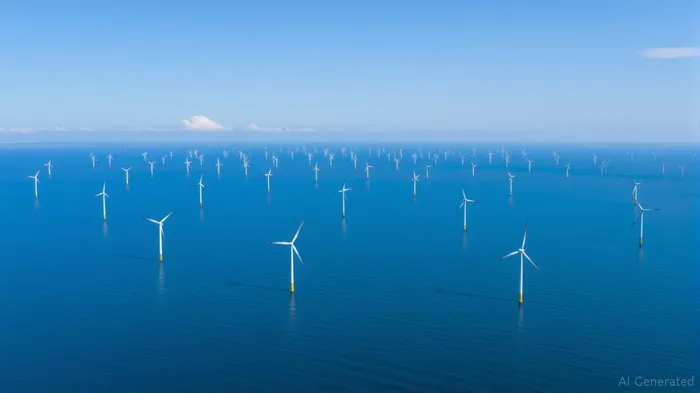
The Deal Unpacked: A Model for Green Financing
The Greater Changhua 4 project, part of a 920 MW complex, was financed through a combination of equity divestment and debt. Cathay Life Insurance's $1.56 billion equity stake (50% of the project) was matched by Ørsted's retained ownership, while the overall $3 billion financing package relied on 25 banks and six export credit agencies (ECAs), including Taiwan's National Credit Guarantee Administration (NCGA) for the first time. This structure reduced project risk by diversifying capital sources and securing guarantees from institutions like Denmark's EIFO and the UK's UKEF. The inclusion of local Taiwanese banks and ECAs highlights the strategic alignment of national interests with green energy goals, a trend likely to replicate in Asia-Pacific markets.
The transaction's cornerstone is a 20-year corporate power purchase agreement (CPPA) with Taiwan Semiconductor Manufacturing Company (TSMC), which guarantees stable revenue streams. Such long-term PPAs, increasingly sought after by corporations for their ESG commitments, are critical in de-risking renewable projects and attracting institutional investors.
While Ørsted's shares dipped 3% on the announcement—a reflection of near-term dilution of ownership—the stock's subsequent recovery suggests markets view the transaction as a strategic win. The company's 2024 financial guidance remained unchanged, reinforcing the project's alignment with its capital-light strategy.
Implications for Renewable Energy Investment Appetite
The Greater Changhua deal reveals three key trends reshaping renewable energy finance:
1. Institutional Investor Confidence: Cathay Life Insurance's investment, the largest by a Taiwanese life insurer in offshore wind, signals that insurers are now viewing renewable projects as low-risk, long-duration assets that match their liability profiles. This opens a new pool of capital for developers.
2. Export Credit Agency Pivots: ECAs' expanded role in backing projects in non-traditional markets (like Taiwan) demonstrates their shift from pure geopolitical tools to enablers of global decarbonization. The NCGA's participation, for instance, reflects Taiwan's push to meet its 2030 renewable energy targets.
3. Corporate PPAs as Catalysts: The TSMCTSM-- CPPA, the largest of its kind, shows how corporate demand for green energy can de-risk projects and attract capital. This model will likely accelerate as more firms adopt net-zero commitments.
Investment Takeaways
For investors, the Ørsted-Cathay transaction offers three actionable insights:
- Look for Projects with Multi-Layered Risk Mitigation: Debt funded by ECAs and commercial banks, coupled with corporate PPAs, create a “risk buffer” that lowers the cost of capital.
- Monitor Institutional Investor Entrants: The involvement of insurers like Cathay suggests a broader move into renewables. Investors tracking allocations by life insurers or pension funds could identify undervalued projects.
- Focus on Markets with Policy Support: Taiwan's ECA guarantees and CPPA frameworks exemplify how strong government support—through both regulation and financial tools—can make risky projects viable.
Offshore wind's share of renewable investment has risen steadily, from 12% in 2020 to an estimated 18% in 2024, driven by technological advancements and falling costs. Ørsted's deal exemplifies this momentum, but investors must remain cautious: projects lacking such robust financing structures or long-term revenue agreements may struggle to attract capital.
Conclusion: A Green Infrastructure Play for the Decade
Ørsted's Taiwan strategy is more than a divestment—it's a template for unlocking capital in emerging renewable markets. By leveraging local partnerships, ECAs, and corporate PPAs, developers can mitigate risk and appeal to diverse investors. For portfolios, this suggests a shift toward “green infrastructure” as a core asset class, with offshore wind leading the charge. Investors should prioritize projects with similar risk-sharing frameworks, particularly in regions like Southeast Asia, where policy support and corporate demand are rising rapidly. The Ørsted-Cathay deal isn't just about Taiwan's energy transition—it's about proving that renewables can be both planet-saving and profit-making.







Comentarios
Aún no hay comentarios