
Ormat's Geothermal Bet: Is It the Baseload Infrastructure for the AI Era?
The story of Ormat's new power purchase agreement is not just about one company's contract. It's a bet on the fundamental infrastructure needed to fuel the next technological paradigm. That paradigm is artificial intelligence, and it is creating an exponential demand for electricity that the existing grid cannot handle.
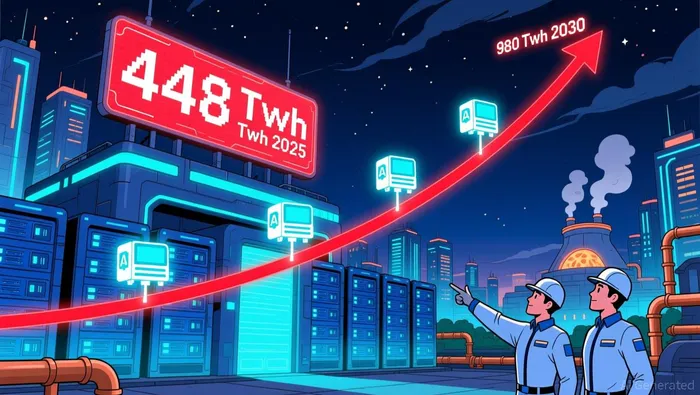
The numbers reveal a doubling of global data center power consumption, from 448 terawatt hours in 2025 to 980 TWh by 2030. This isn't linear growth; it's the classic S-curve of a disruptive technology hitting its inflection point. The driver is clear: AI-optimized servers. Their electricity usage is set to rise nearly fivefold, and by 2030, they will account for 44% of total data center power consumption. This shift is the core of the new demand paradigm.
The strain is already visible. In the United States, data center power demand is projected to surge from 61.8 GW in 2025 to 134.4 GW in 2030. That's a doubling of the load within a single decade, a pace that is fundamentally reshaping utility planning and grid investment. As one analyst noted, data centers are now the primary driver of robust load-growth estimates for many electric utilities.
This creates a massive infrastructure challenge. The current model, relying heavily on fossil fuels for on-site power, is not sustainable. The solution requires a new class of carbon-free, always-on power sources-what Gartner calls "clean on-site power alternatives." The thesis for OrmatORA-- is that geothermal, with its inherent baseload characteristics, is positioned to become one of those essential rails for the AI era. The company's recent PPA is a direct play on this coming infrastructure need.
Ormat's Position: First-Mover in a Critical Niche
This new agreement is a strategic inflection point. For the first time, Ormat has signed a direct, long-term power purchase deal with a major data center operator. This isn't a utility contract; it's a bet on a specific, high-growth customer segment that is driving the AI energy S-curve. The 13MW PPA with Switch signals that the market is beginning to recognize geothermal not just as a grid-balancing resource, but as a foundational, carbon-free baseload solution for the most power-hungry digital infrastructure.
The deal's structure is smart. By including an option to add a 7MW solar farm, Ormat is creating a hybrid auxiliary system. This isn't about selling solar power to the data center; it's about using solar to power the geothermal plant's own operations, like pumps and control systems. This enhances the project's economics by reducing its internal energy costs and improving overall efficiency-a classic infrastructure play that maximizes the value of the existing geothermal resource.
Ormat's position is built on a substantial, global infrastructure base. The company operates a total generating portfolio of 1,695MW, with 1,310MW from geothermal and solar. This scale provides the platform for the kind of strategic expansion hinted at by management. The potential to recontract over 100MW across its existing fleet under this new data-center framework is a powerful signal. It suggests Ormat is not just securing one deal, but establishing a repeatable model for capturing a growing share of the AI power market. The company is positioning itself as the infrastructure layer that can reliably deliver the clean, constant power the next paradigm demands.
Financial Impact and Exponential Growth Levers
The strategic bet now translates into concrete financial mechanics. The core of the deal is a 20-year Power Purchase Agreement with Switch. This long-term, fixed-price contract provides immediate de-risking for a portion of the Salt Wells plant's output. It locks in revenue far into the future, insulating that specific capacity from the volatility of spot power markets and providing a stable cash flow stream to fund the upcoming plant upgrade.
The financial profile of Ormat's existing operations shows the kind of margins that make this infrastructure play attractive. In the third quarter of 2025, the company's Product segment showed a gross margin of 21.7%, while its Energy Storage segment achieved a robust 39.4%. These are high-margin businesses that contribute significantly to overall profitability. The new data-center PPA, while likely in the lower-margin electricity segment, benefits from the same long-term visibility and can be expected to carry a favorable, contracted rate.
The most powerful lever, however, is scalability. Management has pointed to the potential for future recontracting of over 100 MW across Ormat's fleet. This is not just about one deal; it's about establishing a repeatable model. The initial 13MW agreement with Switch serves as a proof point that can be applied to other geothermal assets in Ormat's portfolio. This creates a path for exponential growth in contracted, high-quality revenue, turning a single project into a scalable infrastructure business.
The bottom line is that this PPA is a foundational step. It de-risks a portion of existing capacity, provides a template for future deals, and aligns Ormat's financials with the long-term, carbon-free baseload demand of the AI era. The company is building the rails, and the financial model is starting to show how those rails can generate reliable, high-margin returns.
Catalysts, Risks, and What to Watch
The path from this strategic bet to a scaled infrastructure play is defined by a few critical milestones and vulnerabilities. The primary catalyst is the successful completion of the Salt Wells upgrade by Q2 2026. This project is the linchpin; without its timely and on-budget execution, power delivery to Switch in Q1 2030 cannot begin. The upgrade enables the initial 13MW of contracted capacity and sets the stage for the potential recontracting of over 100MW across Ormat's fleet. This is the first-order execution risk: any delay or cost overrun here would not only jeopardize the near-term cash flow but also undermine the credibility of the entire data-center framework.
A major risk is execution risk on the timeline and cost of the upgrade and any future recontracting. Geothermal projects, while stable once built, involve significant upfront engineering and permitting. The company's ability to manage this capital-intensive work efficiently will be tested. Furthermore, the "potential for future recontracting" is a forward-looking statement. Converting that potential into actual, long-term agreements with other data center operators will depend on market conditions, competitive dynamics, and Ormat's ability to demonstrate operational reliability and scalability. The risk is not just technical but commercial.
Policy support is the third critical lever. The technoeconomic study cited shows that investment tax credits are crucial to driving costs down to competitive levels. For geothermal to become the dominant baseload solution for AI data centers, a supportive policy environment with streamlined permitting and financial incentives is essential. This isn't just about making one project viable; it's about creating the conditions for the entire industry to scale. Watch for federal and state-level initiatives that could accelerate or decelerate this path.
The bottom line is that Ormat is building a new infrastructure model. Success hinges on executing a single, complex upgrade on time, then proving the model can be replicated. The financial and strategic upside is tied to exponential growth in contracted, carbon-free baseload power. But the near-term catalysts and risks are all about execution and policy-two factors that will determine whether this bet on the AI energy S-curve becomes a foundational rail or just another project.





Comentarios
Aún no hay comentarios