
Orlando's Theme Park War: How Universal's Epic Universe Threatens Disney's Crown Jewel
The $7 billion Epic UniverseUPC--, Universal’s fourth Orlando theme park set to debut on May 22, 2025, marks a bold challenge to Disney’s decades-long dominance in Florida’s tourism economy. This isn’t just a battle over rides—it’s a strategic war for market share, innovation, and the wallets of millions of annual visitors. For investors, the stakes are clear: Disney’s $30 billion investment in park upgrades and pricing shifts may not be enough to stave off a rival armed with immersive IP-driven experiences like Harry Potter and Nintendo.
The Epic Threat: Universal’s Bold Bet
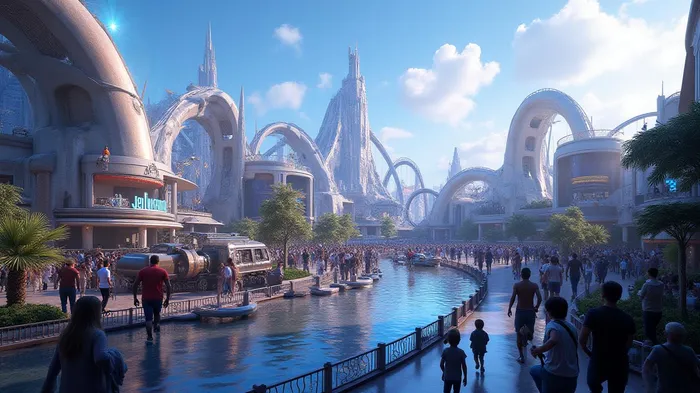
Epic Universe is designed to eclipse Disney’s traditional strengths by focusing on hyper-immersive storytelling tied to global franchises. With worlds like Jurassic World, The Dark Knight, and Mario Kart, Universal is betting that its IP library—bolstered by partnerships with Nintendo, Marvel, and Jurassic Park—will attract both die-hard fans and families seeking fresh experiences. Analysts project the park could draw 8 million annual visitors, potentially siphoning 1–2 million guests from Disney’s Orlando parks.
The financial risks for Disney are stark. While Universal’s parent company, Comcast, has allocated $7 billion to the project, Disney’s $30 billion domestic park investment (spread over a decade) must now justify its spending against this direct competitor. reveals a widening gap: Disney’s shares have lagged behind Comcast’s growth, reflecting investor skepticism about its ability to sustain premium pricing in a crowded market.
Disney’s Response: Upgrades and Price Tiers
Disney isn’t standing still. Its $30 billion plan includes major overhauls: replacing outdated lands like Tom Sawyer’s Island with a Cars theme park and a Villains Land, while expanding Animal Kingdom’s Encanto and Indiana Jones experiences. These moves aim to keep its parks fresh and justify high ticket prices.
But Disney’s pricing strategy is under fire. While the cheapest single-day tickets remain at $116 (unchanged since 2019), peak-season tickets have risen 64% over the past decade—a rate outpacing inflation. Critics argue this pricing power is unsustainable as Epic Universe offers cheaper multi-day passes and Florida resident discounts.
The tension is evident in Disney’s 2025 Q2 earnings. Despite a 9% revenue rise in domestic parks, CFO Hugh Johnston admitted, “Epic Universe will test our ability to retain guests through innovation, not just price hikes.”
The Visitor Diversion Dilemma
The key question: Will Orlando’s tourism pie grow enough to satisfy both parks, or will Disney suffer a net loss? Universal’s optimism hinges on “rising tide” economics—Epic’s arrival could draw 8 million new visitors to Orlando, many of whom will also visit Disney. But history suggests otherwise. When Universal’s Islands of Adventure opened in 1999, Disney’s attendance dropped 10% that year.
Analysts warn that today’s crowded market could amplify this effect. With Epic’s $7 billion investment focused on a single park, Universal can afford to price aggressively, while Disney’s sprawling infrastructure demands premium margins.
Valuation at Risk: Who Wins the IP Wars?
For investors, the math is chilling. Disney’s parks division accounts for 40% of its EBITDA, yet its EV/EBITDA multiple (20.5x) is 40% higher than Comcast’s (14.2x). This premium assumes Disney can maintain its profit engine indefinitely—a risky bet as Epic’s IP-first strategy targets younger, franchise-loyal audiences.
Meanwhile, Disney’s cruise line and streaming divisions face their own struggles, making parks a critical profit driver. A sustained decline in Orlando attendance could force Disney to cut prices further, eroding margins and shareholder returns.
Time to Rebalance Portfolios
Investors holding Disney must now confront a harsh reality: Epic Universe isn’t just a competitor—it’s a catalyst for industry-wide disruption. While Disney’s brand loyalty remains unmatched, Universal’s bold IP bets and pricing flexibility pose a tangible threat.
The call to action is clear:
- Reduce exposure to Disney’s theme park-heavy stock, especially if attendance metrics weaken post-Epic’s opening.
- Consider Comcast’s shares as a play on the theme park boom, given Epic’s potential to lift Orlando’s tourism economy.
- Monitor ticket sales and EBITDA margins in Disney’s Q3 2025 earnings report, which will signal whether Epic is a win-win or a win-lose game.
In the theme park wars, innovation and IP reign supreme. For now, Universal has seized the high ground—investors ignoring this shift risk being left behind.








Comentarios
Aún no hay comentarios