
Oriental Food Industries Holdings Berhad: A Case Study in Sustainable Growth and Exceptional Returns
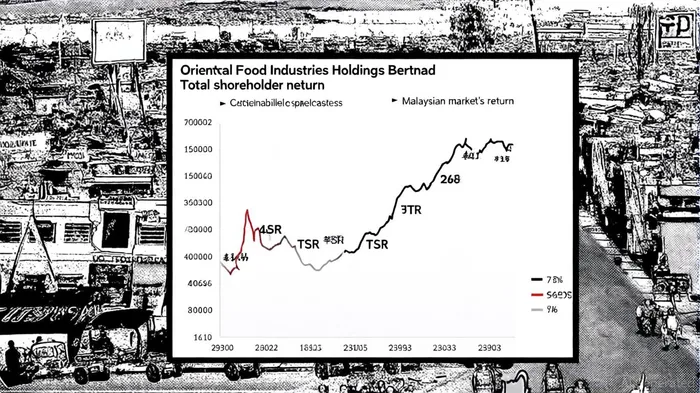
In the dynamic landscape of Malaysia's food manufacturing sector, Oriental Food Industries Holdings Berhad (KLSE:OFI) has emerged as a standout performer, delivering a staggering 102% total shareholder return (TSR) over the past five years. This figure, which accounts for both share price appreciation and dividend reinvestment, far outpaces the broader market's meager 8.7% return during the same period[1]. Such exceptional performance is not a mere statistical anomaly but a reflection of OFI's strategic alignment with the global shift toward sustainability—a trend reshaping Malaysia's food industry.
A Dual Engine of Growth: Financial Resilience and ESG Leadership
OFI's financial metrics underscore its robustness. Earnings per share (EPS) have grown at an average annual rate of 24.6% since 2020[5], while return on equity (ROE) stands at 10.64%, outperforming many peers in the sector[6]. These figures are underpinned by a business model that prioritizes operational efficiency and international diversification. Export sales now account for 65% of total revenue, a testament to OFI's successful foray into global markets[5].
However, what truly sets OFI apart is its commitment to environmental, social, and governance (ESG) principles. The company has set ambitious sustainability targets, including a 50% reduction in Scope 1 and 2 emissions and a 30% reduction in Scope 3 emissions by 2030, relative to a 2020 baseline[2]. To achieve these goals, OFI has integrated solar energy into select production facilities and adopted digital tools like AtSource for supply chain traceability[4]. These initiatives not only reduce environmental impact but also enhance operational transparency—a critical factor in today's investor climate.
Industry Tailwinds: Malaysia's Sustainable Food Manufacturing Sector
OFI's success is further amplified by favorable industry trends. Malaysia's food manufacturing sector is increasingly prioritizing sustainability, driven by consumer demand for eco-friendly products and government policies promoting green technology[3]. For instance, the New Industrial Master Plan 2030 emphasizes decarbonization and resource efficiency, creating a regulatory environment conducive to companies like OFI[2].
The broader foodservice market in Malaysia is also expanding rapidly, projected to grow at a 13.26% CAGR from 2025 to 2030[5]. This growth is fueled by the rise of cloud kitchens and quick-service restaurants, which align with OFI's focus on scalable, efficient production. By investing in automated machinery and new factory blocks, OFI is positioning itself to capitalize on this demand while maintaining cost discipline[1].
Navigating Challenges: Balancing Short-Term Volatility with Long-Term Vision
Despite its long-term success, OFI has faced recent headwinds. The stock has declined by 22.47% over the past 52 weeks[6], reflecting broader market corrections and investor caution. However, this volatility should not overshadow the company's fundamentals. OFI's trailing price-to-earnings (P/E) ratio of 11.15 suggests it remains undervalued relative to its earnings growth and industry peers[6].
Critically, OFI's strategic initiatives—such as regenerative agriculture programs targeting 1 million farmers and 2 million hectares by 2030[2]—position it to benefit from the global transition to sustainable food systems. These efforts align with Malaysia's national sustainability goals and create long-term value by securing supply chains and reducing input costs.
Conclusion: A Model for Sustainable Capitalism
Oriental Food Industries Holdings Berhad exemplifies how sustainable growth and profitability can coexist. Its 102% five-year TSR is not just a financial achievement but a validation of its ESG-driven strategy. As Malaysia's food manufacturing sector evolves to meet global sustainability standards, OFI's proactive approach—combining innovation, international expansion, and environmental stewardship—positions it as a leader in a resilient industry. For investors seeking long-term value, OFI's story is a compelling case study in aligning profit with purpose.







Comentarios
Aún no hay comentarios