
Organon's Valuation Dislocation: A Strategic Entry Point for Value Investors?
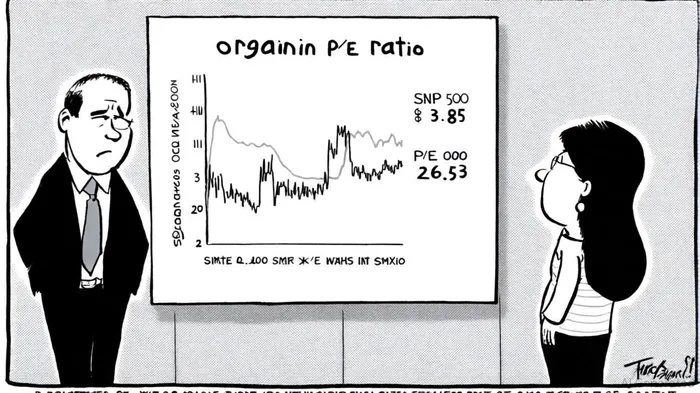
Organon Inc. (OGN) has underperformed the broader market in 2025, with its stock price declining 31.11% year-to-date compared to the S&P 500's 8.19% gain [1]. This divergence raises questions about valuation dislocation and long-term growth potential. For value-oriented investors, the company's historically low price-to-earnings (P/E) ratio of 3.85 (TTM) and 2.78 (forward) [2], coupled with resilient earnings growth and strategic deleveraging, suggests a compelling case for re-evaluation.
Valuation Dislocation: A Tale of Two Markets
Organon's valuation metrics starkly contrast with those of the S&P 500. As of September 2025, the S&P 500 trades at a P/E of 26.53, well above its 5-year average of 22.17 [3], while Organon's P/E ratio has trended downward, hitting 2.61 in August 2025 [4]. This 86.5% discount to its all-time high P/E of 29.24 [5] reflects diminished growth expectations, yet the company's fundamentals tell a different story.
Organon's trailing P/E of 3.85 is 33% below its 5-year average of 5.69 [6], and its price-to-book (P/B) ratio of 3.85 [7] is significantly lower than peers like DanaherDHR-- (26.63) and CVS HealthCVS-- (10.34) [8]. This suggests the market is pricing in conservative assumptions about earnings power, despite the company's 4% revenue growth in Q3 2024 and a 32.7% adjusted EBITDA margin in Q2 2025 [9].
Sector Headwinds and Strategic Resilience
The healthcare sector in 2025 faces systemic challenges, including workforce shortages, rising operational costs, and cybersecurity risks [10]. OrganonOGN--, however, has navigated these pressures through disciplined cost management. CEO Kevin Ali's leadership has prioritized debt reduction, repaying $345 million in long-term debt in Q2 2025 and targeting a net debt/EBITDA ratio of 3.5x by 2026 [11]. These actions have stabilized the balance sheet, with total assets of $13.5 billion and liabilities of $12.8 billion [12], while maintaining profitability in core segments like women's health and biosimilars.
Despite challenges such as the loss of exclusivity for Atozet in Europe, Organon's Women's Health division grew 12% in Q1 2025, driven by Nexplanon and Follistim AQ [13]. Biosimilars also contributed to margin expansion, with non-GAAP adjusted EBITDA reaching $522 million in Q2 2025 [14].
R&D Pipeline: Catalysts for Long-Term Growth
Organon's R&D pipeline remains a critical growth lever. While setbacks like the failed phase 2 trial for OG-6219 (endometriosis) have emerged [15], the company is advancing key programs. A five-year indication for Nexplanon—a long-acting contraceptive—could extend its market dominance, while a denosumab biosimilar submission to the FDA in 2025 positions Organon to capture additional market share [16].
The pipeline's focus on women's health and biosimilars aligns with secular trends, including the $50 billion U.S. contraceptive market and the $12 billion biosimilars sector [17]. With 21 drugs in development for endocrinology and metabolic diseases [18], Organon's innovation engine, though tempered by recent R&D setbacks, retains upside potential.
Workforce Reductions and Operational Efficiency
Organon's 5% workforce reduction in Q1 2025 and 93 layoffs in Jersey City [19] signal a shift toward leaner operations. While such measures risk short-term innovation drag, they align with the company's goal of achieving $500 million in annual cost savings by 2026 [20]. This operational discipline enhances free cash flow, which could be reinvested in R&D or used to further reduce debt.
Investment Thesis: A Strategic Entry Point
Organon's valuation dislocation presents an opportunity for value investors who can differentiate between short-term challenges and long-term catalysts. At a P/E of 2.78 (forward), the stock implies earnings growth expectations of over 100% annually to justify current multiples—a low bar given the company's 5% revenue growth and 32.7% EBITDA margins [21].
Key risks include regulatory headwinds in the U.S. contraceptive market and pricing pressures in biosimilars. However, the company's debt reduction progress, resilient core segments, and R&D pipeline advancements mitigate these risks. For investors with a 3–5 year horizon, Organon's current valuation offers a margin of safety, particularly if its biosimilars and women's health segments outperform expectations.







Comentarios
Aún no hay comentarios