
Oracle's Strategic Edge in the Post-Cloud Era: A Case for Long-Term Growth
The post-cloud transition is reshaping the enterprise software landscape, and OracleORCL-- (ORCL) is emerging as a pivotal player. With Citigroup's recent upgrade to a "Buy" rating and a raised price target of $415 per share[1], the market is beginning to recognize Oracle's unique positioning in a world where AI infrastructure and hybrid cloud strategies dominate. This analysis unpacks why Oracle's long-term growth potential is not just speculative but rooted in its strategic investments, competitive differentiation, and alignment with macroeconomic trends.
Citi's Bullish Case: A Deep Dive
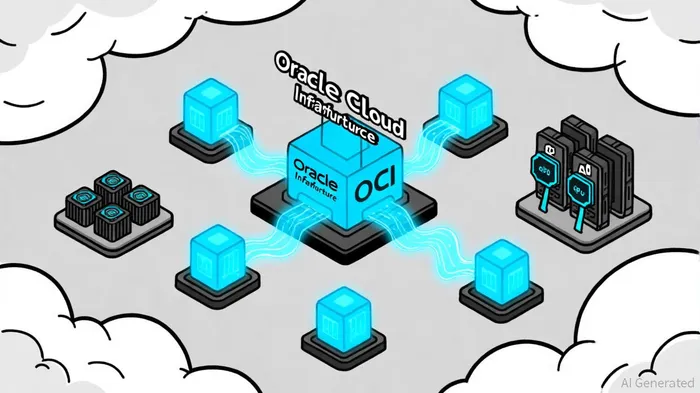
Citigroup's Tyler Radke has become a vocal advocate for Oracle, citing the stock's recent 10% pullback as a "buying opportunity"[3]. The firm's price target increase-from $395 to $415-reflects confidence in Oracle's ability to capitalize on AI-driven demand for cloud infrastructure. Radke notes that Oracle Cloud Infrastructure (OCI) is on a "rapid growth trajectory," fueled by enterprise clients seeking scalable AI solutions[4].
The analyst's optimism is grounded in Oracle's upcoming AI World event in Las Vegas, which is expected to showcase product advancements and customer adoption metrics[1]. Citi also anticipates management will provide clarity on capital expenditures and profitability timelines for AI projects, addressing lingering market skepticism about the sustainability of AI-driven growth[3].
Long-term, Citi forecasts Oracle's earnings per share (EPS) to grow at a 30%+ annual rate from 2026 to 2030, driven by operating efficiencies and rising GPU margins[4]. The $415 price target, based on 37 times fiscal 2028 earnings, implies a premium valuation but aligns with Oracle's track record of outperforming in capital-intensive sectors.
Competitive Positioning: Oracle's Post-Cloud Play
Oracle's strength lies in its vertically integrated cloud strategy and enterprise-grade AI infrastructure. According to the 2025 IDC MarketScape report, Oracle is a "Leader" in public cloud infrastructure, distinguished by its multicloud partnerships with Microsoft Azure and Google Cloud[1]. These alliances allow customers to deploy Oracle Database@Azure and Oracle Database@AWS, creating a seamless hybrid cloud experience that competitors like AWS and Azure struggle to replicate[1].
The company's AI infrastructure is equally compelling. Oracle's OCI Supercluster, equipped with up to 131,072 NVIDIA GPUs, is a critical asset for enterprises training large AI/ML models[1]. This hardware advantage is complemented by software innovations like AI Agent Studio for Fusion Applications, a platform that enables real-time AI agent deployment across enterprise workflows[3]. By embedding AI into its core applications, Oracle is not just selling infrastructure-it's offering a comprehensive solution for productivity and innovation.
Strategic partnerships further solidify Oracle's edge. Its collaboration with ByteDance has positioned Johor, Malaysia as the world's second-largest AI hub[2], demonstrating Oracle's ability to scale AI compute demand in emerging markets. Meanwhile, its long-standing expertise in enterprise databases provides a foundation of trust in regulated sectors, where data security and compliance are paramount[2].
Risks and Realities
While Oracle's trajectory is promising, risks remain. The AI infrastructure market is highly competitive, with AWS and Microsoft investing heavily in GPU capacity and AI-as-a-service offerings. Additionally, Oracle's reliance on long-term enterprise contracts could expose it to macroeconomic volatility if clients delay cloud migrations.
However, Oracle's vertically integrated model-combining hardware, software, and cloud services-creates switching costs that insulate it from short-term disruptions. Its focus on AI-driven operating efficiencies also positions it to benefit from the broader shift toward automation and data-driven decision-making.
Conclusion: A Buy for the Long Haul
Oracle's strategic value in a post-cloud market is undeniable. Citigroup's upgraded price target and Oracle's competitive positioning in AI and multicloud solutions suggest the stock is undervalued relative to its long-term potential. For investors seeking exposure to the AI infrastructure boom, Oracle offers a compelling blend of technical innovation, enterprise trust, and executional rigor.
As Radke aptly puts it, "Oracle is not just riding the AI wave-it's building the boat."[3] With the right catalysts and execution, the $415 price target could be just the beginning.





Comentarios
Aún no hay comentarios