
Oracle Health's Strategic Move in Irish Maternity Care: A Blue-Print for Healthcare IT and Recurring Revenue
In the ever-evolving landscape of healthcare technology, one company is making waves in a sector that often flies under the radar: maternity care. OracleORCL-- Health's recent expansion in Irish maternity care is not just another software implementation—it's a masterclass in strategic IT adoption and long-term government contract management. For investors, this represents a compelling case study in how a technology company can align with public health priorities to create a sustainable revenue stream.
Let's start with the fundamentals: Oracle Health has implemented its Maternal & Newborn Clinical Management System (MN-CMS) at University Maternity Hospital Limerick (UMHL), marking a significant milestone. This system now supports over 50% of all births in Ireland, replacing outdated paper-based processes with a robust electronic health record (EHR) system. The results are already measurable—neonatology nurses save an average of 76 minutes per shift by reducing administrative tasks. That's not just efficiency—it's a tangible value proposition for healthcare administrators.
What makes this expansion particularly intriguing is the strategic alignment with the Irish government's Digital for Care 2030 strategy. This five-year plan aims to roll out the MN-CMS to all 19 maternity hospitals in Ireland, creating a predictable, long-term revenue stream for Oracle. The government's commitment to digitizing maternity care isn't just about modernization—it's about addressing critical issues like patient safety, medical negligence reduction, and improving overall care quality. Oracle's system supports these goals by enabling better data sharing, real-time risk notifications, and improved clinical decision-making.
The key to Oracle's success in this space lies in its ability to create switching costs. Once a hospital system is integrated with the MN-CMS, the costs of switching to a competitor become prohibitively high. This is a classic business strategy—build a platform so integrated and valuable that customers are effectively locked in. In the case of Irish maternity care, this creates a multi-decade revenue opportunity for Oracle, with the potential for recurring revenue as the system is expanded across all hospitals.
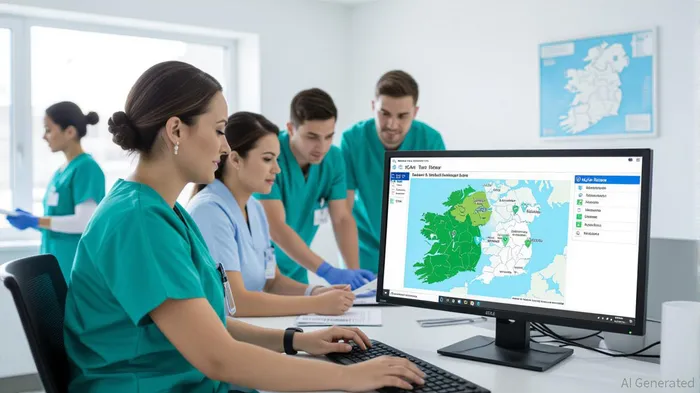
Oracle's approach in Ireland also highlights the growing importance of interoperable healthcare systems. The MN-CMS isn't just a standalone system—it connects multiple facilities, including the Nenagh Ambulatory Gynaecology Unit, creating a comprehensive healthcare data ecosystem. This interconnectedness is crucial in an industry where information continuity is vital for patient safety. The ability to access patient information regardless of location is a game-changer, particularly in maternity care where timely decisions can be life-saving.
The financial implications of this expansion are significant. With the government's commitment to digitizing maternity care, Oracle is positioned to benefit from a multi-year, multi-hospital contract. The MN-CMS implementation at UMHL and Nenagh Hospital is just the beginning. As the system expands across all 19 hospitals, Oracle will see a steady increase in revenue, with the potential for long-term growth beyond the initial contract period. This is the kind of predictable, high-margin revenue that investors love to see—especially in a sector as critical as healthcare.
What's particularly compelling about Oracle's position in the Irish healthcare IT landscape is its ability to compete with other major players like Epic and Cerner (now Oracle-owned). The MN-CMS system's success in Ireland demonstrates Oracle's capacity to deliver scalable, impactful digital transformation in critical healthcare sectors. This isn't just about selling software—it's about building a platform that becomes an essential part of the healthcare infrastructure.
For investors, the key takeaway is clear: Oracle Health's expansion in Irish maternity care is more than just a strategic move—it's a blueprint for success in the healthcare IT space. The combination of government contracts, long-term implementation plans, and the creation of switching costs positions Oracle for sustained growth. The efficiency gains, patient safety improvements, and data-driven insights provided by the MN-CMS make it a valuable asset for any hospital system.
As we look at the broader healthcare IT market, the trends are equally promising. The industry is moving toward interoperable systems and data-driven insights, with governments around the world investing heavily in digital health infrastructure. Oracle's position in this space—particularly with its success in Ireland—makes it well-positioned to capitalize on these trends.

For investors seeking exposure to the healthcare IT sector, Oracle Health presents an attractive opportunity. The company's ability to secure long-term government contracts, combined with its track record of delivering measurable efficiency improvements, makes it a strong candidate for long-term investment. While the stock may not be as flashy as some of its tech counterparts, the fundamentals tell a different story—one of steady growth, strategic positioning, and a clear path to profitability.
In conclusion, Oracle Health's expansion in Irish maternity care is a masterclass in strategic healthcare IT adoption and recurring revenue growth. For investors, this represents a compelling opportunity to invest in a company that is not only solving critical healthcare challenges but also building a sustainable business model. As the healthcare industry continues to digitize, Oracle's position in this space—particularly with its success in Ireland—makes it a stock worth watching.





Comentarios
Aún no hay comentarios