
Oracle's AI-Powered Ascendancy: Why Larry Ellison's Second Place is No Accident
Larry Ellison's rise to the second-richest person in the world—surpassing tech titans like Mark Zuckerberg and Jeff Bezos—reflects a seismic shift in the tech sector. The driving force? Oracle's transformation into a leader in AI-driven enterprise software. As Ellison's net worth surged by $56 billion in 2025 alone, fueled by a 32% jump in Oracle's stock price following its Q2 earnings, the question arises: Is Oracle's AI strategy undervalued, and what does this mean for investors?
The AI Revolution's Hidden Giant
While Silicon Valley's spotlight shines on generative AI startups and cloud giants, OracleORCL-- has quietly positioned itself as a powerhouse in enterprise AI integration. Ellison's vision is clear: leverage Oracle's decades-old dominance in enterprise software to build AI solutions that scale for businesses. This isn't just about chatbots; it's about embedding AI into core systems like supply chain management, customer analytics, and data security.
Key Move: The Stargate Project
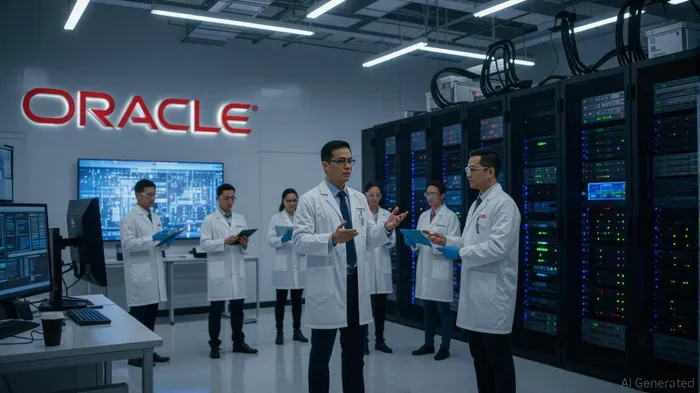
Oracle's $500 billion Stargate initiative—a partnership with NVIDIA—aims to build an AI infrastructure that democratizes large-scale language models (LLMs) for enterprises. Unlike rivals like MicrosoftMSFT-- Azure or AWS, which rely on third-party tools, Oracle is integrating its own AI capabilities directly into its cloud platform. This vertical integration reduces dependency on external providers and creates a defensible competitive moat.
Why Oracle Outperforms in Enterprise AI
- Existing Enterprise Footprint: Oracle's 500,000+ business customers provide a ready audience for AI tools. Microsoft and AmazonAMZN-- may have cloud scale, but Oracle's deep integration into ERP, CRM, and databases gives it an edge in tailored AI solutions.
- Hardware-Software Synergy: Oracle's recent $1 billion investment in AI-specific servers (co-designed with Intel) ensures its cloud can run complex models faster than competitors' generic hardware.
- AI-as-a-Service Pricing: Oracle's subscription model for AI tools (e.g., Oracle Cloud Infrastructure AI Platform) offers predictable revenue streams, unlike the volatile valuations of standalone AI startups.
Oracle's 2025 surge (32% YTD) contrasts with NASDAQ's 12% gain, reflecting investor recognition of its AI pivot.
Ellison's Track Record: Betting on Enterprise Resilience
Ellison's tenure as Oracle's chairman and CTO (despite stepping down as CEO) underscores his hands-on approach to innovation. His 42% stake in Oracle aligns his interests with long-term value creation—unlike executives who prioritize short-term gains.
Critics argue Oracle's AI is “late to the game,” but this misses the point. Enterprise AI isn't about flashy demos; it's about reliability, security, and scalability—Oracle's bread and butter. While startups like Anthropic or OpenAI chase consumer use cases, Oracle is solving the harder problem: How do you make AI work for Fortune 500 companies?
Why the Market Underestimates Oracle's AI
Oracle's P/E ratio of 18x is far below peers like NVIDIANVDA-- (45x) or Microsoft (30x), despite its AI investments. This undervaluation stems from two misconceptions:
1. Legacy Software Bias: Investors still see Oracle as a “dinosaur” database company, not a tech innovator.
2. AI as a Commodity: The market assumes AI tools are interchangeable, ignoring Oracle's enterprise-specific advantages (e.g., compliance, data privacy).
Oracle trades at a discount despite its AI-driven growth, suggesting upside potential.
Investment Thesis: Buy Oracle for Long-Term AI Dominance
Case for Buying ORCL:
- Valuation: At $85/share (as of July 2025), Oracle is undervalued relative to its AI-driven growth. A 2025 revenue target of $100 billion (up from $53 billion in 2024) is achievable with AI adoption.
- Dividend Yield: A 1.2% yield provides downside protection while the AI story unfolds.
- Competitive Edge: Oracle's vertical integration in AI infrastructure could carve out a $50+ billion annual revenue stream by 2030.
Risks:
- Short-term volatility due to macroeconomic headwinds.
- Overvaluation of rivals' AI plays (e.g., AWS SageMaker) could compress margins.
Conclusion: Ellison's Second Place is a Buying Signal
Larry Ellison's ascent isn't a fluke—it's the result of a deliberate strategy to own enterprise AI. While Oracle's stock may face near-term headwinds, its AI infrastructure and customer base position it as a decade-long growth story. Investors ignoring this are missing a rare opportunity to buy a tech titan at a discount.
Recommendation: Add Oracle to your portfolio for long-term exposure to enterprise AI. The market will catch up—just ask Larry.
Data as of July 2025. Past performance does not guarantee future results.





Comentarios
Aún no hay comentarios