
Oracle's $50 Billion AI Push Fuels Cloud Ambitions Amid Debt Concerns
Oracle Corp. is pouring $50 billion into AI infrastructure this fiscal year, signaling its aggressive pursuit of cloud dominance amid fierce competition with hyperscalers like AWS and MicrosoftMSFT-- Azure. The company's investments include a $40 billion order of NVIDIANVDA-- Blackwell GPUs for OpenAI's Stargate Data Center and a $248 billion total data center lease commitment through 2028. Despite its rapid growth, OracleORCL-- remains a distant fourth in the cloud market, with just 2–3% market share compared to AWS's 30% according to market analysis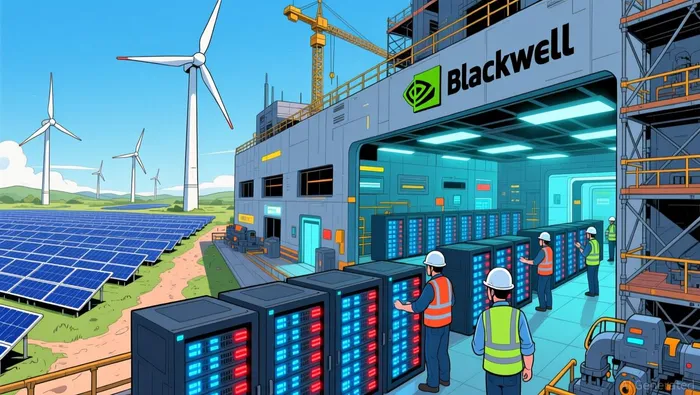 .
.
The scale gap between Oracle and its rivals is significant. AWS and Microsoft have annual AI infrastructure investments in the $75–$100 billion range, far outpacing Oracle's efforts. Oracle's latest Supercluster, capable of 131,072 NVIDIA Blackwell GPUs, is impressive but lags behind AWS's 400,000-GPU clusters and Microsoft's 485,000 Hopper GPU purchase in 2024 according to market analysis.
Oracle's bold expansion is not without risk. Its $523 billion in revenue-producing contracts, including a $300 billion OpenAI deal starting in 2027, creates concentration risk. Any misstep in executing these contracts could strain its financials and market confidence. Additionally, investors are hedging against potential defaults, with Oracle's credit default swaps hitting 2009 levels according to market data.
Why the Standoff Happens
Oracle's cloud ambitions are driven by a desire to close the gap with hyperscalers while leveraging its unique offerings. The company claims its autonomous database and Exadata Cloud Service are unmatched, enabling a 817% growth in cross-cloud consumption. It also asserts a 75% cost advantage over Azure, which could appeal to enterprises seeking cost-effective migration paths according to company claims. However, these advantages are hard to monetize without matching the scale of AWS or Microsoft.
The company's Stargate project with OpenAI and SoftBank aims to bridge this gap, but delays due to labor and supply chain issues have pushed project timelines to 2028. These challenges reflect broader issues in AI infrastructure expansion, as firms globally race to build the physical and digital backbone for next-generation AI models.
Risks to the Outlook
Oracle's aggressive investment strategy has drawn scrutiny from both financial markets and regulators. Its $150 billion data center lease commitment over three months is the largest of any tech firm, but critics question whether such a heavy debt load is sustainable. With tech debt forecast to hit $1.5 trillion by 2030, Oracle's $500 billion AI infrastructure spending spree could become a liability if returns fall short.
Credit markets are already reacting. Oracle's CDS costs have spiked, reflecting investor concerns about its debt load. The company's recent stock price drop, after a week of its worst performance in seven years, highlights the volatility in its valuation amid the AI boom. Analysts are watching closely to see if Oracle can maintain its growth trajectory or face a correction similar to what has impacted other AI-driven tech firms according to market analysis.
For investors, Oracle's AI push represents both opportunity and risk. The company's unique position in enterprise databases and cloud infrastructure gives it a foothold in the AI race, particularly with its strategic partnerships like Stargate. However, the scale and capital intensity of the industry mean Oracle must outperform its peers to justify its valuation.
The current market environment adds another layer of complexity. With inflation data looming and the Federal Reserve considering interest rate policy, financing for large-scale infrastructure projects like Oracle's becomes more sensitive. Investors are also watching regulatory developments, as AI infrastructure projects face growing scrutiny over energy consumption and environmental impact.
Oracle's ability to execute its vision will depend on navigating these challenges while delivering on its ambitious timelines. For now, the company remains a key player in the AI infrastructure arms race, but whether it can catch up to the hyperscalers remains an open question.





Comentarios
Aún no hay comentarios