
Optimizing Financial Strategies for Tax-Efficient Debt Relief: Pre-Year-End Moves for Student Loan Forgiveness
As the tax landscape for student loan forgiveness evolves, borrowers must act strategically to mitigate potential liabilities. With the expiration of the American Rescue Plan Act (ARPA) tax exemption at year-end 2025, forgiven debt after December 31, 2025 will be treated as taxable income at the federal level. This shift creates a critical window for borrowers to implement pre-year-end strategies that align with both federal and state-specific tax rules.
Federal Tax Exemption Expiring: A Looming Transition
The ARPA provision shielding student loan forgiveness from federal taxation expires in 2026, meaning borrowers whose debt is discharged under income-driven repayment (IDR) plans after this date will face a significant tax burden. For example, a borrower with $57,000 in forgiven debt in the 22% tax bracket could owe over $12,000 in federal taxes. However, those who secure forgiveness by December 31, 2025, will still benefit from the tax-free exclusion according to tax experts. This creates an urgent imperative for borrowers to confirm their repayment plans qualify for tax-free forgiveness (e.g., Income-Based Repayment, Pay As You Earn, or Income-Contingent Repayment) and ensure they meet payment thresholds (240–300 qualifying payments) by year-end according to financial guidance.
State-Level Considerations: Navigating Varied Tax Treatments
While federal rules offer temporary relief, state tax policies introduce additional complexity. Borrowers in Arkansas, Indiana, Mississippi, North Carolina, and Wisconsin, for instance, may face state-level taxes on forgiven debt even if it is federally tax-free. For example: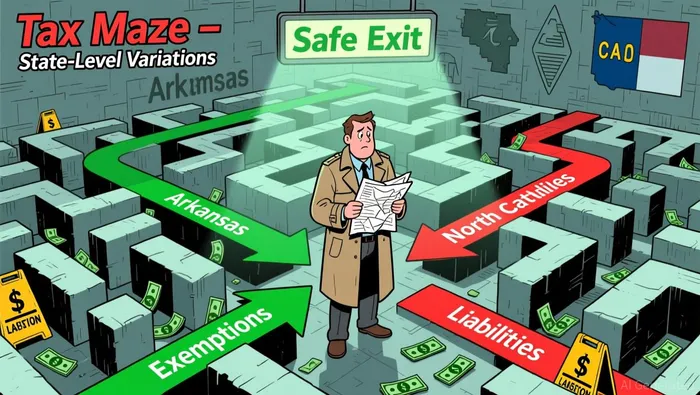 - Arkansas taxes most forgiveness except for Public Service Loan Forgiveness (PSLF) and disability discharge.
- North Carolina requires borrowers to add forgiven amounts to taxable income unless the discharge stems from death or total disability.
Proactive documentation of eligibility for exceptions-such as PSLF or disability discharge-is essential to avoid unexpected state tax liabilities.
Pre-Year-End Strategies: Tax-Efficient Moves for 2025
To position for tax-efficient debt relief, borrowers should prioritize the following actions:
1. Verify Repayment Plan Eligibility
Ensure your repayment plan qualifies for tax-free forgiveness under ARPA. Borrowers on the newer Saving for a Valuable Education (SAVE) plan are currently ineligible and should consider switching to a qualifying IDR plan before December 31, 2025.
2. Save for Anticipated Tax Liabilities
For those expecting forgiveness after 2025, setting aside funds in a taxable brokerage account can help cover future tax obligations. Contributions to traditional 401(k) or IRA accounts also reduce taxable income, potentially lowering monthly IDR payments and overall tax exposure according to tax advice.
4. Address State-Specific Rules
Borrowers in states that tax forgiven debt should review their circumstances with a tax professional. For instance, Mississippi excludes CARES Act discharges from taxation, while Wisconsin offers exceptions for teacher loan forgiveness according to state tax resources.
Conclusion: Proactive Planning for a Tax-Efficient Future
The impending expiration of the ARPA tax exemption demands immediate action. By verifying repayment plan eligibility, saving for potential liabilities, and addressing state-specific rules, borrowers can navigate the transition with confidence. As tax professionals emphasize, "Documentation and early preparation are key to avoiding a financial shockwave in 2026" according to tax advisors.







Comentarios
Aún no hay comentarios