
Optimism's OP Token Buyback Proposal and the Future of L2 Value Capture
The evolution of token economics in layer-2 (L2) ecosystems has become a critical battleground for blockchain protocols seeking to balance utility, governance, and value capture. Optimism's recent proposal to implement a revenue-driven OP tokenOP-- buyback program represents a bold experiment in redefining how token demand aligns with protocol growth. By redirecting 50% of SuperchainSUPER-- sequencer revenue into monthly over-the-counter (OTC) token purchases, the OptimismOP-- Foundation aims to create a feedback loop between network activity and token value, addressing long-standing challenges in low-fee L2 environments. This analysis evaluates the strategic implications of the proposal, its alignment with broader growth metrics, and the risks inherent in its execution.
Strategic Design of the Buyback Program
The proposed 12-month buyback initiative is structured to use protocol-generated revenue-specifically, fees from the Superchain-as a recurring funding source. By allocating half of sequencer revenue to OTC purchases, the program avoids direct price manipulation while signaling confidence in the token's long-term utility. Crucially, the buybacks are designed to be revenue-based rather than price-targeted, emphasizing sustainability over short-term volatility. Purchased OPOP-- tokens will be held in the Collective treasury, while remaining ETH is managed by the Optimism Foundation within predefined parameters, ensuring transparency and governance oversight.
This approach reflects a shift in the OP token's role from a governance-focused asset to one whose demand is intrinsically tied to the Superchain's usage. By linking token value to network activity, the proposal seeks to create a durable alignment between user growth, developer incentives, and token holder returns according to analysis. The program's pilot nature-subject to reassessment after one year-also allows for iterative adjustments based on real-world data, a pragmatic approach in the rapidly evolving L2 landscape.
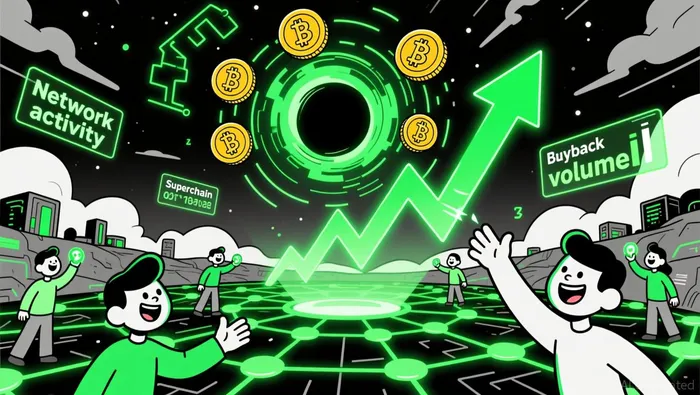
Alignment with Protocol Growth Metrics
The buyback program is part of a broader strategy to explore sustainable value capture in low-fee environments. Optimism's governance has previously proposed allocating revenues to public goods and strategic initiatives, such as funding buybacks or rewarding contributors tied to Superchain success as outlined in governance discussions. These mechanisms aim to reinforce the token's utility beyond governance, ensuring its value is derived from the ecosystem's long-term health rather than speculative demand according to tokenomics analysis.
However, the success of this alignment hinges on the network's ability to generate consistent revenue. As noted in community discussions, without strong demand drivers such as staking or fee-sharing, the OP token risks losing relevance in a competitive decentralized finance (DeFi) landscape according to community concerns. The buyback program must therefore be complemented by initiatives that drive real-world adoption, such as expanding Superchain partnerships or enhancing developer tooling. For instance, proposals to allocate a percentage of revenue toward retroactive public goods funding could further solidify the token's role as a catalyst for ecosystem growth .
Challenges and Considerations
While the buyback proposal addresses key gaps in token economics, several challenges remain. First, the program's reliance on sequencer revenue exposes it to fluctuations in network usage. During periods of low activity, reduced buyback volumes could undermine confidence in the token's value proposition. Second, the absence of staking mechanisms or direct utility functions means the OP token's demand is still partially decoupled from on-chain activity, a vulnerability highlighted by critics of governance tokens.
Additionally, the structured execution of buybacks-designed to avoid excessive market volatility-requires precise timing and coordination. As outlined in tokenomics literature, poorly timed buybacks can lead to liquidity imbalances or price distortions, particularly in illiquid markets. Optimism's choice of OTC transactions mitigates this risk by reducing slippage, but the long-term effectiveness of this approach remains untested.
Conclusion
Optimism's OP token buyback proposal represents a strategic pivot toward aligning token economics with protocol growth. By redirecting Superchain revenues into recurring buybacks, the foundation is testing a model where token value is derived from network activity rather than speculative demand. While the initiative addresses critical gaps in L2 value capture, its success will depend on complementary efforts to enhance token utility and drive adoption. Investors should monitor key metrics, including Superchain usage growth, treasury liquidity, and the outcomes of the proposed governance vote scheduled for 22 January according to proposal details. In a landscape where L2 competition is intensifying, Optimism's experiment could set a precedent for how protocols balance sustainability, utility, and value accrual in the post-fee-burn era.







Comentarios
Aún no hay comentarios