
Operation Atlantic: A Flow Analysis of a Targeted Crypto Crime Crackdown
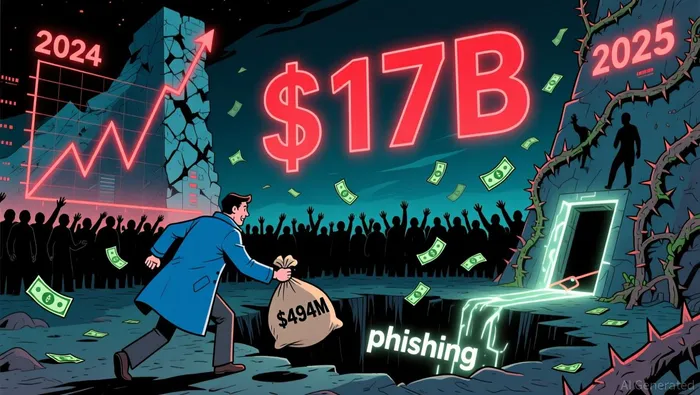
Operation Atlantic zeroes in on a specific, high-impact illicit flow: approval phishing scams. In 2025, these scams caused $83.85 million in losses across 106,106 victims. That figure represents a dramatic 83% decline from the $494 million lost in 2024, signaling a major crackdown or market shift. Yet this targeted subset is a shrinking piece of a much larger illicit pie.
The broader crypto fraud ecosystem remains vast and active. In 2025, total estimated stolen funds reached $17 billion, with on-chain scam inflows surging to $14 billion. This context frames approval phishing as a narrowing target within a resilient, industrialized fraud industry. The operation's focus is on a category that has seen explosive growth in adjacent tactics, like impersonation scams which grew over 1400% year-over-year.
Despite the decline in approval phishing losses, the overall illicit on-chain volume hit an all-time high of USD 158 billion in 2025. This creates a clear tension: law enforcement is successfully disrupting specific, high-profile scams, but the underlying illicit flow through crypto networks continues to expand. Operation Atlantic aims to cut off a critical artery in this flow, even as the total volume of illicit activity grows.
Operational Mechanics and Immediate Market Flows
Operation Atlantic is a coordinated, real-time disruption effort. The joint U.S., UK, and Canadian initiative builds on earlier probes like Project Atlas, aiming to identify and disrupt scams in near real-time. Its focus is on halting approval phishing attacks as they happen, issuing victim warnings, and guiding recovery-targeting the specific flow of stolen funds before they can be laundered or spent.
The market's immediate reaction to this crackdown, however, was not a flow of illicit funds but a surge of fear. The broader crypto market sentiment plunged, with the Fear & Greed Index hitting an all-time low of 5 in February. This extreme fear streak, lasting 34 days, is a known precursor to major XRPXRP-- rallies. Historically, such periods have been followed by XRP rallies of 1,300% and 1,100%.
This fear created a classic accumulation pattern. While the index was at rock bottom, XRP whales added 1.3 billion tokens in 48 hours in early March, and $738 million in XRP left exchanges on March 10. This movement into cold storage signals long-term holding, a setup that has repeatedly preceded explosive price moves for XRP. The operation's focus on a specific scam type may have disrupted one illicit flow, but it coincided with a market-wide selloff that saw institutional capital quietly accumulating.
Flow Implications and Forward-Looking Catalysts
The operation's success hinges on its ability to trace and recover stolen funds. The record $15 billion seizure linked to the Prince Group demonstrates a significant leap in law enforcement's capability to track illicit flows and disrupt criminal networks. If Operation Atlantic can replicate this level of recovery for approval phishing cases, it would validate the real-time disruption model and improve the cost-benefit calculus for fraudsters.
The primary risk is that this focused effort does not address the broader ecosystem. While approval phishing losses have collapsed, the total illicit on-chain flow remains immense. The broader scam ecosystem, estimated at $17 billion in 2025, continues to expand with tactics like impersonation scams that grew over 1400% year-over-year. Operation Atlantic may be cutting off a specific artery, but the underlying illicit flow through crypto networks is still surging.
The key catalyst to watch is any significant on-chain recovery of funds directly tied to the operation. A publicized seizure would signal improved illicit asset tracking and could alter whale accumulation patterns. For now, the market's focus remains on the fear-driven accumulation phase, but tangible recoveries would provide a concrete metric for the operation's financial impact and potentially shift sentiment.







Comentarios
Aún no hay comentarios