
OpenSea's Strategic Pivot to Multi-Chain Aggregation: Reshaping NFT Liquidity and Cross-Chain Opportunities
In October 2025, OpenSea made a seismic shift in the crypto landscape by rebranding from a NFT-centric marketplace to a multi-chain crypto trading aggregator, according to a FinancialContent report. This pivot, driven by a 90% collapse in NFT trading volumes since 2021, as noted in a CoinSpot article, marks a bold reimagining of digital asset liquidity. By aggregating cross-chain markets and introducing a native token ($SEA), OpenSea is not just surviving the NFT downturn—it's redefining the rules of the game.
![]https://cdn.ainvest.com/aigc/hxcmp/images/compress-qwen_generated_1760817826829.jpg.png
The Catalyst for Change: NFT Market Decline and Strategic Shift
The NFT market's collapse—triggered by macroeconomic shocks like U.S.-China trade tariffs and a broader crypto winter—left OpenSea with a critical question: _How to retain relevance in a shrinking market?_ The answer lies in liquidity aggregation. By expanding beyond NFTs to include memecoins, tokens, and cross-chain trading, OpenSea is positioning itself as a one-stop shop for digital assets. This strategy mirrors the rise of platforms like BlurBLUR--, which leveraged token-based incentives to capture market share, as described in the FinancialContent report.
OS2: A Multi-Chain Aggregation Powerhouse
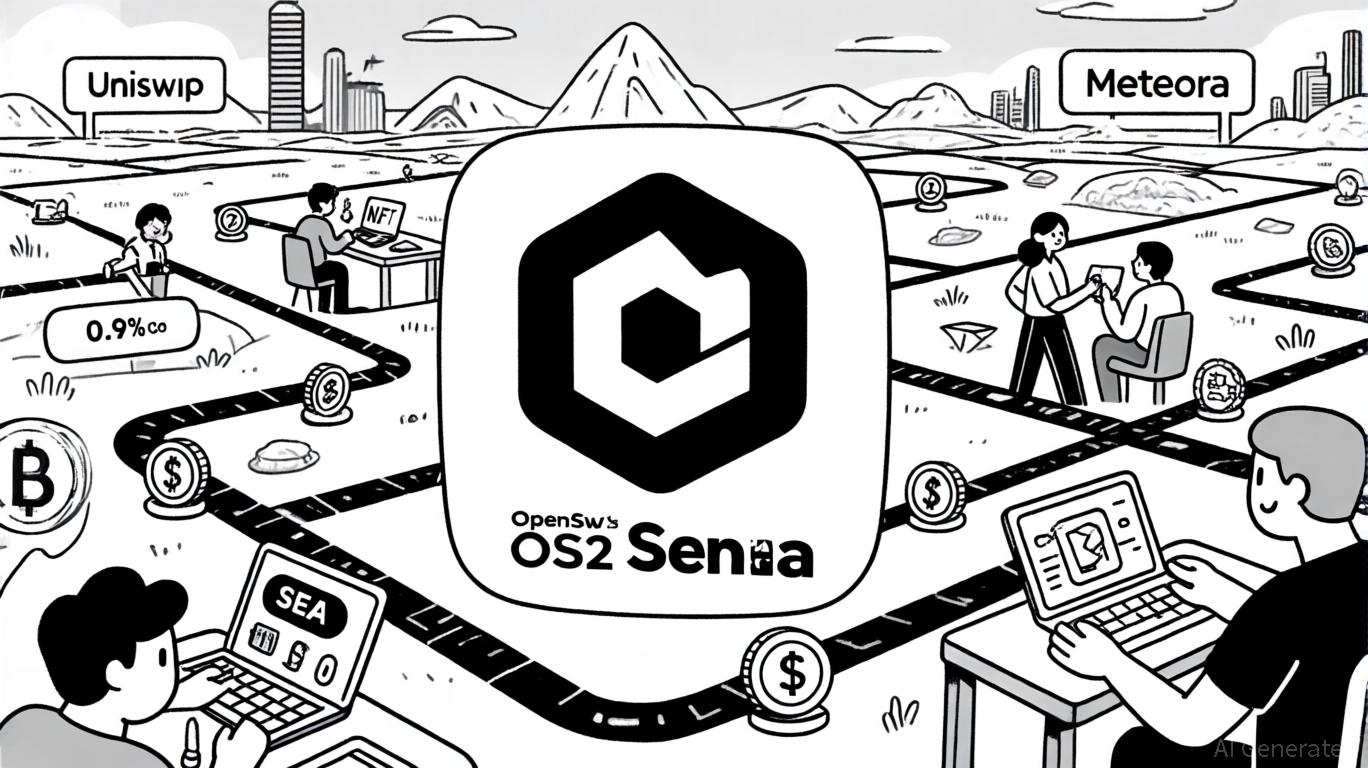
OpenSea's new platform, OS2, supports 22 blockchains, including EthereumETH--, SolanaSOL--, and Polygon, according to the FinancialContent report. This multi-chain approach solves a critical pain point: fragmented liquidity. For example, a user can now trade a Bored Ape NFT on Ethereum while simultaneously swapping a memecoinMEME-- on Solana—all within a single interface. By integrating with decentralized exchanges like UniswapUNI-- and Meteora, OS2 aggregates liquidity pools across chains, reducing slippage and improving trade execution, the FinancialContent report explains.
The platform's 0.9% transaction fee model (down from 2.5% for NFTs) is a strategic move to attract traders. In its first two weeks of October 2025, OpenSea processed $1.6 billion in crypto trades and $230 million in NFT transactions—the highest monthly volume in over three years, as Cryptopolitan reported. This surge underscores the demand for cross-chain accessibility, particularly as memecoins and tokenized assets gain traction.
Liquidity Aggregation and Cross-Chain Synergies
The true value of OS2 lies in its ability to bridge ecosystems. For instance, a user holding a Pudgy PenguinsPENGU-- NFT on Ethereum can now list it for sale while simultaneously using a wrapped version of the asset to stake on a DeFi protocol on ArbitrumARB--. This interoperability is enabled by OpenSea's non-custodial infrastructure and lack of KYC checks, which align with the ethos of blockchain sovereignty, as discussed in the CoinSpot article.
Data from OpenSea's October 2025 report indicates that cross-chain trades now account for 35% of total volume, a 200% increase from Q3 2025, per the FinancialContent report. This trend is particularly pronounced in gaming and metaverse sectors, where users demand seamless asset portability.
The $SEA Token and Governance Dynamics
OpenSea's Token Generation Event (TGE) for $SEA is a pivotal component of its strategy. The token serves dual purposes:
1. Governance: Holders can vote on platform upgrades and fee structures.
2. Utility: Discounts on trading fees, staking rewards, and airdrop eligibility, the FinancialContent report notes.
The "Treasure Chests" airdrop initiative, which rewards early adopters with $SEA, has already driven user growth. By mirroring Blur's token economics, OpenSea is creating a flywheel effect: more users → more liquidity → higher trading volumes, as the FinancialContent report outlines.
Market Resilience and Future Prospects
Despite the NFT market's challenges, blue-chip collections like Bored Ape Yacht Club have regained prominence, with trading volumes rising 40% in October 2025, according to the FinancialContent report. OpenSea's multi-chain strategy is amplifying this recovery by making NFTs more accessible to a broader audience.
Looking ahead, OpenSea plans to launch a mobile app and an independent foundation to oversee $SEA distribution, as the CoinSpot article details. These moves signal a long-term vision: to become the central hub for digital asset trading, not just NFTs.
Investment Implications
OpenSea's pivot is a masterclass in adaptation through aggregation. By addressing liquidity fragmentation and leveraging cross-chain synergies, the platform is unlocking new value for traders and developers. For investors, the key metrics to watch are:
- $SEA token adoption: A strong TGE could drive demand for governance and utility.
- Cross-chain volume growth: Sustained increases in multi-chain trades would validate OpenSea's market position.
- Fee revenue: The 0.9% model, if scaled, could outperform traditional NFT marketplaces.
However, risks remain. Competition from platforms like Blur and potential regulatory scrutiny of memecoins could dampen growth. Yet, OpenSea's first-mover advantage in multi-chain aggregation and its focus on user sovereignty position it as a must-watch asset in 2026.







Comentarios
Aún no hay comentarios