
OpenSea's Native SEA Token Launch and Its Implications for the NFT Ecosystem
OpenSea's upcoming launch of its native SEA token in Q1 2026 marks a pivotal moment in the evolution of the NFT ecosystem. By tokenizing platform utility and user engagement, OpenSea aims to redefine how digital asset marketplaces operate, fostering growth, liquidity, and investor value. This analysis explores how the SEA token's design, coupled with OpenSea's strategic pivot to a broader on-chain trading platform, could reshape the landscape for both creators and investors.
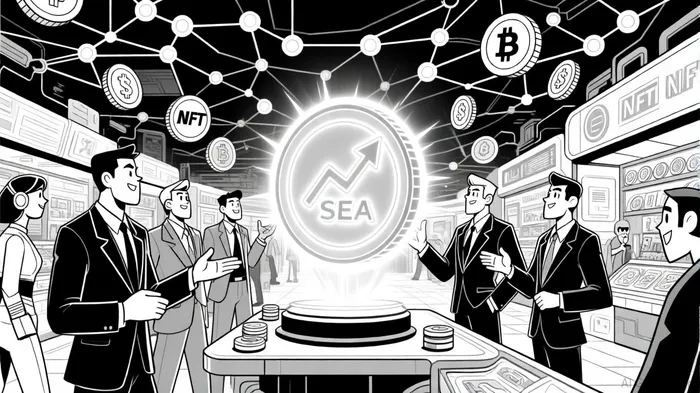
Tokenization as a Growth Catalyst
OpenSea's decision to allocate 50% of the SEA token supply to the community-including both historical and new users-reflects a deliberate effort to align platform success with user incentives. By rewarding active participation through staking, airdrops, and governance, OpenSea is creating a self-sustaining ecosystem where users are financially motivated to contribute to the platform's growth. For instance, users who engage in trading, complete "Voyages" (weekly quests), or stake tokens to support their favorite collections will earn rewards tied to the SEA token, according to a Blockonomi report. This model mirrors successful token economies like Ethereum's staking mechanism, where utility and incentives drive adoption.
The token's 50% revenue buyback mechanism further reinforces this strategy. By committing half of OpenSea's platform revenue to repurchase SEA tokens, the company is signaling long-term confidence in the token's value. This approach, akin to traditional stock buybacks, could stabilize the token's price while rewarding early adopters and long-term holders, according to a CryptoBriefing report. Analysts have noted that such buybacks are critical for maintaining token scarcity and investor trust in decentralized platforms, a point also covered in a PR Newswire release.
Strategic Shift to a "Trade Everything" Platform
OpenSea's pivot from a pure NFT marketplace to a "trade everything" platform underscores the broader implications of tokenization. The company now facilitates trading of both fungible and non-fungible assets, with 90% of its $2.6 billion monthly trading volume coming from token transactions, according to a CryptoTimes report. This shift is notNOT-- merely a response to declining NFT market capitalization (which remains below $1 billion as of 2025) but a calculated move to position OpenSea as a one-stop hub for on-chain trading, as noted in a CoinGabbar report.
The integration of the OS2 platform-featuring cross-chain trading, reduced fees, and a mobile app with AI-driven tools-further enhances liquidity. By lowering barriers to entry for new users and improving the experience for existing ones, OpenSea is creating a flywheel effect: increased user activity drives higher trading volume, which in turn attracts more developers and investors to the ecosystem, as described in a CoinTribune article.
Investor Value and Market Response
The initial market response to OpenSea's token launch has been promising. The platform's $2.6 billion trading volume in Q1 2026, with 90% attributed to token trading, highlights the demand for a unified on-chain trading environment, according to a Watcher.Guru article. Investors are particularly drawn to the token's utility features, such as staking and governance, which provide tangible value beyond speculative trading.
However, challenges remain. OpenSea faces stiff competition from platforms like BlurBLUR-- and Magic EdenME--, which have eroded its NFT market dominance. The success of the SEA token will depend on its ability to differentiate OpenSea through superior user experience and robust tokenomics. As stated by CEO Devin Finzer, the token is "not just a launch but a critical step toward a seamless on-chain economy."
Conclusion
OpenSea's SEA token represents a bold experiment in tokenizing digital asset marketplaces. By embedding utility, incentives, and buybacks into its design, the token has the potential to drive platform growth, enhance liquidity, and create lasting investor value. Yet, its success will hinge on OpenSea's ability to execute its vision of a unified on-chain economy while navigating competitive pressures. For investors, the SEA token offers a unique opportunity to participate in a platform that is redefining the boundaries of Web3.






Comentarios
Aún no hay comentarios