
OPENLANE's Strategic Preferred Stock Buyback: A Catalyst for Enhanced Shareholder Value
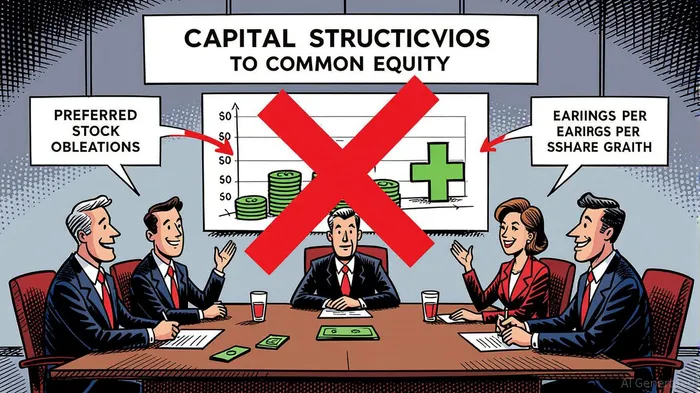
In the ever-evolving landscape of corporate finance, strategic capital allocation remains a cornerstone of long-term value creation. OPENLANEKAR-- (KAR) has taken a bold step in this direction with its recently announced preferred stock buyback program, which aims to repurchase 53% of its Series A Convertible Preferred Stock for approximately $559 million. This move, set to close between September 30 and October 20, 2025, is not merely a transaction—it is a calculated effort to streamline the company's capital structure, reduce future dividend obligations, and enhance shareholder value.
Capital Structure Optimization: Reducing Complexity, Enhancing Flexibility
OPENLANE's decision to repurchase preferred shares held by major stakeholders like Apax Partners and Periphas Capital reflects a clear focus on simplifying its capital structure. By reducing preferred shares by half for Apax and 80% for Periphas, the company is effectively lowering its future dividend payments, which will free up cash for reinvestment or further shareholder returns. According to a report by Stock Titan, the repurchase price of $29.70 per share on an as-converted basis is structured to align with management's confidence in the company's long-term growth trajectory [1].
The financial rationale is compelling. OPENLANE's Q2 2025 results underscored its robust liquidity, with $87 million in adjusted free cash flow and $119 million in cash on hand [1]. This financial flexibility allows the company to execute large-scale repurchases without overleveraging. While conflicting debt-to-equity ratios have been reported—ranging from 0.21 to 87.85%—the more concrete metrics tell a clearer story. As of Q1 2025, OPENLANE's Net Debt-to-EBITDA ratio stood at -0.80, indicating a net cash position, and its Interest Coverage Ratio was 15.29, far exceeding the automotive retail industry benchmark of 31.67 for trailing twelve months [3]. These figures suggest that the buyback is both feasible and prudent, as the company's asset-light model and strong cash flow generation provide a buffer against macroeconomic headwinds.
Shareholder Value: From Earnings Per Share to Signaling Effect
The buyback's impact on shareholder value is twofold. First, by reducing the number of preferred shares outstanding, OPENLANE is poised to see a meaningful boost in earnings per common share. Analysts at JPMorganJPM-- note that the company's 2025 adjusted EBITDA guidance of $290 million to $310 million, combined with its lean operating model, positions it to convert this improved capital structure into higher profitability [3]. Second, the transaction serves as a strong signal of management's confidence in the business. In a sector where execution and valuation multiples are closely scrutinized, such a move reinforces investor trust.
OPENLANE's broader capital return strategy further underscores this intent. The company recently announced a $250 million share repurchase program, demonstrating a commitment to allocating capital to its most valuable asset: its shareholders [1]. This dual approach—repurchasing preferred stock while maintaining flexibility for common equity buybacks—highlights a disciplined, shareholder-centric strategy.
Industry Context and Long-Term Appeal
The automotive retail sector, while facing challenges like tariffs and shifting consumer preferences, remains resilient. OPENLANE's Debt-to-EBITDA ratio of 0.73 for 2025 aligns with industry norms, but its Interest Coverage Ratio of 15.29—well above the sector's 31.67—demonstrates exceptional solvency [2]. This financial fortitude, coupled with its strategic buyback, positions OPENLANE to outperform peers in both stability and growth.
Critically, the buyback aligns with the company's transformation since 2020, which has prioritized an asset-light structure and operational efficiency. As one analyst observed, “OPENLANE's ability to generate strong cash flow while maintaining low leverage is a rare combination in this sector” [3].
Conclusion: A Win for Shareholders and Executives Alike
OPENLANE's preferred stock buyback is more than a tactical move—it is a strategic repositioning that enhances both short-term financial metrics and long-term investment appeal. By reducing complexity, lowering future obligations, and signaling confidence, the company is laying the groundwork for sustained shareholder value creation. For investors, this represents a compelling case of capital structure optimization executed with precision and foresight.





Comentarios
Aún no hay comentarios