
Openbank's Entry into Crypto Trading in Germany: A Catalyst for Retail Adoption and Fintech Evolution in the EU
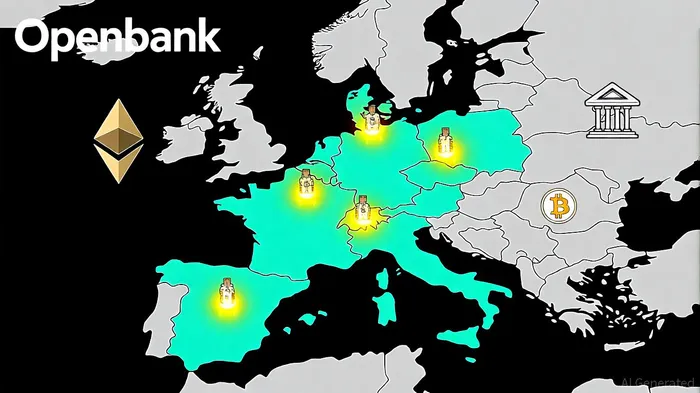
The launch of Openbank's crypto trading services in Germany marks a pivotal moment in the integration of digital assets into mainstream finance. As the digital arm of Banco SantanderSAN--, Openbank has positioned itself at the intersection of traditional banking and crypto innovation, offering German customers direct access to BitcoinBTC-- (BTC), EthereumETH-- (ETH), and other major cryptocurrencies under the European Union's Markets in Crypto-Assets (MiCA) framework [1]. This move not only reflects Santander's strategic alignment with evolving customer preferences but also underscores the broader implications for retail adoption and fintech competition in the EU.
Strategic Implications for Retail Crypto Adoption
Openbank's entry into crypto trading is poised to accelerate retail adoption in Germany and beyond. According to a joint Bitpanda and zeb market study, 16% of private investors in the EU already hold cryptocurrencies, a figure that outpaces the 19% of banks offering crypto services [2]. This gap highlights a significant unmet demand, which Openbank's user-friendly platform—allowing customers to manage crypto alongside traditional investments—aims to address. By eliminating the need for third-party platforms and offering transparent fees (1.49% per transaction, no custody fees), Openbank reduces friction for new users while reinforcing trust through regulatory compliance under MiCA [3].
The MiCA framework itself has been a critical enabler. By harmonizing regulations across EU member states, MiCA has reduced uncertainty for institutions and investors alike, fostering a climate where traditional banks can confidently enter the crypto space [4]. Openbank's expansion plans—announced to include additional cryptocurrencies and crypto-to-crypto conversions—signal a broader trend: banks are no longer merely observers but active participants in shaping the future of digital finance.
Fintech Innovation and Competitive Dynamics
Openbank's foray into crypto also reshapes the fintech landscape. Historically, fintech startups dominated retail crypto services due to their agility and customer-centric models. However, the entry of regulated institutions like Openbank introduces a new dynamic. While fintechs may retain an edge in innovation speed, traditional banks now offer the dual advantages of institutional credibility and integrated financial ecosystems. For example, Openbank's ability to let users manage crypto alongside stocks, funds, and ETFs within a single account challenges fintechs to either collaborate or differentiate further [5].
This competition could drive innovation in two ways. First, it may spur fintechs to enhance their offerings, such as through advanced analytics or DeFi integrations, to retain market share. Second, it could foster partnerships between banks and fintechs, leveraging the latter's agility while benefiting from the former's regulatory infrastructure. The European Central Bank (ECB) has noted that such collaboration could enhance financial inclusion and diversify investment options for retail investors [6].
Challenges and the Road Ahead
Despite these opportunities, challenges persist. Public education remains a hurdle: while 54% of EU households hold less than €1,000 in crypto, volatility and regulatory complexity continue to deter mass adoption [7]. Openbank's success will depend on its ability to demystify crypto for mainstream users, a task requiring sustained investor education initiatives. Additionally, legacy banking systems must adapt to support seamless crypto integration—a technical and operational challenge for institutions accustomed to traditional asset classes.
The ECB has also raised concerns about the growing interconnectedness between crypto and traditional finance, warning of systemic risks such as contagion [8]. Openbank's expansion, while promising, must navigate these risks carefully. Regulatory bodies will likely monitor its operations closely, ensuring compliance with MiCA's stringent requirements while allowing room for innovation.
Conclusion: A New Era for EU Finance
Openbank's launch in Germany is more than a product update—it is a harbinger of a broader shift. By bridging the gap between legacy banking and crypto, SantanderSAN-- is not only catering to current demand but also laying the groundwork for a future where digital assets are as normalized as stocks or bonds. For investors, this signals a maturing market where institutional participation and regulatory clarity are driving adoption. As Openbank expands to Spain and beyond, the EU's financial ecosystem will likely see a renaissance of competition, innovation, and accessibility—a testament to the transformative power of crypto in the hands of traditional institutions.





Comentarios
Aún no hay comentarios