
OpenAI's Product Strategy and the Future of AI-Driven Platforms
The artificial intelligence landscape in 2025 is defined by two forces: the relentless pace of technological innovation and the fragility of investor confidence in the face of leadership turbulence. OpenAI, once a nonprofit with a moonshot mission, now stands at a crossroads as it navigates the dual challenges of maintaining its AI leadership while restructuring its governance to attract capital. For investors, the interplay between OpenAI's product execution—particularly the rollout of GPT-5—and its leadership transitions offers a compelling case study in how strategic clarity and operational execution can either fortify or erode value in high-growth tech ventures.
Leadership Restructuring: A Double-Edged Sword
OpenAI's shift from a nonprofit to a for-profit benefit corporation (PBC) has triggered a wave of internal churn. Key figures such as Chief Technology Officer Mira Murati and Chief Research Officer Bob McGrew have departed, while new appointments like Mark Chen (Chief Research Officer) and Brad Lightcap (Chief Operating Officer) signal a pivot toward commercialization[1]. This restructuring, as noted in a report by Quantum Intelligence, reflects a broader tension between OpenAI's founding ethos of ethical AI and the demands of scaling a profitable enterprise[2].
The transition to a PBC model, while designed to attract capital, has drawn criticism from regulators and former employees who fear mission dilution[5]. Elon Musk's public dissent and Microsoft's expanded influence—via its veto power over structural decisions—highlight the precarious balance OpenAI must strike between independence and financial sustainability[5]. For investors, this governance uncertainty raises a critical question: Can a company with a dual mandate of profit and public good maintain the agility required to outpace competitors like Anthropic and xAI?
GPT-5: A Strategic Leap, But Execution Matters
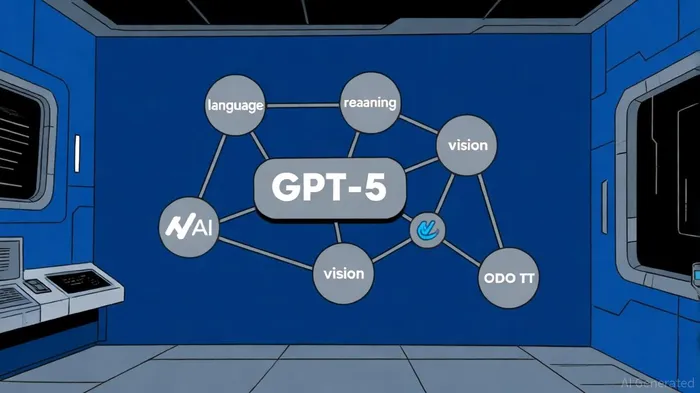
The launch of GPT-5 in August 2025 marked OpenAI's most ambitious product integration to date. By unifying its o-series and GPT-series models into a single system, the company aims to eliminate the need for users to toggle between specialized AI tools[1]. According to Applying AI, GPT-5's 300-billion-parameter architecture, combined with dynamic memory and multimodal capabilities, positions it as a “unified system” that could redefine enterprise workflows[2].
However, the rollout was marred by technical hiccups. A report by AI2.Work noted that the initial version of GPT-5 was rolled back after users reported subpar performance, triggering a sell-off in tech stocks and raising concerns about OpenAI's ability to deliver on its roadmap[1]. This misstep underscores a recurring theme in AI development: even the most advanced models are only as valuable as their execution. For investors, the incident highlights the risks of overhyping product launches in a sector where expectations are sky-high.
Financial Metrics: Growth, Valuation, and the Road to Profitability
Despite the GPT-5 fiasco, OpenAI's financials remain robust. The company secured $8.3 billion in fresh capital at a $300 billion valuation in 2025, with plans for a secondary stock sale valued at $500 billion[4]. These figures, as analyzed by Aventis Advisors, reflect a sector-wide trend of inflated valuation multiples—median revenue multiples in AI venture rounds now hover around 25–30x EV/Revenue[3].
Yet profitability remains elusive. OpenAI is projected to post $5 billion in losses in 2024, with breakeven expected by 2029[3]. This trajectory, while not uncommon for tech unicorns, raises questions about the sustainability of its business model. The company's pivot to high-value consulting services—embedding engineers in client operations to tailor AI solutions—could improve margins[2], but it also increases operational complexity. For investors, the key metric will be whether OpenAI can scale its enterprise offerings without sacrificing the agility that made it a market leader.
Competitive Positioning: Can OpenAI Retain Its Edge?
OpenAI's dominance in the chatbot market—ChatGPT holds 82.7% global market share—provides a buffer against rivals[5]. Strategic partnerships with Microsoft, particularly the integration of GPT models into Microsoft 365, further entrench its position in enterprise ecosystems[5]. However, the rise of Anthropic (valued at $178 billion) and Chinese AI startups like DeepSeek signals a maturing market where differentiation is key[1].
The Porter's Five Forces analysis from HiveLR underscores this challenge: rising infrastructure costs, regulatory scrutiny, and the risk of AI misuse (e.g., deepfakes) could erode margins and market share[2]. OpenAI's focus on multimodal AI and ethical governance offers a counterweight, but these advantages are not immune to commoditization.
Investment Implications: Balancing Opportunity and Risk
For investors, OpenAI represents a high-conviction bet on the future of AI. Its product roadmap, particularly the integration of GPT-5, has the potential to unlock new revenue streams in enterprise AI and consulting[2]. The company's $500 billion valuation, while lofty, is justified by its market leadership and the transformative potential of its technology[5].
However, the risks are equally pronounced. Leadership instability, regulatory headwinds, and the technical challenges of scaling AGI could derail progress. As noted in a Neuronad analysis, the transition to a PBC model has already sparked debates about transparency and mission alignment[5]. Investors must weigh these uncertainties against the sector's growth potential.
Conclusion
OpenAI's journey from a nonprofit research lab to a $500 billion private company is a testament to the transformative power of AI. Yet its future hinges on two critical factors: the ability to execute on its product vision and the capacity to maintain investor trust amid governance shifts. For those willing to tolerate the volatility, OpenAI offers a rare opportunity to invest in the infrastructure of the next industrial revolution. But as the GPT-5 rollout demonstrates, even the most advanced technology cannot compensate for operational missteps. In the end, the company's success will depend not just on the brilliance of its models, but on the resilience of its leadership and the clarity of its mission.







Comentarios
Aún no hay comentarios