
OpenAI's Instant Checkout: Reshaping Digital Retail and Redefining Value Chains in AI-Driven E-Commerce
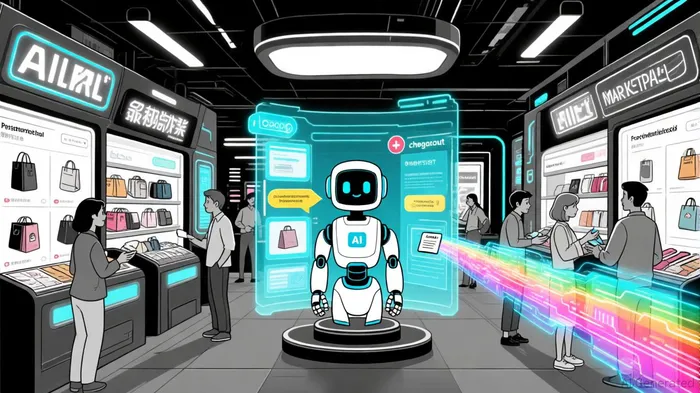
The integration of AI into e-commerce has long been a buzzword, but OpenAI's recent launch of ChatGPT Instant Checkout marks a seismic shift in how digital retail operates. By enabling users to complete purchases directly within the ChatGPT interface—without redirecting to external websites—OpenAI is not just enhancing user convenience; it is redefining the entire value chain of e-commerce. This innovation, powered by the Agentic Commerce Protocol and partnerships with ShopifySHOP-- and Stripe, signals a strategic pivot from conversational AI to a full-fledged commerce platform. For investors, the implications are profound: OpenAI is positioning itself to capture a slice of the $6.3 trillion global e-commerce market while challenging traditional gatekeepers like Amazon and Google.
A New Era of Embedded Commerce
OpenAI's Instant Checkout feature, launched in late 2025, allows users in the U.S. to purchase products from EtsyETSY-- sellers and over a million Shopify merchants, including brands like Glossier and SKIMS, directly within ChatGPT, according to a Fortune report. The Agentic Commerce Protocol, developed in collaboration with Stripe, facilitates secure, encrypted transactions and enables users to leverage existing payment methods stored in their ChatGPT accounts, as described in a CNBC report. This eliminates friction in the purchasing process, a critical factor in an era where 53% of U.S. consumers plan to use generative AI for online shopping in 2025, per eComposer statistics.
The strategic brilliance of this move lies in its ability to monetize ChatGPT's 700 million weekly active users, many of whom previously contributed little to no revenue. By taking a small commission on each transaction—estimated at around 2% for some partners—OpenAI is diversifying its income streams beyond subscriptions and enterprise deals, as Ecommerce North America reports. An analysis estimates this feature could generate $3.4 billion in revenue for OpenAI in 2025 alone, a critical step toward offsetting its $5 billion loss in 2024, according to an SQ Magazine analysis.
Disrupting Traditional E-Commerce Dynamics
The introduction of Instant Checkout disrupts two dominant models: search-driven commerce (Google) and marketplace dominance (Amazon). By embedding transactions within a conversational interface, OpenAI captures high-intent shoppers at the point of discovery. For example, a user asking ChatGPT for “wireless noise-canceling headphones” can now receive product suggestions, view pricing and reviews, and complete a purchase—all without leaving the chat. This collapse of the traditional shopping funnel threatens to redirect significant traffic and advertising revenue away from search engines and marketplaces.
Moreover, the Agentic Commerce Protocol's open-sourced nature invites broader adoption. Merchants and developers can integrate the system without overhauling existing infrastructure, accelerating adoption across platforms. As of Q3 2025, 1.7 million Shopify storesSHOP-- are accessible via ChatGPT, and brands like SKIMS and Glossier are already onboarding. This creates a network effect: the more merchants adopt the protocol, the more value ChatGPT accrues as a centralized hub for AI-driven commerce.
Consumer Behavior and the Rise of Agentic Commerce
AI-driven instant checkout is reshaping consumer behavior in three key ways:
1. Hyper-Personalization: ChatGPT's AI analyzes browsing history, purchase patterns, and contextual cues to deliver tailored recommendations. This reduces decision fatigue and accelerates conversions, with early data showing a 20% increase in purchase intent for users engaging with AI-curated product suggestions, TheCommerceShop finds.
2. Frictionless Transactions: By eliminating the need to navigate multiple websites or apps, OpenAI taps into the growing demand for speed and convenience. A study found that 68% of consumers abandon carts due to a cumbersome checkout process; Instant Checkout mitigates this by streamlining the flow, per a PeakCommerce study.
3. Trust and Control: OpenAI emphasizes that product rankings are based on relevance, not merchant fees, addressing concerns about algorithmic bias. However, consumer trust in AI for purchases remains a hurdle, with only 24% of U.S. users currently comfortable with AI agents making purchases on their behalf, according to a Bain report.
Cross-Platform Commerce and Ecosystem Shifts
The Agentic Commerce Protocol is not just a technical innovation—it's a strategic play to dominate cross-platform commerce. By enabling machine-to-machine transactions, OpenAI allows AI agents to pull data from multiple supplier catalogs, compare pricing, and execute purchases within predefined budgets. For instance, a user could instruct ChatGPT to “find the best-reviewed wireless headphones under $200,” and the AI would autonomously source options from Shopify, Etsy, and other integrated platforms.
This shift has profound implications for marketers and loyalty programs. Brands must now optimize for machine readability, ensuring structured data (e.g., real-time inventory, pricing, and product metadata) is accessible to AI agents. Traditional advertising placements and checkout optimizations become less relevant as AI agents bypass human-centric touchpoints. As noted in a Forbes analysis, brands that fail to adapt risk being “invisible” to the next generation of commerce.
Economic Impact and Future Outlook
The economic ramifications of OpenAI's Instant Checkout are already materializing. For merchants, the feature opens a new channel to reach high-intent shoppers, with Shopify stores reporting a 15% increase in conversion rates for ChatGPT-driven traffic, according to BusinessTechWeekly reports. For OpenAI, the monetization of transactions—coupled with its enterprise AI adoption (32.4% of U.S. businesses now use OpenAI tools)—positions the company to rival traditional e-commerce platforms.
Looking ahead, the feature's expansion to multi-item carts and global markets could further disrupt the status quo. However, challenges remain. Consumer trust in AI for purchases is still low, and regulatory scrutiny over data privacy and algorithmic transparency could slow adoption. OpenAI's emphasis on parental controls and secure infrastructure suggests it is aware of these risks, as Testing Catalog notes.
Conclusion: A Must-Watch for Investors
OpenAI's Instant Checkout is more than a feature—it's a catalyst for a new era of agentic commerce. By embedding transactions into a conversational AI interface, OpenAI is creating a value chain where AI agents act as intermediaries, reshaping how consumers discover, compare, and purchase goods. For investors, the key takeaway is clear: companies that adapt to AI-driven commerce—whether by integrating with OpenAI's Agentic Commerce Protocol or developing their own AI-first strategies—will lead the next wave of e-commerce innovation. Those that cling to legacy models risk obsolescence in a market where speed, personalization, and trust are paramount.





Comentarios
Aún no hay comentarios