
OpenAI's ChatGPT Go in India: A Pricing Disruption with Global Implications for AI-as-a-Service
In the rapidly evolving AI-as-a-Service (AIaaS) market, OpenAI's launch of ChatGPT Go in India at ₹399 per month has ignited a pricing revolution. This move, tailored to India's 400 million+ digital users, is not just a regional play—it's a blueprint for how global AI firms can monetize emerging markets while navigating regulatory and competitive hurdles. For investors, the implications are profound: OpenAI's strategyMSTR-- in India could redefine the economics of AIaaS, offering a scalable model for growth in regions where affordability and localization are critical.
Localized Pricing: A Gateway to Mass Adoption
India's AIaaS market is projected to grow at a 30.41% CAGR from 2025 to 2030, driven by digital transformation and government initiatives like the National AI Mission. OpenAI's ChatGPT Go, priced at a fraction of its global counterparts (e.g., $20/month for Plus), is a calculated bet on India's price-sensitive but tech-savvy population. By offering 10x more image generations and file uploads than the free tier, OpenAI is addressing a key pain point for Indian users: the need for high-capacity tools at low cost.
This pricing strategy is already paying off. India's ChatGPT user base has tripled in a year, with OpenAI CEO Sam Altman declaring it the company's second-largest market. The localized pricing model—unavailable elsewhere—has enabled OpenAI to capture early adopters and SMEs, who are critical to scaling AIaaS. For investors, this signals a shift from premium-first monetization to a volume-driven approach, where low-cost tiers act as a funnel for higher-tier conversions.
Partnerships: Reliance Jio and the Power of Ecosystems
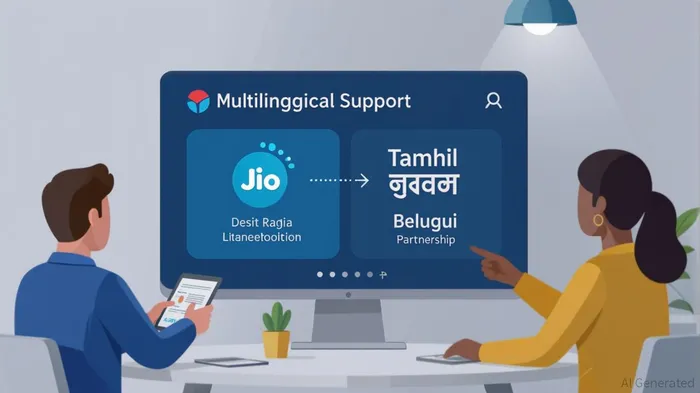
OpenAI's collaboration with Reliance Jio, India's largest telecom provider, is a masterstroke. By bundling AI services into Jio's mobile plans, OpenAI is leveraging India's 400 million+ smartphone users to drive adoption. This partnership mirrors Microsoft's strategy in the U.S., where Azure and Office 365 create a closed ecosystem. For OpenAI, Jio's reach ensures that even users with limited disposable income can access AI tools, fostering a habit of paid AI usage.
The ripple effect is significant. Reliance's JioMart and JioCinema platforms could integrate ChatGPT Go for customer service, content curation, and personalized recommendations, creating a flywheel of data and engagement. For investors, this ecosystem approach—where AIaaS becomes a utility rather than a luxury—highlights the potential for cross-subsidized revenue streams and long-term customer lock-in.
Multilingual Support: Breaking Barriers in a Diverse Market
India's linguistic diversity—40% of the population does not speak English—has long been a barrier to AI adoption. OpenAI's GPT-5 model, now supporting 12 Indian languages, is a game-changer. By enabling AI interactions in Tamil, Telugu, Bengali, and others, OpenAI is unlocking new use cases in education, healthcare, and rural customer service.
This multilingual edge is not just a feature; it's a strategic moat. Competitors like Google Gemini and Perplexity, despite their own localization efforts, lack the depth of language support and cultural nuance that OpenAI is now offering. For investors, this underscores the importance of cultural adaptability in AIaaS—a factor that could determine market dominance in regions like India.
Regulatory and Competitive Challenges
OpenAI's India strategy is not without risks. The Digital Personal Data Protection Act (DPDP Act) imposes strict data governance requirements, and OpenAI's refusal to comply with a Delhi High Court request to remove Indian content from its training data highlights jurisdictional tensions. While data residency options (allowing users to store data locally) mitigate some concerns, regulatory friction could slow adoption.
Competition is also intensifying. Perplexity AI, in partnership with Airtel, offers a free AI Pro plan worth ₹17,000 annually, directly challenging OpenAI's paid tiers. Google's free AI Pro subscriptions for Indian students further complicate the landscape. However, OpenAI's focus on enterprise-grade features (e.g., the Operator AI agent for Pro users) and its ecosystem partnerships provide a buffer against price wars.
Investment Implications: A Scalable Model for Emerging Markets
OpenAI's India strategy offers a template for monetizing AIaaS in emerging markets. By prioritizing affordability, localization, and ecosystem partnerships, the company is building a scalable model that could be replicated in Southeast Asia, Africa, and Latin America. For investors, this points to two key opportunities:
- AIaaS Providers with Emerging Market Exposure: Companies like OpenAI, MicrosoftMSFT-- (via Azure), and AWS are well-positioned to capitalize on the AIaaS boom in India and beyond.
- Local Partners in the AI Value Chain: Reliance Jio and Indian IT firms (e.g., TCS, Infosys) stand to benefit from their roles in infrastructure and integration.
Conclusion: A Pricing Disruption with Global Reach
OpenAI's ChatGPT Go in India is more than a product—it's a strategic pivot toward a localized, affordable AI ecosystem. By addressing price sensitivity, linguistic diversity, and ecosystem integration, OpenAI is not only capturing India's market but also setting a precedent for global AIaaS monetization. For investors, the lesson is clear: the future of AI lies in emerging markets, where innovation meets affordability. Those who bet on companies that adapt to this reality will reap the rewards of a $45.72 billion AIaaS market by 2034.
Investment Advice: Consider long-term positions in AIaaS leaders with strong emerging market partnerships (e.g., Microsoft, AWS) and regional players like Reliance Jio. Monitor regulatory developments in India, as compliance could shape the competitive landscape.







Comentarios
Aún no hay comentarios