
OPEC+'s Strategic Output Adjustments and Geopolitical Risks in the Oil Market
The global oil market in late 2025 is navigating a delicate balancing act between OPEC+'s measured production increases and escalating geopolitical risks, particularly from potential new sanctions on Russian oil exports. These dynamics, combined with the Federal Reserve’s cautious monetary policy, are creating a compelling bullish case for crude prices. Investors must carefully assess how these interlocking forces are tightening supply chains and reshaping market fundamentals.
OPEC+'s Calculated Production Hikes
OPEC+ has adopted a strategic, incremental approach to restoring oil supply, prioritizing market share over aggressive output expansion. In September 2025, the alliance agreed to increase production by 547,000 barrels per day (b/d) for September, followed by a further 137,000 b/d boost in October 2025. This marks the beginning of a 12-month plan to unwind 1.65 million b/d of voluntary cuts implemented in 2023 [1]. Key members like Saudi Arabia and Russia are leading the charge, each adding 42,000 b/d in October, while the UAE, Iraq, and others contribute smaller increments [2].
The decision reflects OPEC+'s dual objectives: stabilizing prices amid rising U.S. and Norwegian production and regaining lost market share. According to a Reuters analysis, the group emphasized “healthy market fundamentals” and a “steady global economic outlook” as justification for the move, while retaining flexibility to pause or reverse adjustments if conditions deteriorate [3]. However, the relatively modest scale of the hikes—particularly compared to the 2.2 million b/d cuts unwound in prior years—suggests a cautious approach to avoid oversupply [4].
Geopolitical Risks: Sanctions and Supply Chain Disruptions
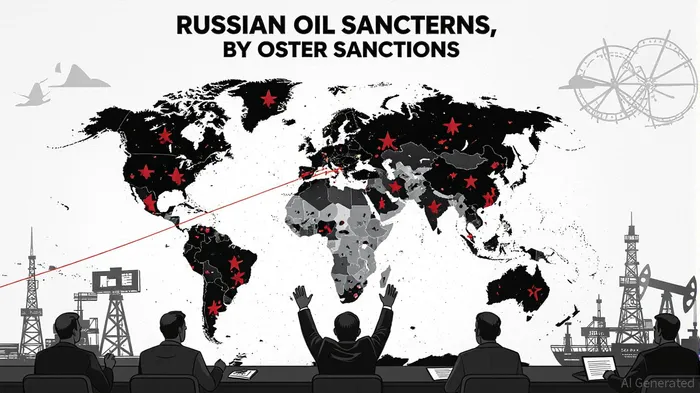
While OPEC+’s output adjustments are unfolding, the threat of new sanctions on Russian oil buyers is introducing significant volatility. The U.S. and EU are reportedly considering stricter measures, including secondary sanctions that would restrict access to Western financial systems and impose tariffs on countries purchasing Russian crude [5]. These measures aim to cripple Russia’s energy revenue but risk creating supply bottlenecks and rerouting inefficiencies.
A report by Discovery Alert highlights that Asian buyers like India and China are already absorbing discounted Russian oil, but logistical hurdles—including reliance on “shadow fleet” tankers and soaring insurance costs—are straining global supply chains [6]. U.S. sanctions targeting Russian tankers have further tightened vessel availability, pushing freight rates to multi-year highs [7]. If fully enforced, the proposed sanctions could reduce Russian exports by 0.5–1 million b/d in the short term, with longer-term risks of 1.5–2 million b/d declines under a Trump-era 100% tariff scenario [8]. Such disruptions would tighten global supply, particularly as OPEC+’s incremental increases fail to offset the potential shortfall.
Fed Policy: A Mixed Signal for Demand
The Federal Reserve’s 2025 policy trajectory adds another layer of complexity. While the central bank has signaled a series of rate cuts in the second half of 2025 to support a weakening labor market, inflation remains stubbornly above 3% due to tariffs and trade uncertainties [9]. As noted in a PGIM analysis, the Fed’s cautious approach—keeping rates in the 4.25–4.50% range—limits the stimulative impact on oil demand, which is sensitive to interest rate fluctuations [10]. However, the Fed’s commitment to a “soft landing” scenario suggests it will avoid aggressive tightening, preventing a sharp downturn in energy consumption.
This middle-ground policy creates a stable but non-explosive environment for oil demand, allowing supply-side disruptions (e.g., from sanctions) to exert upward pressure on prices. The interplay between OPEC+’s measured output and geopolitical risks thus becomes the dominant driver of crude’s near-term trajectory.
A Bullish Case for Crude: Converging Forces
The convergence of OPEC+’s strategic restraint, Russian supply vulnerabilities, and Fed policy neutrality positions oil as a high-conviction investment. While OPEC+’s 137,000 b/d October increase is modest, it is insufficient to counterbalance the potential 1–2 million b/d supply shocks from sanctions. Meanwhile, the Fed’s cautious easing prevents a collapse in demand, ensuring that tighter supply translates into higher prices.
Conclusion
Investors should prioritize crude oil as a defensive asset in this environment. OPEC+’s disciplined approach to output, coupled with the fragility of Russian supply chains and the Fed’s balanced policy stance, creates a self-reinforcing cycle of tightening fundamentals. While risks remain—such as a faster-than-expected OPEC+ response or sanctions easing—the current trajectory strongly favors a bullish outlook for oil prices in the near term.
Source:
[1] OPEC+ agrees further oil output boost from October to regain market share, Reuters
[2] OPEC+ agrees to increase oil output by 137,000 b/d in October, S&P Global Commodity Insights
[3] OPEC+ speeds up return of next tier of halted oil production, Politico Pro
[4] Key Factors Shaping OPEC+ Decisions, Oxford Energy
[5] Sanctions on Russian Oil Buyers: Global Impact Analysis, Discovery Alert
[6] March 2025 — Monthly analysis of Russian fossil fuel exports and sanctions, Energy and Clean Air
[7] U.S. sanctions on Russia hit oil freight rates, CNBC
[8] Russia Crude Shipments Gain Ahead of Trump's Sanctions Threat, Energy News Beat
[9] Fed on track for string rate cuts as labor market weakens, Reuters
[10] Fed Cuts Rates, Signals Less Easing in 2025, PGIM







Comentarios
Aún no hay comentarios