
OPEC's Deep Oil Cuts: A Long-Term Strategy Amidst Weak Demand
Generado por agente de IAEli Grant
miércoles, 20 de noviembre de 2024, 11:04 am ET2 min de lectura
AENT--
RACE--
The Organization of the Petroleum Exporting Countries (OPEC) and its allies, collectively known as OPEC+, have been maintaining deep oil production cuts to support prices and manage the market surplus. This strategy, initially implemented in response to the COVID-19 pandemic, has been extended multiple times due to weak demand and a supply glut. As the global economy continues to grapple with sluggish growth and shifting energy dynamics, OPEC+ may stick with these deep cuts for an extended period.
Weak demand, particularly in China, has been a significant factor driving OPEC+'s decision to maintain deep oil cuts. The International Energy Agency (IEA) has revised its 2025 global oil demand growth projection downwards, reflecting the slowdown in Chinese demand and the increasing adoption of electric vehicles (EVs). This weak demand, coupled with record U.S. oil output and concerns over sluggish demand in other major economies, has led OPEC+ to extend its production cuts through November 2025.
Geopolitical tensions and regional dynamics also play a role in OPEC+'s decision-making process. While the Middle East conflict has not directly affected oil prices, the possibility of a direct confrontation between Israel and Iran can move the needle. Additionally, divisions within Europe regarding trade policies, particularly on tariffs against China, may influence OPEC+'s decisions. Some European automakers are heavily invested in China and oppose tariffs, which could lead to a more cooperative stance towards China in the electrification race, potentially affecting OPEC+'s willingness to extend oil production cuts.
The influence of non-OPEC+ producers, such as the United States, Canada, and Brazil, also impacts OPEC+'s decision-making process. These countries' increasing output can offset OPEC+'s supply management efforts, as seen in the IEA's November 2024 report, which forecasts non-OPEC+ supply growth of 1.5 million barrels per day (mb/d) in both 2024 and 2025. This growth, led by the United States, is expected to more than cover demand growth in both years. Consequently, OPEC+ may extend deep oil cuts to maintain market share and prevent a supply glut.
OPEC+ members' individual interests, budgetary needs, and fiscal breakeven oil prices also influence their decision to maintain deep oil cuts. Saudi Arabia, the de facto leader of OPEC+, requires Brent crude to trade at around $81 a barrel to balance its budget. Other members, like Iraq and Venezuela, have even higher breakeven prices. With global oil demand growth slowing and supply increasing, OPEC+ may extend cuts to support prices and meet their fiscal needs.
In conclusion, OPEC+ is likely to stick with deep oil cuts for an extended period due to weak demand, geopolitical tensions, and the influence of non-OPEC+ producers. The alliance's decision-making process is driven by a complex interplay of economic, political, and technological factors. As the global energy landscape continues to evolve, OPEC+ will need to adapt its strategies to maintain its competitive advantage and address the challenges posed by the transition to cleaner energy sources.
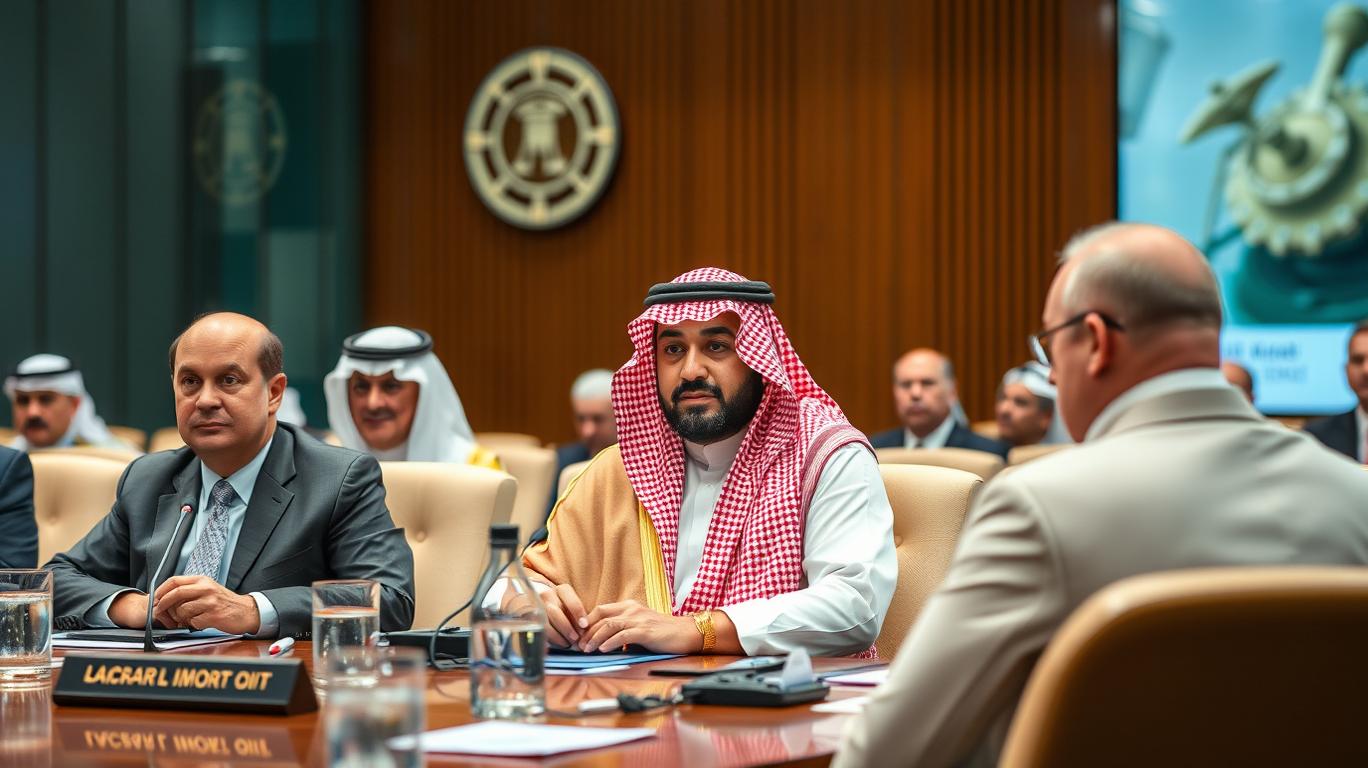
Weak demand, particularly in China, has been a significant factor driving OPEC+'s decision to maintain deep oil cuts. The International Energy Agency (IEA) has revised its 2025 global oil demand growth projection downwards, reflecting the slowdown in Chinese demand and the increasing adoption of electric vehicles (EVs). This weak demand, coupled with record U.S. oil output and concerns over sluggish demand in other major economies, has led OPEC+ to extend its production cuts through November 2025.
Geopolitical tensions and regional dynamics also play a role in OPEC+'s decision-making process. While the Middle East conflict has not directly affected oil prices, the possibility of a direct confrontation between Israel and Iran can move the needle. Additionally, divisions within Europe regarding trade policies, particularly on tariffs against China, may influence OPEC+'s decisions. Some European automakers are heavily invested in China and oppose tariffs, which could lead to a more cooperative stance towards China in the electrification race, potentially affecting OPEC+'s willingness to extend oil production cuts.
The influence of non-OPEC+ producers, such as the United States, Canada, and Brazil, also impacts OPEC+'s decision-making process. These countries' increasing output can offset OPEC+'s supply management efforts, as seen in the IEA's November 2024 report, which forecasts non-OPEC+ supply growth of 1.5 million barrels per day (mb/d) in both 2024 and 2025. This growth, led by the United States, is expected to more than cover demand growth in both years. Consequently, OPEC+ may extend deep oil cuts to maintain market share and prevent a supply glut.
OPEC+ members' individual interests, budgetary needs, and fiscal breakeven oil prices also influence their decision to maintain deep oil cuts. Saudi Arabia, the de facto leader of OPEC+, requires Brent crude to trade at around $81 a barrel to balance its budget. Other members, like Iraq and Venezuela, have even higher breakeven prices. With global oil demand growth slowing and supply increasing, OPEC+ may extend cuts to support prices and meet their fiscal needs.
In conclusion, OPEC+ is likely to stick with deep oil cuts for an extended period due to weak demand, geopolitical tensions, and the influence of non-OPEC+ producers. The alliance's decision-making process is driven by a complex interplay of economic, political, and technological factors. As the global energy landscape continues to evolve, OPEC+ will need to adapt its strategies to maintain its competitive advantage and address the challenges posed by the transition to cleaner energy sources.

Divulgación editorial y transparencia de la IA: Ainvest News utiliza tecnología avanzada de Modelos de Lenguaje Largo (LLM) para sintetizar y analizar datos de mercado en tiempo real. Para garantizar los más altos estándares de integridad, cada artículo se somete a un riguroso proceso de verificación con participación humana.
Mientras la IA asiste en el procesamiento de datos y la redacción inicial, un miembro editorial profesional de Ainvest revisa, verifica y aprueba de forma independiente todo el contenido para garantizar su precisión y cumplimiento con los estándares editoriales de Ainvest Fintech Inc. Esta supervisión humana está diseñada para mitigar las alucinaciones de la IA y garantizar el contexto financiero.
Advertencia sobre inversiones: Este contenido se proporciona únicamente con fines informativos y no constituye asesoramiento profesional de inversión, legal o financiero. Los mercados conllevan riesgos inherentes. Se recomienda a los usuarios que realicen una investigación independiente o consulten a un asesor financiero certificado antes de tomar cualquier decisión. Ainvest Fintech Inc. se exime de toda responsabilidad por las acciones tomadas con base en esta información. ¿Encontró un error? Reportar un problema


SOBRE NOSOTROS
Nuestra historiaAutores de noticiasBase de conocimientosPolítica de privacidadTérmino de usoDescargo de responsabilidad de corretaje de tercerosTérminos de uso de AIMEDivulgaciones de riesgos de AInvest AICarrerasCONTÁCTENOS
Email: support@ainvest.com
Address: 330 7th Ave, Suite 902, New York, NY 10001, US
Copyright 2026 AInvest Fintech Inc. All rights reserved.


Comentarios
Aún no hay comentarios