
OPEC+ Resilience and Geopolitical Tensions: Why the Oil Dip is a Strategic Buying Opportunity
The Iran-Israel ceasefire, brokered with dramatic flair by U.S. President Donald Trump, has sent oil prices into a tailspin. Brent crude plummeted nearly 7% to $68 per barrel in late June, erasing gains from earlier fears of a Middle East war. Yet beneath this short-term volatility lies a compelling case for energy investors: the pullback to the $65–68 support zone represents a rare buying opportunity in an increasingly constrained market. Here's why the correction is overdone—and how to capitalize on it.
The Short-Term Overcorrection: Ceasefire ≠ Supply Certainty
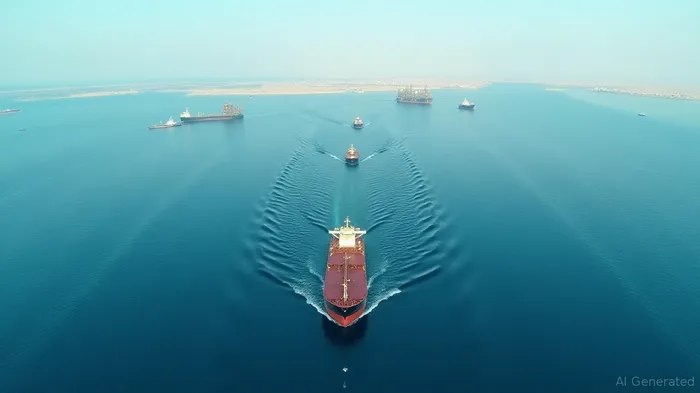
The price drop reflects a classic market overreaction to headline risk. While the ceasefire reduced immediate fears of a Strait of Hormuz blockade, it hasn't eliminated geopolitical instability. Iran's parliament still threatens to close the strait, which handles 20% of global oil trade. Even a symbolic missile strike on a U.S. base in Qatar—like the one launched this month—could reignite supply fears.
Analysts at Swissquote Bank noted the $65 level as a critical test, but this ignores two key realities. First, OPEC+ has no intention of flooding the market. Their June decision to maintain production at current levels—despite unwinding 411,000 b/d of voluntary cuts—shows deliberate restraint. Second, the U.S.-Iran nuclear talks remain deadlocked, with Tehran demanding sanctions relief before resuming uranium enrichment monitoring. Any misstep there could reignite tensions.
Long-Term Fundamentals: Supply Constraints and OPEC+ Discipline
The real story is the structural imbalance between global oil demand and sustainable supply. OPEC+'s spare production capacity has dwindled to just 5.4 million b/d—a figure that excludes exempted producers like Iran and Venezuela. Meanwhile, the IEA reports global inventories remain 90 million barrels below their five-year average. Even as OPEC+ unwinds cuts, their “flexibility” means output hikes can be paused at any time—a check on oversupply.
Russia's own production constraints amplify this tightness. Despite sanctions, Moscow's crude exports dropped 230,000 b/d in May due to falling prices and logistical bottlenecks. And U.S. shale producers, hamstrung by ESG pressures and low drilling budgets, can't make up the gapGAP--. The IEA forecasts non-OPEC supply growth will slow to 840,000 b/d in 2026—a far cry from the 2 million b/d needed to meet demand.
Technical Levels and Strategic Entry Points
The $65–68 zone isn't just a random number. This range represents:- Psychological support: The pre-war average before Israel's June 13 strikes- OPEC+ floor: The level at which producers would likely pause output increases- Cost breakeven: Below $65, most U.S. shale operators face negative free cash flow
Investors should view dips below $68 as buying opportunities. A breach of $65 would likely trigger panic buying, as it did in February 2023. For long-term exposure, consider:1. ETFs: The United States Oil Fund (USO) tracks WTIWTI-- prices with minimal tracking error2. OPEC+ producers: National Oilwell Varco (NOV) and SchlumbergerSLB-- (SLB) benefit from rig count stability3. Geopolitical plays: Chevron (CVX) and ExxonMobil (XOM), which maintain diversified Middle East assets
Risks and Caution Flags
No investment is risk-free. A durable Iran-U.S. nuclear deal could ease sanctions on Iranian exports, adding 1 million b/d to global supply. Similarly, a full-scale global recession—unlikely but possible—could collapse demand. Monitor these risks via two key indicators:1. Strait of Hormuz traffic: A sustained rise in tanker transits signals stability2. Chinese refining margins: Narrowing spreads (below $3/bbl) indicate demand weakness
Final Takeaway: Buy the Dips, Hedge the Risks
The oil market's current panic over a fragile ceasefire is overdone. With OPEC+ keeping a lid on supply and geopolitical tinderboxes still smoldering, the $65–68 zone offers a compelling entry for energy exposure. Pair long positions with options—like put spreads on USO—to protect against a deeper correction. The long-term fundamentals are too strong to ignore.
As one analyst put it: “You don't need a war to justify $80 oil—you just need a Strait of Hormuz.” The truce may have calmed the headlines, but the market's underlying tension remains—and that's where the profit lies.





Comentarios
Aún no hay comentarios