
OPEC+ Production Decisions and Global Energy Market Stability: Strategic Implications for Energy Equities and Commodities Traders
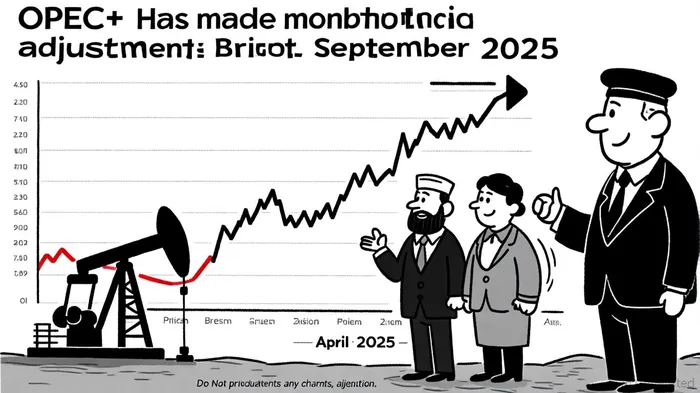
OPEC+'s 2025 production decisions have sent shockwaves through global energy markets, reshaping the landscape for energy equities and commodities traders. The group's strategic pivot from price defense to market share capture-exemplified by its aggressive unwinding of voluntary production cuts-has created a volatile environment where investors must navigate both opportunity and risk. Let's break down the implications.
1. OPEC+'s Gradual Unwinding of Cuts: A Double-Edged Sword
In June 2025, OPEC+ agreed to increase output by 411,000 barrels per day (bpd), marking the second consecutive month of accelerated production after a 2.2 million bpd voluntary cut in April (the S&P Global report cited above). By September, the group had fully reversed these cuts, adding 4 million bpd to global inventories (a CNBC report noted the accelerated hikes). This strategy, framed as a bid to reclaim market share from U.S. shale producers and respond to President Trump's calls for lower energy prices, has stabilized prices in the $65–$68 range for Brent crude (the Reuters report referenced earlier). However, the move has also exposed vulnerabilities: non-OPEC+ production from the U.S., Brazil, and Argentina is projected to outpace demand growth, creating downward pressure on prices (the Dallas Fed report flagged these supply concerns).
For energy equities, this dynamic is a mixed bag. Upstream producers like OccidentalOXY-- (OXY) and ConocoPhillipsCOP-- (COP) face margin compression as oil prices stagnate. The Dallas Fed's Energy Indicators report notes that 70% of energy executives believe $60/bbl WTI is too low to justify new drilling, signaling potential production plateaus in 2026. Conversely, downstream players-refiners and airlines-could benefit from cheaper feedstock and fuel costs (as documented in the S&P Global coverage referenced above).
2. Energy ETFs and the Bear Market in Oil
The surge in OPEC+ supply has battered energy ETFs. The United States Oil Fund (USO) has plummeted nearly 9% year-to-date, while the Energy Select Sector SPDR Fund (XLE) is down 3.5% in 2025 (OPEC's own recent press release provided context on production shifts). This underperformance reflects a broader bearish sentiment. Traders are increasingly hedging with downside options, with volatility indices and the Skew Ratio pointing to a high probability of further price declines (the Dallas Fed report highlights elevated volatility metrics). For example, the CBOE's Crude Oil Volatility Index (OVX) has spiked to multi-year highs, indicating a flight to safety (again, as the Dallas Fed notes).
Investors should also watch the debt burdens of upstream producers. With oil prices near breakeven for many shale operators, companies like Devon EnergyDVN-- (DVN) and Marathon Oil (MRO) could face liquidity crunches if prices dip below $60/bbl (the Reuters coverage cited above). This makes energy stocks a high-risk, high-reward proposition-ideal for aggressive traders but perilous for long-term holders.
Historical backtesting of RSI-oversold entries in energy ETFs from 2022 to 2025 reveals mixed outcomes. While XLE's RSI-oversold entries produced a solid compounded return, outperforming both USO and a buy-and-hold benchmark, USO's signals delivered a small negative total return-the backtest results provide the data and methodology. Both ETFs exhibited significant drawdowns, underscoring that a 30-day holding period alone does not fully mitigate downside risk-supplementary stop-loss or profit-target rules could improve risk-adjusted performance.
3. Commodities Trading Strategies: Flexibility Over Certainty
OPEC+'s emphasis on flexibility-allowing pauses or reversals in production adjustments-has created a chessboard for commodities traders. The group's October 2025 decision to implement a 137,000 bpd increase from its 1.65 million bpd voluntary adjustments was highlighted in OPEC's press communications. Traders are now favoring options-based strategies to capitalize on short-term volatility. For instance, bear call spreads and protective puts have gained popularity as hedging tools (the Dallas Fed indicators point to increased use of options hedges).
Technical indicators also suggest a bearish outlook. WTI crude's daily and weekly charts show key support levels breaking, with the Relative Strength Index (RSI) in oversold territory-a classic setup for further declines (the Dallas Fed analysis informs these technical observations). However, geopolitical risks, such as potential U.S. sanctions on Iran or Middle East tensions, could disrupt this trajectory (the Reuters report discussed geopolitical upside risks). Traders must balance these macro risks with OPEC+'s stated commitment to market stability.
4. The Road Ahead: Balancing Act for OPEC+
OPEC+'s next moves will hinge on two factors: global demand resilience and non-OPEC+ supply growth. While the group's monthly meetings aim to ensure compliance with the Declaration of Cooperation (see OPEC's press release), its ability to counter U.S. shale's cost advantages remains uncertain. Saudi Arabia's push for a November 2025 output hike, as noted in Reuters coverage, signals a willingness to prioritize market share over price, but this could backfire if it triggers a price war.
For investors, the takeaway is clear: energy equities and commodities are in a transitional phase. Energy stocks with strong balance sheets (e.g., ExxonMobil, Chevron) may outperform, while ETFs and futures traders should prioritize short-term volatility plays. As OPEC+ navigates this delicate balancing act, staying nimble will be key.







Comentarios
Aún no hay comentarios