
OPEC+ Policy Adjustments and Oil Price Volatility: A NYMEX Crude Futures Perspective
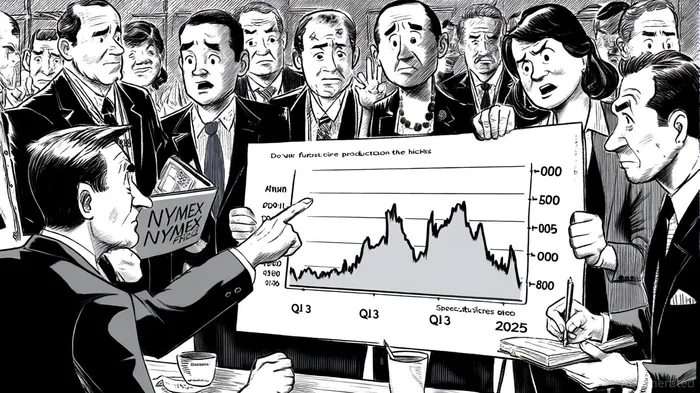
The Organization of the Petroleum Exporting Countries and its allies (OPEC+) have once again reshaped the global oil market with a series of production adjustments in late 2025. These decisions, aimed at regaining market share from U.S. shale producers and addressing concerns over a potential supply glut, have triggered significant volatility in NYMEX crude futures. As the group unwinds voluntary production cuts implemented since 2023, the interplay between OPEC+ policy, speculative investor behavior, and macroeconomic factors has created a complex landscape for oil traders and investors.
OPEC+ Policy Adjustments: A Strategic Shift Toward Volume Growth
In October 2025, OPEC+ announced a production increase of 137,000 barrels per day (bpd), marking the second tranche of a broader strategy to unwind 1.65 million bpd of voluntary cuts, according to an Emirates247 report. This decision, part of a phased approach to restore output by September 2026, reflects a strategic pivot from price defense to volume growth. The group cited a "steady global economic outlook" and "healthy market fundamentals" as justification, particularly noting low oil inventories, according to OPEC. However, the market's reaction was mixed: while Brent crude and West Texas Intermediate (WTI) prices initially rose, they subsequently fell by 8.1% and 7.4%, respectively, as traders anticipated oversupply risks, CNBC reported.
The U.S. Energy Information Administration (EIA) forecasts that OPEC+ production will increase by 0.6 million bpd in 2025 and 0.5 million bpd in 2026, a gradual but deliberate move to stabilize prices while countering non-OPEC competition, in its Short-Term Energy Outlook. This cautious approach underscores the group's balancing act: too rapid an increase risks price collapses, while too slow a response allows rivals like U.S. shale producers to gain ground.
NYMEX Crude Futures: A Barometer of Market Sentiment
NYMEX crude futures have emerged as a critical barometer for gauging investor sentiment in the oil market. In Q3 2025, the market exhibited bearish tendencies, with the October WTIWTI-- contract trading lower as participants priced in the likelihood of OPEC+ unwinding its second layer of output cuts, as Morningstar noted. The EIA's analysis further reinforced this bearish bias, projecting growing global oil inventories that could exert downward pressure on prices in its Today in Energy post.
The volatility in NYMEX futures is not merely a reflection of OPEC+ policy but also a response to broader uncertainties. For instance, geopolitical tensions-such as Israel-Iran clashes and Ukraine's attacks on Russian oil infrastructure-have introduced additional layers of risk, complicating forecasts for crude flows and refining margins, as InvestingLive reported. Meanwhile, China's crude stockpiling activities, which absorbed approximately 500,000 bpd of surplus supply, have provided temporary stability to prices, Reuters reported.
Investor Positioning: CFTC COT Reports Reveal Speculative Shifts
The CFTC's Commitments of Traders (COT) reports offer a window into speculative positioning in NYMEX crude futures. While specific Q3 2025 data is not fully detailed in the provided sources, the general trend indicates a shift in non-commercial (speculative) positions. Large traders, including hedge funds and institutional investors, have increasingly adopted bearish stances as OPEC+ production hikes and inventory builds loom on the horizon, according to a Market-Bulls COT report.
For example, the COT report for NYMEX crude futures typically categorizes traders into commercial, non-commercial, and non-reportable groups. Non-commercial positions, which reflect speculative bets, are calculated as the difference between long and short positions. A significant net long position suggests bullish sentiment, while a net short position indicates bearish expectations, as the CFTC explains. In Q3 2025, the unwinding of OPEC+ cuts and the potential for a 500,000 bpd production increase in November 2025 likely prompted speculative traders to reduce long positions and increase short exposure, as Nexanteca reported.
Geopolitical and Economic Uncertainties: Compounding Volatility
The oil market's volatility is further amplified by external factors. The U.S. government shutdown in late 2025, for instance, disrupted economic data releases, heightening uncertainty about global demand, Reuters reported. Similarly, the resumption of Kurdish oil exports added 230,000 bpd to global supplies, reinforcing bearish sentiment, according to DiscoveryAlert. Russia's ability to maintain high crude exports despite sanctions also underscores the limited impact of Western policies on oil revenues, complicating OPEC+'s market management efforts, per a DiscoveryAlert analysis.
Conclusion: Navigating a Volatile Landscape
OPEC+'s production adjustments in 2025 have undeniably influenced oil price volatility, with NYMEX crude futures serving as a key indicator of market sentiment. While the group's phased approach to unwinding cuts aims to avoid sudden price shocks, the interplay of speculative positioning, geopolitical risks, and inventory dynamics has created a volatile environment. For investors, the challenge lies in balancing exposure to short-term price swings with long-term strategic considerations. As OPEC+ continues to adapt to evolving market conditions, the NYMEX futures market will remain a critical barometer for assessing the group's impact on global oil markets.





Comentarios
Aún no hay comentarios