
OPEC+'s Output Hikes: A Recipe for Oil's Downward Spiral or a Strategic Play for Market Dominance?
The oil market is at a crossroads. OPEC+ has embarked on an aggressive strategy to unwind its production cuts, accelerating supply additions just as geopolitical tensions and U.S. tariff threats loom large. This move could either be a masterstroke to reclaim market share or a reckless gamble that sends prices spiraling downward. For investors, the calculus is stark: short-term volatility offers tactical opportunities, but the long-term trajectory hinges on demand resilience and policy outcomes.
The Strategic Gamble: OPEC+'s Supply Surge
In July 2025, OPEC+ announced a 411,000 b/d production increase, followed by an even larger 548,000 b/d hike in August—moves designed to unwind 2.2 million b/d of voluntary cuts faster than planned. The goal is clear: outcompete U.S. shale producers and regain market share. But this strategy risks oversupply. With global oil demand projected to grow just 2.5 mb/d by 2030, OPEC+'s surge may flood markets, especially post-summer demand peaks.
The Tariff Wildcard: July 9 Deadline
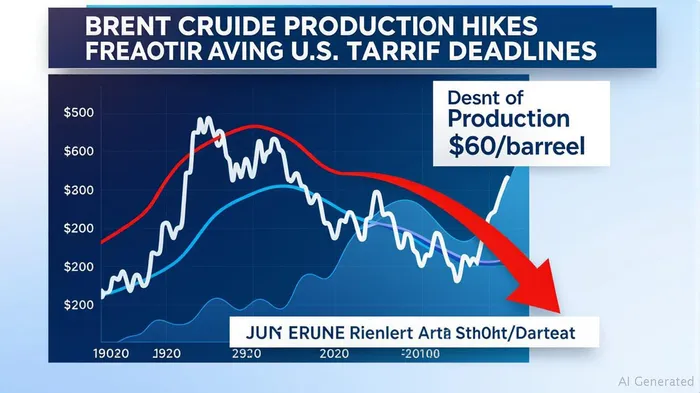
The U.S. tariffs on imports from OPEC+ nations—set to take effect on July 9—add another layer of uncertainty. Countries like Saudi Arabia, Iraq, and Algeria face tariffs as high as 39%, while those importing Iranian or Russian oil could face secondary penalties. These tariffs could slash demand for OPEC+ crude, further depressing prices. Goldman SachsGS-- warns that Brent could dip below $60/barrel if the tariffs trigger a demand shock.
Demand's Fragile Balance
Summer demand has historically buoyed prices, but this year's backdrop is precarious. While U.S. travel hit record highs, the real test comes after the peak. Geopolitical risks—such as escalating Israel-Iran tensions—could disrupt supply, but OPEC+'s overhang may outweigh those fears. Meanwhile, U.S. shale producers, already reeling from ethane export bans to China, face a reckoning if prices stay below $60.
Tactical Plays for Energy Investors
- Short Pure-Play E&Ps: Companies like Pioneer Natural Resources (PXD) and Diamondback EnergyFANG-- (FANG) are vulnerable to price declines. Their high-cost structures and debt-laden balance sheets make them prime candidates for shorting.
- Favor Integrated Majors: Exxon MobilXOM-- (XOM) and ChevronCVX-- (CVX) benefit from refining and midstream assets that profit from lower crude prices. Their diversified cash flows provide stability amid volatility.
- Hedge with Refiners: Refiners like Marathon PetroleumMPC-- (MPC) thrive when crude is cheap and gasoline prices stay high. Their margins expand as the “crack spread” (price difference between refined products and crude) widens.
- Consider Midstream Plays: Pipeline operators such as Enterprise Products PartnersEPD-- (EPD) offer steady dividends and are less exposed to oil price swings.
The Bottom Line
OPEC+'s gamble is a double-edged sword. While the short-term supply surge may create a bullish illusion, the long-term risk of an oversupplied market and U.S. tariffs could cement a bearish reality. Investors should stay nimble: capitalize on near-term dips with shorts and refiners, but position for a potential rebound if geopolitical risks dominate. The July 9 tariff deadline and summer demand data will be pivotal—watch them closely.
In this volatile landscape, the old adage holds: “Oil is a commodity, but it's traded as a currency.” For now, the market is betting on oversupply—and investors would be wise to align their portfolios accordingly.





Comentarios
Aún no hay comentarios