
OPEC+'s Output Hike and Geopolitical Risks: A Reassessment of Oil Market Dynamics
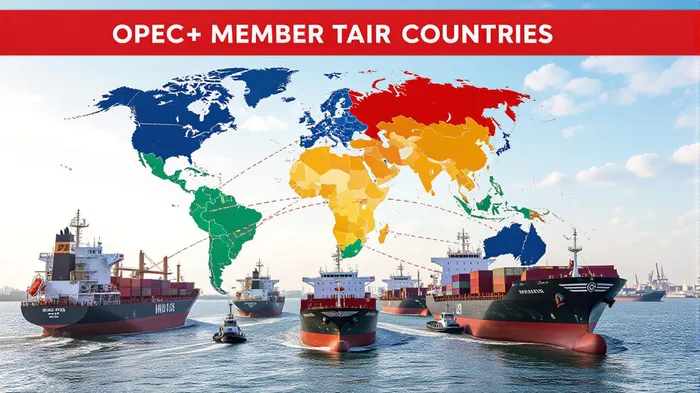
The global oil market in 2025 is navigating a complex web of OPEC+ strategic recalibration, U.S.-India-Russia trade frictions, and shifting energy dependencies. OPEC+'s decision to incrementally increase production by 411,000 barrels per day (b/d) in June and July 2025—accelerating its 18-month plan to unwind 2.2 million b/d of voluntary cuts—has sent ripples through an already volatile landscape. This move, coupled with escalating trade tensions between the U.S., India, and Russia, is reshaping supply-demand imbalances and creating new risks for investors.
OPEC+'s Strategic Gambit: Balancing Market Share and Stability
OPEC+'s phased output hike reflects a delicate balancing act. By gradually restoring production to pre-2023 levels, the group aims to counter non-OPEC+ gains, particularly from U.S. shale and Brazilian offshore projects, which are projected to add 800,000 b/d in 2025. Saudi Arabia, the de facto leader of the coalition, has been instrumental in pushing for faster unwinding of cuts, driven by its need to reclaim market share and stabilize internal cohesion. However, the group's flexibility to pause or reverse increases—dependent on market conditions—introduces uncertainty.
The UAE's quota increase of 300,000 b/d, phased in from April 2025 to September 2026, highlights regional fissures. While the UAE defends its overproduction as a response to price competitiveness, Saudi Arabia has pressured members to compensate for excess output since January 2024. This tension underscores the fragility of OPEC+'s collective strategy, where economic self-interest often clashes with collective goals. For investors, the risk lies in divergent member actions destabilizing coordinated output adjustments.
U.S.-India-Russia Trade Tensions: A Geopolitical Wild Card
The U.S. imposition of a 25% tariff on Indian goods in response to New Delhi's continued Russian oil imports has injected further volatility. While India maintains that its purchases are driven by market fundamentals—Russian crude is 20-30% cheaper than alternatives—the U.S. frames this as a breach of its Ukraine-related sanctions. This standoff has elevated geopolitical risks, with India's 70% share of Russian crude exports in 2024 making it a pivotal player.
India's defiance of U.S. pressure signals a broader realignment. By leveraging its role as Russia's top oil buyer, India is asserting economic autonomy while mitigating energy costs for its rapidly growing economy. However, this strategy risks alienating U.S. allies and could trigger retaliatory measures, such as sanctions on Indian energy infrastructure. For investors, the potential for supply shocks—should U.S. pressure force India to curtail Russian oil—poses a tail risk of $100–120/bbl prices, with cascading effects on inflation and equity markets.
Investment Implications: Navigating Uncertainty
The interplay of OPEC+ output adjustments and geopolitical tensions creates a dual-edged sword for investors. On one hand, OPEC+'s production hikes could temper prices, with Brent crude currently trading near $70/bbl. On the other, U.S.-India-Russia tensions threaten to disrupt supply chains, creating asymmetrical risks.
1. Energy Producers and Refiners:
- OPEC+ Exports: Companies like Saudi Aramco and Rosneft are positioned to benefit from production increases but face margin compression if prices fall below $70/bbl. Investors should monitor compliance with compensation plans and internal OPEC+ disputes.
- Indian Refiners: Entities such as Reliance Industries, which rely on Russian crude, may see short-term cost advantages but face regulatory risks. Diversifying crude sources or hedging against sanctions could mitigate exposure.
2. Equity Markets:
Asian markets, particularly India's Nifty 50, are vulnerable to trade disruptions. A 10% decline in Russian oil imports could shave 0.5% off India's GDP growth, amplifying equity volatility. Investors should overweight energy-linked sectors in OPEC+ nations while hedging against geopolitical shocks.
3. Alternative Energy Exposure:
The push for energy security may accelerate investments in renewables. Companies in solar, hydrogen, and battery storage could gain long-term traction as oil volatility persists.
Strategic Positioning: A Call for Prudence
For investors, the key is to balance exposure to short-term market dynamics and long-term structural shifts. Here's a roadmap:
- Short-Term: Hedge against geopolitical risks by diversifying energy portfolios. Consider short positions in Brent crude if OPEC+ overcorrects, but maintain a floor at $65/bbl.
- Mid-Term: Monitor OPEC+ compliance and U.S.-India-Russia negotiations. A resolution easing tensions could unlock $75–$80/bbl price levels.
- Long-Term: Prioritize energy transition plays. The volatility of 2025 underscores the inevitability of decarbonization, with green hydrogen and battery tech offering asymmetric upside.
In conclusion, the oil market in 2025 is a theater of strategic recalibration and geopolitical brinkmanship. OPEC+'s output hike and the U.S.-India-Russia standoff are not isolated events but interconnected forces reshaping energy geopolitics. Investors who navigate this landscape with agility and foresight will find opportunities amid the chaos.







Comentarios
Aún no hay comentarios