
OPEC vs. IEA Outlook Divergence in the Oil Market: Assessing the Investment Implications of a Balanced vs. Glut-Driven 2026
The global oil market in 2026 hangs in a precarious balance between two competing narratives: OPEC's cautiously optimistic forecast of a near-equilibrium supply-demand dynamic and the International Energy Agency's (IEA) stark warning of a looming surplus. This divergence, the largest in over two decades, has profound implications for energy investors, who must navigate conflicting signals to allocate capital effectively.
OPEC's Bullish Case: A Balanced Market
, according to Reuters. The organization attributes this optimism to sustained demand growth in emerging markets, particularly China and India, which are expected to drive a 1.4 million bpd increase in global oil demand. OPEC+ members, including Saudi Arabia and the UAE, , signaling confidence in market stability as data shows.
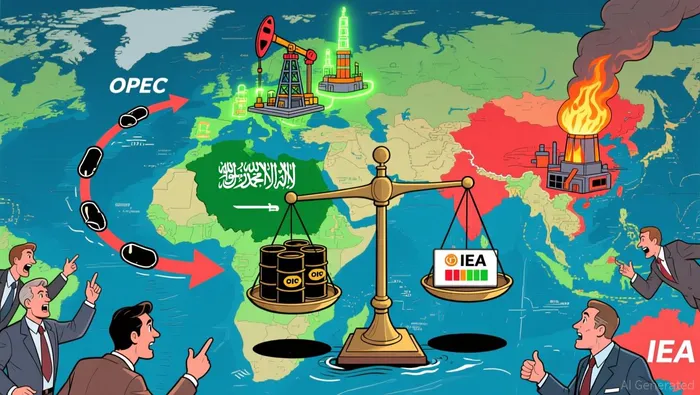 This outlook aligns with OPEC's historical role as a stabilizer, prioritizing price resilience over aggressive production cuts. For investors, a balanced market implies continued demand for oil infrastructure and exploration, particularly in regions with untapped reserves. However, OPEC's forecasts have historically overestimated demand growth, raising questions about the accuracy of its assumptions.
IEA's Bearish Case: A Surplus-Driven Downturn
In contrast, , driven by robust supply growth from non-OPEC+ producers like the U.S., Brazil, and Canada, to global output. The agency also highlights weaker-than-expected demand in key emerging markets and structural challenges, according to IEA commentary. This surplus, the IEA warns, could lead to falling prices and inventory buildups, pressuring energy equities and commodities.







Comentarios
Aún no hay comentarios