
OPEC+ Chaos and Trade Wars Fuel Oil's Sharpest Drop Since 2021
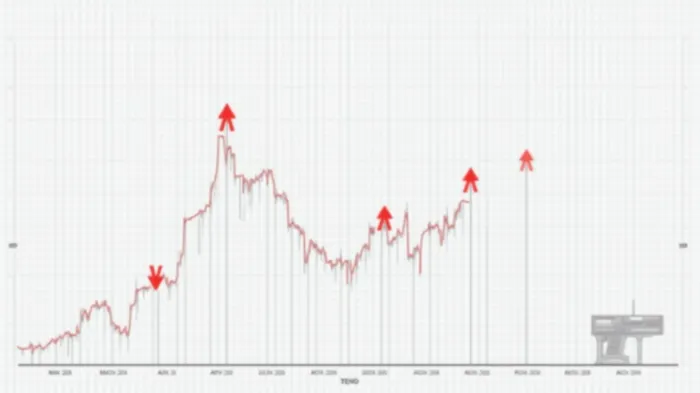
The global crude oil market is witnessing its most dramatic price collapse in over four years, with Brent prices plummeting to under $60 per barrel in early April 2025—the lowest since early 2021. This historic decline, driven by a toxic mix of escalating trade tensions, OPEC+ policy missteps, and structural demand weakness, has sent shockwaves through energy equities and commodity-dependent economies.
The Perfect Storm for Oil Prices
The April 2025 decline marks the largest monthly price collapse since the post-pandemic crash of April 2020. Key catalysts include:
1. Trade Policy Shock: U.S. tariffs on $200 billion of Chinese goods and retaliatory measures from Beijing slashed global GDP growth forecasts by 0.5%, with the IEA revising 2025 oil demand growth down by 400,000 barrels per day (kb/d).
2. OPEC+ Supply Surprise: Eight members accelerated production cuts unwinding by 411 kb/d for May, but overcompliance from nations like Kazakhstan (overproducing 390 kb/d) and Iraq (440 kb/d excess) worsened oversupply fears.
3. Chinese Refinery Glut: Record inventories (three-year highs) and 2.5 mb/d refinery overcapacity stifled demand from the world’s largest oil importer.
Historical Context: How Bad Is This Drop?
The $15/barrel plunge from mid-March to April’s trough exceeds declines seen in late 2023 or early 2024. Comparisons to prior periods:
- March 2025: Prices fell ~$10/barrel but stabilized at $70–$75/b.
- April 2022: A $10/b decline from $112/b (peak) to $102/b was less severe.
- April 2020: The pandemic crash saw prices drop $30/b in a month, but today’s fundamentals lack the extreme supply shutdowns of that period.
Winners and Losers in the Oil Rout
- Loser: U.S. shale producers face existential pressure. The Dallas Fed survey shows a $65/b break-even point for new drilling—now at the bottom of the price range. Stocks like XOM (ExxonMobil) and CVX (Chevron) have declined ~15% YTD as margins compress.
- Winner: Asian refiners (e.g., PTT.BK in Thailand) benefit from discounted crude, though Chinese refining margins hit 2020 lows due to oversupply.
- Neutral: OPEC+ members like Saudi Arabia (still compliant) maintain fiscal breakevens at $65–$75/b—now at risk.
The "Wobbly Smile" Forward Curve
The futures market’s unusual structure in April 2025—near-term prices ($65/b) and long-term prices ($70/b) exceeding mid-term prices ($63/b)—reflects extreme uncertainty. This "smile" signals:
- Short-term oversupply fears from OPEC+ overproduction and U.S. shale resilience.
- Long-term anxiety over energy transition policies and underinvestment in new projects.
Investment Implications
- Short-Term Plays: Consider inverse oil ETFs like DTO (3x short exposure) or SCO (short crude oil futures) for near-term volatility.
- Long-Term Value: Oil majors with low-cost production (e.g., RDSA (Shell) at $20/b breakeven) may outperform if prices stabilize above $65/b.
- Geopolitical Hedge: Gold miners like GOLD (Sprott Physical Gold Trust) could benefit from dollar weakness if oil-driven inflation expectations falter.
Conclusion: A New Era of Volatility
The April 2025 oil price collapse—driven by trade wars, OPEC+ dysfunction, and China’s demand slump—has shattered the stability of the past two years. With prices now at four-year lows and the market’s "wobbly smile" signaling deep uncertainty, investors should prepare for prolonged volatility.
Key data points underscore the shift:
- Price Drop: Brent fell 14% in five days (April 2–7), the fastest decline since 2020.
- Supply Overhang: Global inventories are now 250 mb above the five-year average.
- Demand Risks: 2025 global oil demand growth is now projected at just 730 kb/d vs. 1.2 mb/d earlier this year.
For investors, this is a bifurcated market: short-term opportunities in inverse funds, but long-term caution until geopolitical tensions ease and OPEC+ regains control. The era of $80+ oil may be over—for now.







Comentarios
Aún no hay comentarios