
OPEC+ Boosts Oil Output: Market Impact and Geopolitical Risks
Generado por agente de IACyrus Cole
sábado, 5 de abril de 2025, 6:43 am ET3 min de lectura
The Organization of the Petroleum Exporting Countries and its allies (OPEC+) have announced a significant increase in oil output, set to take effect in May 2025. This decision, which involves an additional 411,000 barrels per day, has sent shockwaves through the global energy market, raising questions about its short-term and long-term impacts on oil prices and market stability.
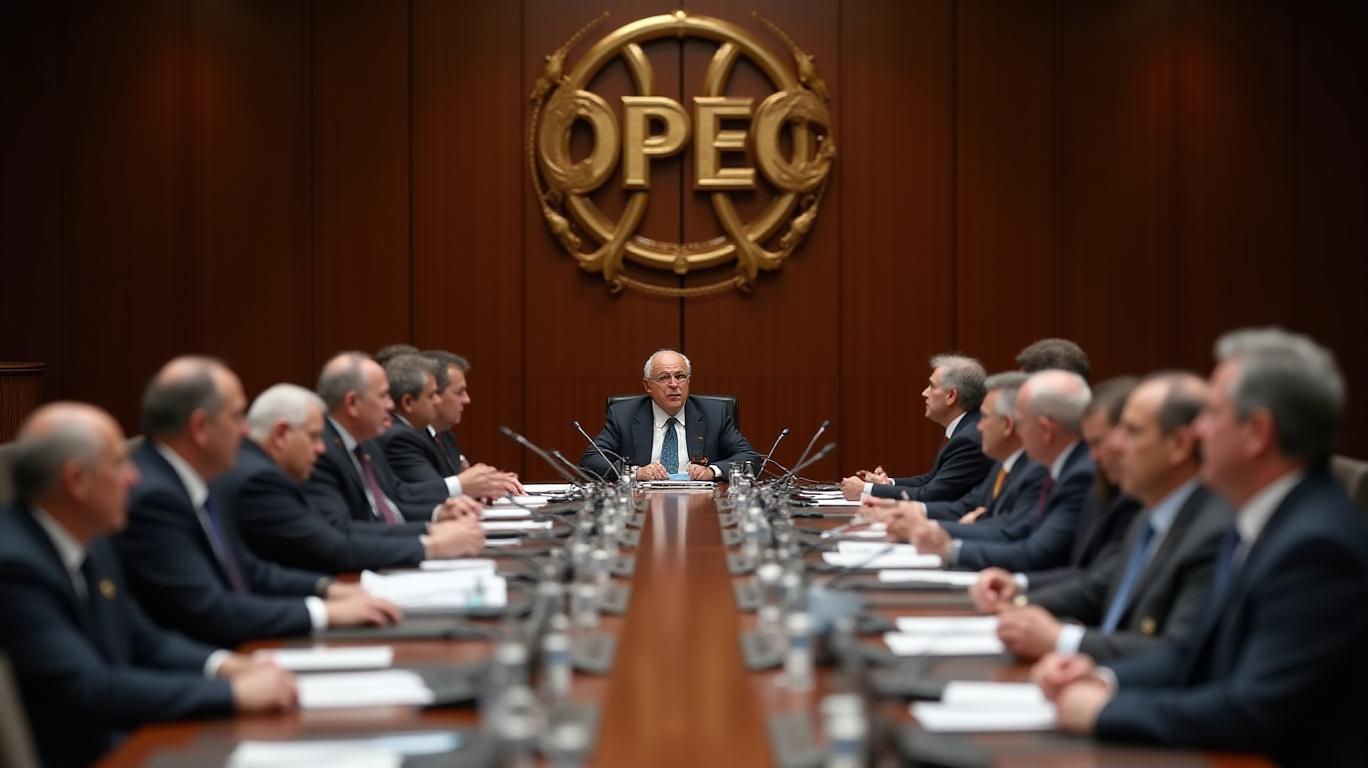
The decision to ramp up production comes at a time when the global economy is already grappling with the fallout from President Trump’s “Liberation Day” tariff announcement. The tariffs, which have rattled financial markets, have exacerbated the sell-off in energy markets, with Brent futures falling 6.42% to $70.14 per barrel and West Texas Intermediate (WTI) declining 6.64% to $66.95 per barrel on April 3, 2025. The increase in output by OPEC+ members, which was well above market expectations of 140,000 barrels per day, has further driven down crude prices, erasing all the geopolitical risk-driven gains since the US struck Houthi militants in mid-March.
The OPEC+ decision to increase oil output by 411,000 barrels per day in May is expected to have significant impacts on global oil prices and market stability in both the short and long term. In the short term, the decision has already led to a sharp decline in oil prices. On April 3, 2025, Brent futures fell 6.42% to $70.14 per barrel, while West Texas Intermediate (WTI) declined 6.64% to $66.95 per barrel. This drop erased all the geopolitical risk-driven gains since the US struck Houthi militants in mid-March. The increase in output was well above market expectations of 140,000 barrels per day, exacerbating the sell-off in energy markets. The decision by eight OPEC members to raise output exacerbated the fragile sentiment, driving crude prices lower. Notably, the White House confirmed that oil, gas, and refined products were exempt from the new tariffs, which means the impact on prices is purely due to the supply increase.
In the long term, the impact on oil prices and market stability will depend on various factors, including global demand, geopolitical tensions, and the actions of other oil-producing countries. OPEC+ has stated that the gradual increases may be paused or reversed subject to evolving market conditions, indicating a degree of flexibility in their approach. This flexibility will allow the group to continue to support oil market stability. However, the decision to accelerate production hikes in May could lead to an oversupply of oil in the market, potentially driving prices down further in the long term.
The decision to increase output by 411,000 barrels per day in May is also likely to have implications for the compensation requirements of some OPEC+ members. Some members are required to reduce supplies to compensate for overproduction compared to their output targets, totalling 4.2 million barrels per day. Kazakhstan, the United Arab Emirates, Nigeria, and Gabon have been identified as countries exceeding their output targets in recent months. The decision to accelerate production hikes in May could provide an opportunity for these countries to accelerate their compensation, potentially leading to further increases in global oil supply.
President Trump's tariff threats on key OPEC+ members, including Russia, Iran, and Venezuela, have significant geopolitical implications that could affect global oil supply and demand dynamics in several ways. Firstly, Trump imposed 25% tariffs on countries importing Venezuelan oil, effective this week. Last week, he also threatened to impose tariffs of 25% to 50% on Russia’s oil buyers and warned of “bombing” and the implementation of “secondary tariffs” on Iran. These “secondary tariffs” represent a new form of sanction through import levies, with China and India—major buyers of oil from these countries—likely to be significantly affected. Potential reductions in Venezuelan and Iranian oil exports could be material to global supply. According to the US Energy Information Administration (EIA), Iran’s oil output has been rising since 2022, currently reaching 1.5 million barrels per day, equivalent to 1.4% of global production. According to OPEC’s secondary sources, Venezuela’s production hit 900,000 barrels per day in the first quarter of 2025, with exports to the US reaching 250,000 barrels per day in January. Reuters reported that Venezuelan crude and fuel exports fell 11.5% in March compared to February, largely due to the latest US sanctions. These tariffs and sanctions could lead to a reduction in oil exports from these countries, potentially offsetting the planned output increases by other OPEC+ members. This could create a supply shortage, driving up oil prices despite the increased production by other OPEC+ countries.
Secondly, the tariff threats could also lead to retaliatory measures from the affected countries, further escalating geopolitical tensions. For instance, Russia and Iran could respond by reducing their oil exports to the US or its allies, or by increasing their support for anti-US groups in the Middle East. This could lead to further instability in the region, affecting oil supply and demand dynamics. Additionally, the tariffs could also lead to a reduction in global trade, affecting economic growth and, consequently, oil demand. For example, the tariffs could lead to a reduction in US imports from China and India, affecting their economic growth and, consequently, their oil demand. This could lead to a reduction in global oil demand, affecting oil prices.
In conclusion, the OPEC+ decision to increase oil output by 411,000 barrels per day in May is likely to have a significant impact on global oil prices and market stability in both the short and long term. The decision has already led to a sharp decline in oil prices in the short term, and the long-term impact will depend on various factors, including global demand, geopolitical tensions, and the actions of other oil-producing countries. President Trump's tariff threats on key OPEC+ members have significant geopolitical implications that could affect global oil supply and demand dynamics. The tariffs could lead to a reduction in oil exports from the affected countries, potentially offsetting the planned output increases by other OPEC+ members. Additionally, the tariffs could also lead to retaliatory measures from the affected countries, further escalating geopolitical tensions and affecting oil supply and demand dynamics.



Divulgación editorial y transparencia de la IA: Ainvest News utiliza tecnología avanzada de Modelos de Lenguaje Largo (LLM) para sintetizar y analizar datos de mercado en tiempo real. Para garantizar los más altos estándares de integridad, cada artículo se somete a un riguroso proceso de verificación con participación humana.
Mientras la IA asiste en el procesamiento de datos y la redacción inicial, un miembro editorial profesional de Ainvest revisa, verifica y aprueba de forma independiente todo el contenido para garantizar su precisión y cumplimiento con los estándares editoriales de Ainvest Fintech Inc. Esta supervisión humana está diseñada para mitigar las alucinaciones de la IA y garantizar el contexto financiero.
Advertencia sobre inversiones: Este contenido se proporciona únicamente con fines informativos y no constituye asesoramiento profesional de inversión, legal o financiero. Los mercados conllevan riesgos inherentes. Se recomienda a los usuarios que realicen una investigación independiente o consulten a un asesor financiero certificado antes de tomar cualquier decisión. Ainvest Fintech Inc. se exime de toda responsabilidad por las acciones tomadas con base en esta información. ¿Encontró un error? Reportar un problema




Comentarios
Aún no hay comentarios