
Oneok's 2025 Collapse: A Tactical Setup for a 2026 Re-Rating
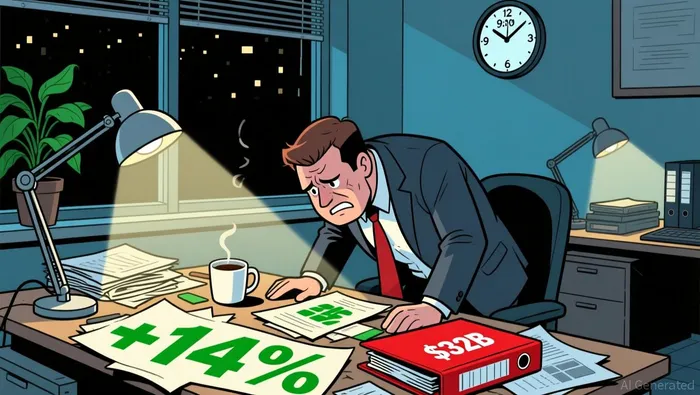
Oneok's 2025 collapse was a classic case of a stock getting punished for the wrong reason. The pipeline giant lost 26.8% of its value last year, making it the "caboose of the sector" in a year when energy stocks as a group were up. The sell-off was driven by a specific, addressable catalyst: a massive $32 billion increase in long-term debt from an aggressive acquisition spree. This debt explosion, not a deterioration in its core business, spooked investors and forced a re-rating of the stock.
The key to a tactical setup here is recognizing that the earnings engine remains intact and growing. Nearly 90% of Oneok's earnings are fee-based, and they are expanding. For the nine months ending September 30, 2025, net income surged 14% to $2.4 billion. The problem was the balance sheet, not the cash flows. The market's reaction-writing off the stock as a sector laggard-may have created a mispricing.
The catalyst for a re-rating in 2026 is now in motion. The company is already executing on cost synergies from its mega-deals, with $500 million in cost synergies from Magellan alone projected by year-end. More importantly, the debt overhang is set to ease. Capital expenditures are expected to decline after recent acquisitions, freeing up significant free cash flow. This cash will be directed toward debt repayment, a key priority that can quickly improve the balance sheet and reduce investor anxiety.
The 2026 Cash Flow Engine: Three Specific Catalysts
The path to a re-rating is paved with cash. For OneokOKE--, the immediate catalysts in 2026 are threefold, each designed to directly improve the balance sheet and free up capital for shareholders.
First is the synergy wave. The company is already delivering on integration promises. On its third-quarter 2025 call, Oneok projected $500 million in cost synergies from Magellan alone by the end of 2025. This is not a distant promise; it's a near-term cash flow boost that reduces operating expenses. The market will watch for execution, but the initial target is clear and achievable.
Second is a tax tailwind. Oneok expects a significant reduction in its cash tax burden, with cash tax expenses falling by nearly $1.5 billion over the next five years thanks to tax deductions under a Trump-backed bill. This is a direct, multi-year cash flow enhancement that doesn't require operational change. It provides a predictable boost to free cash flow that can be deployed toward debt reduction.
Third is the capex cliff. Following its aggressive acquisition spree, capital expenditures are set to decline. This is the mechanics of the setup: less spending on growth projects means more cash is available for other uses. The freed-up cash will be directed toward debt repayment-a key priority-and can also support the company's goal to increase its annual dividend payout by 3% to 4% and return 75% to 85% of operating cash flow to shareholders.
Together, these three catalysts create a powerful cash flow engine. They address the core investor anxiety from 2025-the debt overhang-by generating the very cash needed to pay it down. The re-rating isn't speculative; it's a function of these measurable, cash-generating events materializing.
The Setup: High Yield Meets High Risk
The current risk/reward is defined by a high yield acting as a buffer against a volatile path. Oneok's stock now offers a 5.5% yield, and with a stated goal to grow the dividend by 3% to 4% annually, the total return potential if the stock merely holds its ground is a solid 8.5%. That yield is the primary cushion for investors betting on a 2026 re-rating.
Valuation reflects the market's lingering debt concerns. The stock trades near its 52-week low, pricing in continued anxiety over the balance sheet. This creates the mispricing opportunity: the core earnings engine is expanding, but the stock price is being set by fears of the debt overhang. The setup is for a re-rating once the market begins to price in the 2026 cash flow surge.
The key watchpoint is clear. For the yield to remain sustainable and the stock to rally, the market must start to believe that the three specific cash flow catalysts-synergies, tax savings, and declining capex-will materialize as planned. Success hinges on execution and the visibility of that upcoming cash. If the company hits its synergy targets and capex falls as expected, the debt burden will ease, and the stock's valuation can finally catch up to its improving fundamentals. The risk is that these cash flows are delayed or fall short, leaving the high yield as the only return.
Catalysts and Risks: What to Watch
The tactical setup for Oneok hinges on a few near-term events that will confirm or break the thesis. The first major checkpoint is the Q4 2025 earnings report. Investors will scrutinize two things: the progress on the promised $500 million in cost synergies from Magellan and the company's latest debt metrics. Any delay in hitting the synergy target would be a red flag for the cash flow engine. Conversely, a clean report showing debt reduction and synergy execution would validate the 2026 path.
The second key catalyst is the implementation of the 2026 tax bill. The company's projection of a nearly $1.5 billion reduction in cash tax expenses over the next five years is a major tailwind. The market will watch for concrete steps toward realizing these savings, as they directly boost the free cash flow available for debt repayment.
The primary risk is integration. Oneok has grown through back-to-back multibillion-dollar acquisitions, which have added significant scale but also complexity. The risk is that the operational integration of Medallion, Magellan, and EnLink proves more difficult and costly than planned, potentially delaying the $500 million+ synergy target. This would directly undermine the cash flow surge needed to ease the balance sheet.
The guardrail for the investment is clear: monitor debt reduction progress. The $32 billion long-term debt load remains substantial, and the entire re-rating thesis depends on the cash flow from synergies, tax savings, and declining capex being directed toward paying it down. Any sign that debt is not being reduced as expected would reset the valuation and likely keep the stock under pressure.





Comentarios
Aún no hay comentarios