
Olympus' VISERA ELITE III Platform Could Trigger a Moat Extension—But Execution Is Now the Ultimate Catalyst
The central question for any investor is whether a new product can create durable, recurring value. For Olympus, the launch of the VISERA ELITE III platform is a strategic bet on extending its economic moat. The platform's design-software-upgradable, multispecialty, and co-developed with Sony-aims to standardize care and reduce hospital costs, potentially locking customers into a long-term ecosystem. Yet, its ultimate value hinges on execution and, critically, the price paid today for a company whose earnings are still declining.
The current valuation offers a starting point for the margin of safety. Olympus trades at a P/E ratio of 15.92x based on trailing earnings. This multiple is below the peer average and suggests the market is pricing in continued challenges. The need for a catalyst is clear: while the medical equipment industry's earnings grew at an 8.5% annual rate, Olympus's own earnings have been declining at -0.4% annually. The VISERA ELITE III platform is that potential catalyst, designed to convert a one-time capital sale into a more predictable stream of software upgrades and service revenue. The platform's backward compatibility with a large legacy portfolio is a key feature, allowing hospitals to incrementally adopt new capabilities like 3D and infrared imaging via software licensing, minimizing workflow disruption and investment costs.
Viewed through a value lens, the setup is a classic one: a company with a wide moat facing a temporary earnings headwind, now offering a product that could re-accelerate growth. 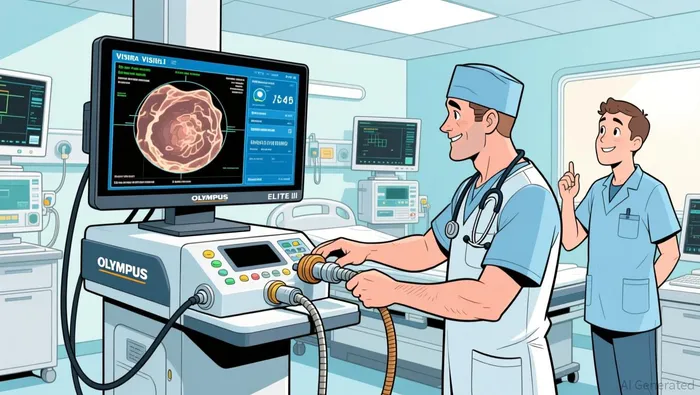 . The platform's multispecialty nature, covering general surgery to ENT, aims to increase the lifetime value of each installed system. The co-development with SonySONY--, a leader in imaging technology, adds credibility to the platform's advanced features like 4K and fluorescence-guided surgery. If Olympus can successfully execute the rollout and convert its vast installed base, the VISERA ELITE III could indeed extend the moat, creating a more durable and recurring revenue stream. The current price, however, leaves little room for error.
Analyzing the Competitive Moat: Installed Base, Compatibility, and Recurring Revenue
The durability of Olympus's competitive position is now being tested. Its historical dominance, with a 70% share of the global endoscope market, is built on a vast installed base of legacy equipment. The VISERA ELITE III platform is a direct response to this reality, designed to lock in that existing customer base through a key differentiator: backward compatibility. By allowing hospitals to integrate the new platform with a large portfolio of prior-generation videoendoscopes, Olympus aims to reduce the total cost of ownership and minimize workflow disruption. This is a classic moat-extension tactic-making it cheaper and easier for a customer to stay within the ecosystem than to switch.
This compatibility is the foundation for a strategic pivot toward recurring revenue. The platform is explicitly described as software-upgradable, enabling hospitals to activate advanced features like 3D and infrared imaging via software licensing. This model converts a one-time capital expenditure into a more predictable stream of service and upgrade fees. The integration of advanced imaging technologies like True 4K and 3D imaging, Yellow Enhancement (YE), and fluorescence-guided surgery is not just about technical prowess; it's about improving clinical outcomes and workflow efficiency. These features aim to support better surgical decisions, potentially leading to shorter procedures and improved patient recovery, which strengthens the value proposition for hospitals.
Yet, the strategic necessity of this platform is underscored by rising competition. While Olympus holds a commanding market share, the landscape is shifting with the encroachment of surgical robotics firms. In this environment, the VISERA ELITE III's multispecialty flexibility becomes critical. Its ability to serve a wide range of disciplines-from general surgery to ENT with a single system-reduces the need for hospitals to manage multiple, siloed platforms. This breadth, combined with backward compatibility, is a defensive moat against competitors who may offer more specialized but less integrated solutions. The platform's launch is less about capturing new market share and more about retaining the existing share by making the current Olympus ecosystem more valuable and harder to leave.
Financial Impact and Management's Turnaround Plan
The financial promise of the VISERA ELITE III platform is now tied to a concrete, two-year operational overhaul. Olympus has unveiled a comprehensive strategy for fiscal years 2026 and 2027, built on three pillars but anchored by a global organizational transformation. The plan's expected financial impact is clear: the company targets approximately 24 billion yen in run-rate savings and a net reduction of roughly 2,000 global positions. This is a classic capital-allocation move-using cost discipline to fund the bold technology investments needed to drive the next growth phase. The savings are meant to be reinvested into innovation, directly supporting the platform's commercialization and the broader shift toward software and services.
Yet, the credibility of this plan is tested by the company's recent financial execution. The announced strategy aims for a 5% year-on-year revenue growth target by fiscal year 2029 and a more than 10% EPS CAGR. These are ambitious goals, especially given the current trajectory. Olympus's earnings have been declining at an average annual rate of -0.4%, a stark contrast to the 8.5% annual growth seen in the broader medical equipment industry. The recent quarterly results underscore this inconsistency. The company delivered a Q3 2026 EPS miss following earlier beats in Q2, creating a pattern of volatility that raises questions about the reliability of its near-term guidance.
The bottom line is that the VISERA ELITE III platform is the catalyst, but the organizational transformation is the vehicle. For the platform's potential to translate into durable value, management must first demonstrate it can execute this cost-saving plan while navigating the current earnings uncertainty. The 24 billion yen in savings provides a tangible buffer and a source of capital, but it must be deployed wisely to accelerate the platform's adoption and convert its technical promise into the recurring revenue stream the strategy envisions. The plan is credible on paper, but its success hinges on overcoming the execution headwinds that have plagued recent quarters.
Valuation, Catalysts, and Key Risks
The investment case for Olympus now hinges on a clear sequence of events. The primary catalyst is the successful commercialization of the VISERA ELITE III platform. This launch is not an isolated product event; it is the linchpin of a two-year turnaround plan. For the thesis to hold, the platform must translate its advanced features-like True 4K and 3D imaging and software-upgradable capabilities-into sustained revenue growth and, eventually, margin expansion. The goal is to convert the company's vast installed base from a source of declining hardware sales into a recurring revenue engine through software licensing and upgrades. If executed, this could justify a re-rating of the current valuation, which sits at a P/E ratio of 15.92x based on trailing earnings.
Yet, the path is fraught with risks. The first is adoption itself. Despite the platform's compelling design, its success depends on hospitals embracing the multispecialty, software-driven model. The platform's 70% share of the global endoscope market is a strength, but it also means the installed base is large and potentially slow to upgrade. The second risk is the effectiveness of management's operational plan. The company has committed to a global transformation aimed at 24 billion yen in run-rate savings and a net reduction of 2,000 global positions. These savings are meant to fund the innovation push, but they must be delivered without damaging the commercial rollout. The recent pattern of volatile quarterly earnings-EPS misses following earlier beats-raises questions about the reliability of near-term execution. Finally, competitive pressure in the MedTech sector is persistent, with the encroachment of surgical robotics firms creating a dynamic landscape where Olympus's multispecialty platform must prove its value proposition is durable.
The critical metric to watch is a reversal in the company's earnings trajectory. The current setup is defined by a stark divergence: Olympus's earnings have been declining at an average annual rate of -0.4%, while the broader medical equipment industry grows at 8.5% annually. For the VISERA ELITE III thesis to be validated, this trend must reverse. Investors should look for a sustained return to growth rates that match or exceed the industry average. This would signal that the platform is successfully extending the economic moat, converting a one-time capital sale into a more predictable stream of software and service revenue. Until that happens, the current price offers a margin of safety, but it is a narrow one, priced for continued challenges. The coming quarters will test whether Olympus can turn its vision into the durable, compounding value that defines a true moat.





Comentarios
Aún no hay comentarios