
Oklo's Strategic Alliances and SMR Innovations: Assessing Long-Term Viability in the Maritime Energy Transition
Oklo Inc. (OKLO) has experienced notable stock price volatility in 2025, driven by a mix of regulatory progress, strategic partnerships, and evolving market dynamics in the (SMR) sector. While the company's core focus remains on land-based SMRs and microreactors for data centers and industrial clients, its indirect involvement in the commercial shipping sector through transatlantic collaborations raises critical questions about the long-term viability of nuclear-powered maritime applications. This analysis evaluates Oklo's positioning in the context of global decarbonization goals and the potential for SMRs to disrupt traditional shipping energy systems.
Strategic Partnerships and Technological Synergies
Oklo's recent partnerships with Blykalla and Newcleo underscore its commitment to accelerating advanced nuclear commercialization. In 2025, OkloOKLO-- co-led a , a Swedish developer of lead-cooled fast reactors (SEALER), to streamline supply chains, share regulatory expertise, and reduce commercialization risks. This collaboration is particularly significant as Blykalla's SEALER reactor has emerged as a leading candidate for maritime propulsion, with ABB and Blykalla jointly advancing plans for nuclear-powered ships to meet decarbonization targets. While Oklo is not directly developing maritime reactors, its role in fostering a cross-border fuel and supply chain ecosystem positions it to benefit from the sector's growth.
 Additionally, Oklo's to build a U.S. nuclear fuel fabrication infrastructure highlights its focus on creating a resilient fuel cycle. By repurposing surplus plutonium into advanced reactor fuel, Oklo aims to address short-term energy demands while supporting the long-term scalability of SMRs. This initiative aligns with the maritime industry's need for reliable, low-carbon energy sources, particularly as global shipping regulators tighten emissions standards.
SMRs and the Maritime Sector: A Gradual Transition
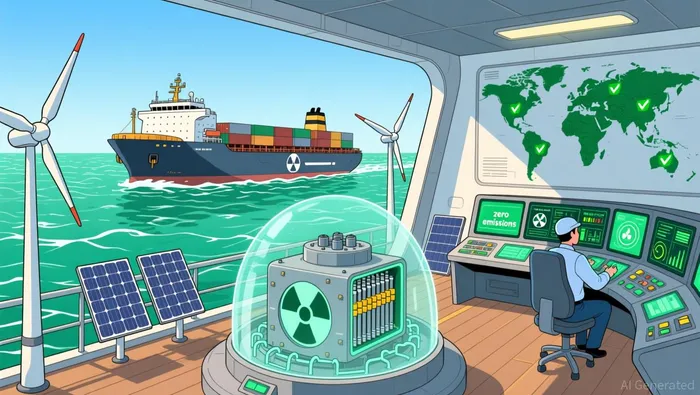
The commercial shipping sector, historically reliant on carbon-intensive fuels, is increasingly exploring nuclear propulsion as a pathway to net-zero emissions. , with its compact design, has been identified as a viable solution for large vessels, with ABB and Blykalla collaborating to address technical and regulatory challenges. Oklo's transatlantic partnership with Blykalla, while focused on land-based reactors, indirectly supports this maritime transition by accelerating shared advancements in reactor materials, fuel fabrication, and licensing frameworks.
However, Oklo's direct engagement in maritime applications remains limited. The company's Aurora Powerhouse, , is primarily targeted at data centers and industrial clients. Its recent military contract to deploy a microreactor at Eielson Air Force Base in Alaska further emphasizes its focus on off-grid, high-security energy solutions. For Oklo to capitalize on the maritime sector, it would need to either adapt its reactor designs for shipboard use or deepen partnerships with companies like Blykalla, which are already pursuing maritime-specific SMRs.
Stock Volatility and Long-Term Viability
Oklo's stock price has fluctuated in response to both positive and negative catalysts. The completion of an NRC readiness assessment for its first commercial Aurora reactor at Idaho National Laboratory (INL) in 2025 marked a critical regulatory milestone, boosting investor confidence. Conversely, delays in finalizing supply chain agreements or regulatory hurdles for SMR deployment could exacerbate volatility.
The long-term viability of Oklo's SMR strategy hinges on three factors:
1. Regulatory Progress: The U.S. Department of Energy's (DOE) and Advanced Nuclear Fuel Pilot Project provide critical support for Oklo's commercialization efforts. Continued federal backing will be essential to offset the high upfront costs of SMR deployment.
2. Market Adoption: While data centers and military clients represent near-term opportunities, the maritime sector's adoption of nuclear propulsion is likely to lag due to complex regulatory and safety requirements. Oklo's indirect role in this transition may limit its immediate financial upside.
3. Competitive Landscape: The SMR sector is highly competitive, with companies like Blykalla and Newcleo advancing specialized designs. Oklo's ability to differentiate its Aurora reactor through scalability and fuel innovation will determine its market share.
Conclusion
Oklo's strategic alliances and technological advancements position it as a key player in the global SMR ecosystem, even as its direct involvement in the maritime sector remains nascent. The company's partnerships with Blykalla and Newcleo, coupled with its progress in fuel fabrication and reactor design, suggest a strong foundation for long-term growth. However, investors should remain cautious about short-term volatility and the sector-specific challenges of maritime nuclear propulsion. For Oklo to fully capitalize on the shipping industry's decarbonization ambitions, it will need to either pivot its reactor designs or deepen its collaboration with maritime-focused partners like Blykalla. In the broader context of energy transition, Oklo's role in advancing SMRs-whether on land or at sea-could prove pivotal, but patience will be required to realize its full potential.





Comentarios
Aún no hay comentarios