
Oklo's Stock Volatility Amid Insider Sales: Assessing Insider Trading Signals in Emerging Nuclear Energy Equities
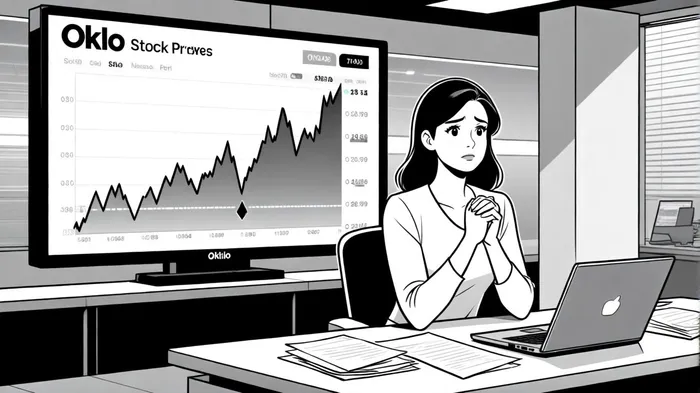
The nuclear energy sector has long been a magnet for speculative investors, but OkloOKLO-- Inc. (OKLO) has emerged as one of the most volatile names in 2025. The company's shares surged 64% in late September alone, driven by strategic partnerships with defense contractors and AI infrastructure providers, only to reverse sharply in early October amid valuation concerns[3]. Amid this turbulence, insider trading activity has drawn scrutiny. Director Michael Stuart Klein's $6.6 million sale of 50,000 shares on September 22—reducing his holdings by 25%—and COO Caroline Cochran's gift of 25,000 shares to a donor-advised fund[4] have raised questions about whether insiders are signaling caution or merely diversifying wealth.
Insider Sales: Signals or Noise?
Klein's transactions, executed at an average price of $133.76, marked a significant departure from his prior pattern. Over the preceding six months, he had sold 300,000 shares for $18.5 million[1], suggesting a deliberate reduction in exposure. By contrast, Cochran's gift—a non-sale transaction—aligns with common estate-planning strategies among executives. However, the timing of these moves coincided with a broader wave of insider sales, including CFO Richard Bealmear's disposal of 100,000 shares for $9.4 million[1], which contributed to a $20 gap-down open in Oklo's stock on September 25[1].
Such activity contrasts with the sector's broader trend. In 2025, insiders at companies like Delek US and Civitas Resources increased holdings by 1.14% to 1.59%, signaling confidence in nuclear energy's long-term prospects[4]. Oklo's sales, however, reflect a more nuanced picture. While Klein's actions could indicate skepticism about near-term execution risks—such as regulatory delays for advanced reactors or the company's $57 million Q2 net loss[1]—they may also represent tax optimization or liquidity needs. The absence of direct sales by CEO Jacob DeWitte, who retains 9.8 million shares via a GRAT[4], further complicates the interpretation.
Market Reactions and Sector Context
Oklo's stock volatility underscores the tension between bullish fundamentals and financial fragility. The company's partnerships with the U.S. Air Force and Vertiv Holdings[3], coupled with the Trump administration's nuclear-focused trade agenda, have fueled investor enthusiasm. Yet these gains are built on a foundation of sustained losses and no revenue. Analysts at Wedbush raised their price target to $150 in September[1], but the stock's 8% plunge in early October highlighted lingering doubts about valuation sustainability[2].
The nuclear sector's regulatory tailwinds, including the ADVANCE Act's streamlined approval process for advanced reactors[1], have created a backdrop of optimism. However, Oklo's insider sales suggest that even in a favorable policy environment, execution risks remain acute. For context, NuScale Power and Terrestrial Energy have seen insider buying amid reactor deployment milestones[1], whereas Oklo's sales mirror the caution seen in tech startups facing commercialization hurdles.
Conclusion: Navigating Mixed Signals
Oklo's insider activity should not be read as a definitive bearish signal. The nuclear energy sector's structural tailwinds—driven by AI demand and geopolitical shifts—remain intact. However, the magnitude and timing of Klein's and Bealmear's sales warrant closer scrutiny. Investors should weigh these moves against the company's progress on key milestones, such as its Air Force contract and reactor licensing timelines. While insider selling is not uncommon in high-growth sectors, Oklo's lack of revenue and regulatory uncertainties mean that such activity carries higher informational value than in more established industries.
For now, the stock remains a speculative play, with its volatility reflecting both the promise of nuclear innovation and the perils of unproven business models. As the sector evolves, continued monitoring of insider transactions—both sales and purchases—will be critical to parsing genuine caution from routine portfolio management.





Comentarios
Aún no hay comentarios