
Oil Volatility and Geopolitical Crossroads: Navigating Energy Investments in a Tense Iran-U.S. Standoff
The U.S. military strikes on Iran's nuclear facilities on June 22, 2025, have thrust the energy market into a precarious balancing act between supply disruption fears and geopolitical brinkmanship. With Brent crude prices surging 18% since June 10, investors now face a critical question: How should portfolios adapt to a world where oil volatility is no longer a temporary blip but a persistent feature of global markets?
The immediate catalyst—the U.S. and Israeli attacks on Iran's nuclear program—has reignited risks that could ripple through energy supply chains. Iran's threats to retaliate by targeting Gulf infrastructure or closing the Strait of Hormuz, which handles 30% of global oil exports, have already injected uncertainty into pricing. reveal a sharp upward trajectory, with analysts warning of a potential breach of $100 per barrel if tensions escalate further.
The Oil Market's New Reality: Volatility as a Permanent Feature
The strikes underscore a broader shift: geopolitical instability is now a core variable in energy markets. Even if Iran's retaliation remains contained, the U.S. and Iran's history of sanctions and counter-sanctions ensures prolonged uncertainty. Existing U.S. sanctions, reinstated in 2018, have already reduced Iran's oil exports to near-zero, but renewed hostilities could disrupt supplies from neighboring producers like Iraq or Saudi Arabia. The IMF's warning of a 0.5% global growth hit if disruptions persist highlights the stakes.
For investors, this volatility creates both risks and opportunities. While higher oil prices benefit energy producers, they also strain economies and consumer spending, amplifying stagflation fears. The challenge is to position portfolios to profit from the upside while hedging against downside risks.
Shale Plays: Winners in a High-Oil-Price World
North American shale producers are among the most direct beneficiaries of sustained high oil prices. Companies like Pioneer Natural ResourcesPBFS-- (PXD) and Devon Energy (DVN) have proven capacity to ramp up production swiftly when prices exceed $60 per barrel—a threshold now comfortably surpassed. Their focus on low-cost, high-return drilling projects positions them to capitalize on elevated prices without overextending balance sheets.
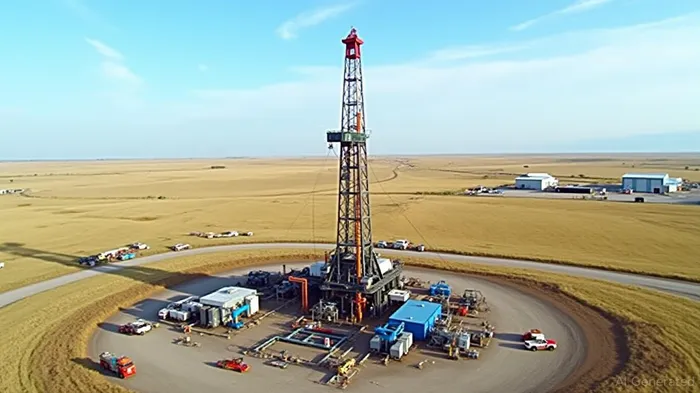
Shale equities, however, are not a uniform bet. Investors should prioritize firms with strong balance sheets and exposure to the Permian Basin, where drilling efficiency is highest. shows shale's outperformance during recent price rallies, though it lags during periods of oversupply.
Defense Contractors: Playing the Escalation Angle
Should Iran retaliate with missile strikes or cyberattacks, defense stocks could emerge as a secondary beneficiary. Companies like Lockheed Martin (LMT) and Raytheon Technologies (RTX), which supply air defense systems and missile technology to Gulf allies, stand to gain. Even without direct conflict, heightened military spending to protect energy infrastructure—such as anti-drone systems or radar upgrades—could boost demand for their products.
The defense sector's appeal hinges on the duration of geopolitical tension. A prolonged standoff or proxy war in the Gulf would justify overweight allocations, but a swift diplomatic resolution could lead to profit-taking. Investors might consider pairing exposure to defense ETFs like the Global X Defense ETF (DEF) with stop-loss orders to mitigate downside risk.
Hedging Strategies for the Prudent Investor
No portfolio should ignore the possibility of a price collapse if diplomacy prevails. Gold (GLD) remains a classic hedge against geopolitical instability, while inverse oil ETFs like the ProShares UltraShort Oil & Gas (DUG) can offset exposure to energy stocks during corrections.
For those seeking diversification without direct commodity exposure, ETFs like the Energy Select Sector SPDR Fund (XLE)—which holds a basket of oil and gas majors—offer broad exposure to the sector's upside while smoothing out individual company risks.
Conclusion: A Balanced Approach to Energy Volatility
The Iran-U.S. standoff has crystallized a fundamental truth: energy markets are now as much about geopolitics as geology. Investors must balance opportunistic bets on shale and defense with hedging tools to navigate the uncertainty.
- Overweight shale equities with a focus on Permian Basin operators.
- Consider defense contractors as a tactical play on escalation.
- Hedge with gold or inverse ETFs to protect against price drops.
- Monitor Strait of Hormuz shipping data and Iranian retaliation timelines to time entries/exits.
The path forward is neither bullish nor bearish but nuanced. In a world where geopolitical risks are here to stay, the wisest strategy is to prepare for both scenarios—and profit from the market's indecision.
This data underscores the energy sector's outsized role in equity markets—making it a critical component of any globally diversified portfolio.







Comentarios
Aún no hay comentarios