
These Oil Stocks Can Thrive Even With Crude Prices Sinking
The oil market has long been a rollercoaster of volatility, with prices swinging between boomBOOM-- and bust cycles driven by geopolitical tensions, demand shifts, and supply disruptions. Yet, for investors, the sector remains compelling—not merely as a play on commodity prices, but as a landscape where strategic companies can navigate downturns through resilience, diversification, and operational discipline. As crude prices hover near critical thresholds, the question arises: Which oil stocks are poised to outperform even when the commodity itself falters?
The Case for Resilience: Key Drivers Beyond Crude
The ability to thrive amid falling oil prices hinges on three pillars: financial fortitude, operational efficiency, and strategic diversification.
- Strong Balance Sheets: Companies with low debt and ample liquidity can weather prolonged price declines without diluting shareholders or scaling back investments.
- Cost Discipline: Lower breakeven costs enable profitability at lower price points. Shale producers, for instance, have slashed production expenses over the past decade.
- Diversification: Exposure to chemicals, renewables, or LNG can insulate revenue streams from pure crude price exposure.

1. ExxonMobil (XOM): The Titans’ Edge
ExxonMobil, a stalwart of the industry, has doubled down on financial discipline. Despite its reputation as a traditional oil giant, it has trimmed debt and prioritized projects with high returns. Its $15 billion annual dividend—one of the highest in the sector—is underpinned by a debt-to-equity ratio of 22% (among the lowest in its peer group).
The company’s focus on low-cost Gulf of Mexico deepwater projects and chemical facilities in Asia-Pacific positions it to profit even as crude dips below $70/barrel. Its dividend yield of 4.5% (as of Q3 2023) acts as a safety net for investors during price slumps.
2. Chevron (CVX): The Conservative Playbook
Chevron’s strategy mirrors Exxon’s: austerity and selectivity. It has maintained a dividend yield of 4.2% while reducing capital expenditures by 20% since 2020. The company’s break-even point of $45/barrel (per Rystad Energy estimates) gives it a margin of safety in a $60/barrel environment.
Chevron’s $3 billion investment in biofuels and carbon capture also signals a gradual pivot toward sustainability, aligning with long-term energy transition trends.
3. BP (BP) and Shell (RDS.A): The Renewable Pivot
For investors seeking exposure to both oil and renewables, BP and Shell offer a hybrid approach. Both companies have slashed oil-focused assets to fund wind, solar, and hydrogen projects.
BP’s $25 billion+ renewables investment by 2030 includes offshore wind farms in the U.K. and U.S., while Shell’s $9 billion acquisition of Wintershall Dea in 2023 expanded its LNG portfolio.
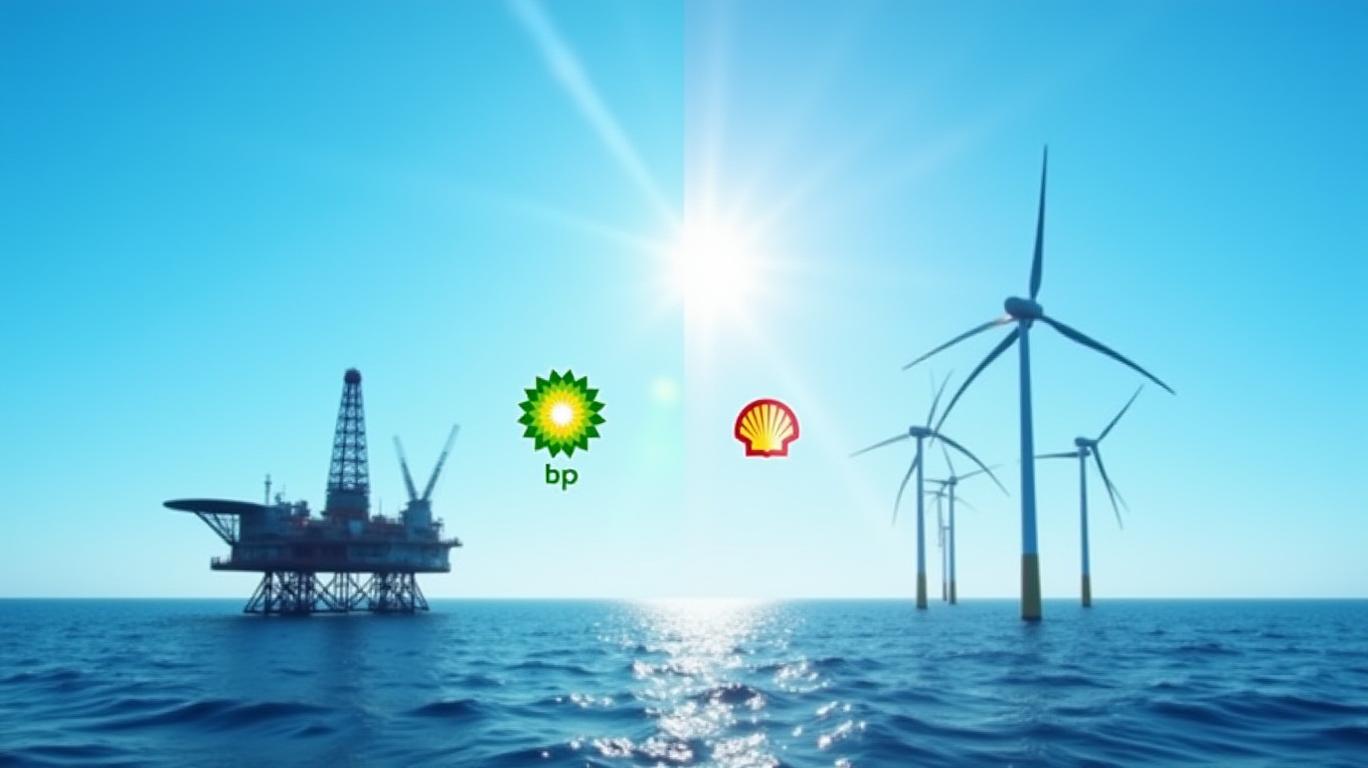
Crucially, their oil divisions remain profitable. BP’s operating cash flow rose 12% YoY in Q2 2023, even as crude prices dipped.
4. Pioneer Natural Resources (PXD): The Agile Shale Player
Smaller players like Pioneer Natural Resources thrive through agility. Its Permian Basin assets—with a breakeven cost as low as $35/barrel—allow it to generate free cash flow even at depressed prices. Pioneer’s shareholder returns (dividends + buybacks) totaled $4.5 billion in 2022, signaling confidence in its model.
Data-Driven Outperformance
The numbers tell the story:
- ExxonMobil’s stock rose 15% in 2022 despite a 14% drop in Brent crude prices.
- Chevron’s dividend has grown for 36 consecutive years.
- Shell’s renewable revenue surged 22% in 2022, offsetting oil headwinds.
Conclusion: The New Oil Playbook
The era of oil stocks as pure commodity bets is fading. Investors must now prioritize companies that blend financial conservatism with forward-thinking strategies. Exxon and Chevron offer stability through dividends and cost discipline, while BP and Shell provide a bridge to the energy transition. Pioneer exemplifies how nimble operators can profit from structural advantages in key basins.
As crude prices test $70/barrel, these stocks are not insulated from short-term volatility. But over the medium term, their resilience is baked into their balance sheets, operational choices, and diversified revenue streams. For investors, this is less about betting on oil’s next swing—and more about betting on companies that outthink it.







Comentarios
Aún no hay comentarios