
Oil Steadies Near $81 as Market Braces for Second Trump Term
Generado por agente de IACyrus Cole
domingo, 19 de enero de 2025, 11:29 pm ET3 min de lectura
ING--
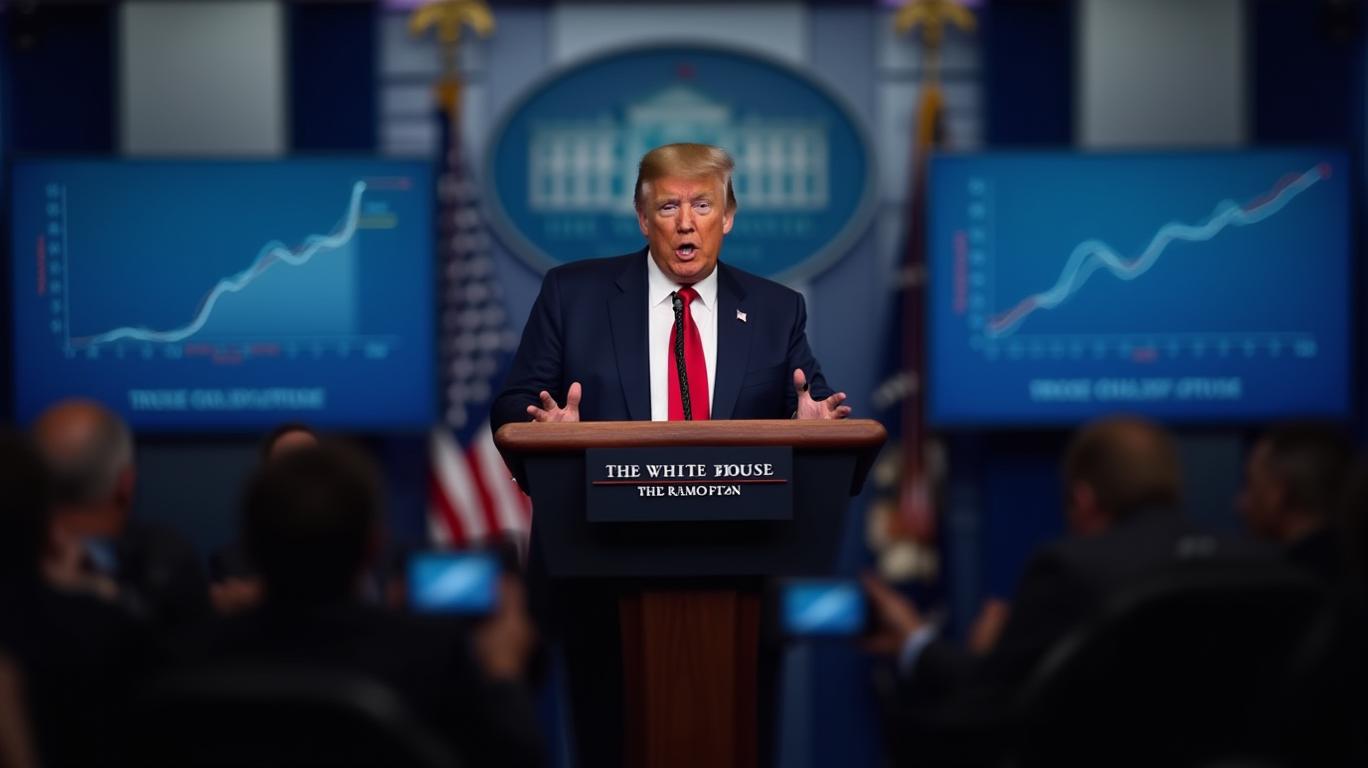
As the world braces for a second term under President Donald Trump, the oil market is taking a pause, with Brent crude futures hovering around $81 per barrel. The market is digesting the implications of Trump's energy policies, which are expected to have both positive and negative impacts on oil production, exports, and prices. This article explores the potential geopolitical risks and opportunities for oil markets under a second Trump term, as well as the possible effects of Trump's trade policies on global oil demand and prices.
Trump's Energy Policies and US Oil Production
Trump's energy policies, particularly his "drill, baby, drill" stance, are expected to have a significant impact on US oil production and exports. Here's how:
1. Increased Production on Federal Lands: Trump's administration is likely to reverse some of President Joe Biden's policies, such as reducing lease sales on federal land and increasing royalty payments and bond requirements for production on federal land. This could lead to an increase in oil production on federal lands, which accounted for around 12% of total US oil output in 2023. (Source: ING Research)
2. Investment in Pipeline Infrastructure: A Trump presidency may provide more certainty to the industry, encouraging investment in pipeline infrastructure. This could alleviate persistent bottlenecks in the US natural gas market, particularly in the Permian region, and potentially strengthen crude oil output. (Source: ING Research)
3. Lifting of LNG Export Project Approvals: Under Trump's presidency, we are likely to see a lifting of Biden’s pause on LNG export project approvals. This could help remove some of the longer-term uncertainty around LNG supply. (Source: ING Research)
Geopolitical Risks and Opportunities
A second Trump term could present several geopolitical risks and opportunities for oil markets:
1. Iran Sanctions: Trump's expected stricter implementation of sanctions against Iran could lead to a reduction in Iran's oil exports, tightening global supply and potentially driving up oil prices. This would be bullish for oil prices, as it would affect the global total in oil supply. However, it could also lead to geopolitical tensions and instability in the Middle East.
2. Trade Tensions: Trump's focus on domestic issues initially may shift to trade later in his term, which could have negative impacts on energy prices. US trade tariffs could lead to retaliatory action against the US on some exports, affecting energy trade. For instance, during the 2018 trade war, Chinese oil buyers were reluctant to purchase US crude oil due to the risk and eventual implementation of tariffs, which saw the WTI-Brent discount widen significantly. A ratcheting up in the trade war with retaliatory tariffs could see the WTI-Brent spread coming under pressure once again.
3. Russia/Ukraine War and Middle East Conflict: Trump's handling of the Russia/Ukraine war and the Middle East conflict will be crucial for energy markets. If he manages to broker a peace deal, it could remove a large amount of geopolitical risk hanging over energy markets. However, the specifics of his approach and the outcomes of these conflicts remain uncertain.

Trump's Trade Policies and Global Oil Demand
Trump's trade policies could have a negative impact on global oil demand and prices, particularly when it comes to US energy prices. Our house view is that Trump is likely to focus on domestic issues initially, but his attention will turn to trade eventually, which could happen in late 2025/early 2026. The potential for growing trade friction will likely provide headwinds to energy prices, particularly if energy trade gets entangled in any of these tensions.
US trade tariffs could see retaliatory action taken against the US on some exports, much like we saw from China during the 2018 trade war. Chinese oil buyers were reluctant to purchase US crude oil due to the risk and the eventual implementation of tariffs. This saw the WTI-Brent discount widen from around US$3/bbl to more than US$11/bbl in 2018. A ratcheting up in the trade war with retaliatory tariffs – or even the risk of tariffs – could see the WTI-Brent spread coming under pressure once again. However, we may not see as much pressure on the spread given that in early 2018, close to a quarter of US crude exports went to China, while this share has fallen to around 7% currently.
For natural gas, the risk arises from LNG exports. In 2018, China imposed retaliatory tariffs of 10% on US LNG imports, which were then increased to 25% in June 2019. This saw US LNG exports to China fall to zero and they only started to recover when China issued tariff waivers as part of the trade deal. Since 2018, there have been large shifts in the global gas market, with a tight LNG market and Europe a significantly more important buyer of US LNG – which may provide some comfort to the US, if China were to target US LNG. But timing is important as there is a significant amount of LNG capacity set to start up towards the end of this decade, and this is likely to push the LNG market to a buyer’s market.
In summary, Trump's trade policies could negatively impact global oil demand and prices by creating uncertainty and potential retaliatory actions from other countries, particularly China. This could lead to reduced demand for US energy exports and increased pressure on energy prices.
As the oil market braces for a second Trump term, investors and stakeholders must closely monitor the geopolitical landscape and potential trade tensions to navigate the potential risks and opportunities that lie ahead. While Trump's energy policies may initially boost US oil production and exports, trade tensions could pose a headwind, impacting global oil demand and prices.
JOE--
As the world braces for a second term under President Donald Trump, the oil market is taking a pause, with Brent crude futures hovering around $81 per barrel. The market is digesting the implications of Trump's energy policies, which are expected to have both positive and negative impacts on oil production, exports, and prices. This article explores the potential geopolitical risks and opportunities for oil markets under a second Trump term, as well as the possible effects of Trump's trade policies on global oil demand and prices.
Trump's Energy Policies and US Oil Production
Trump's energy policies, particularly his "drill, baby, drill" stance, are expected to have a significant impact on US oil production and exports. Here's how:
1. Increased Production on Federal Lands: Trump's administration is likely to reverse some of President Joe Biden's policies, such as reducing lease sales on federal land and increasing royalty payments and bond requirements for production on federal land. This could lead to an increase in oil production on federal lands, which accounted for around 12% of total US oil output in 2023. (Source: ING Research)
2. Investment in Pipeline Infrastructure: A Trump presidency may provide more certainty to the industry, encouraging investment in pipeline infrastructure. This could alleviate persistent bottlenecks in the US natural gas market, particularly in the Permian region, and potentially strengthen crude oil output. (Source: ING Research)
3. Lifting of LNG Export Project Approvals: Under Trump's presidency, we are likely to see a lifting of Biden’s pause on LNG export project approvals. This could help remove some of the longer-term uncertainty around LNG supply. (Source: ING Research)
Geopolitical Risks and Opportunities
A second Trump term could present several geopolitical risks and opportunities for oil markets:
1. Iran Sanctions: Trump's expected stricter implementation of sanctions against Iran could lead to a reduction in Iran's oil exports, tightening global supply and potentially driving up oil prices. This would be bullish for oil prices, as it would affect the global total in oil supply. However, it could also lead to geopolitical tensions and instability in the Middle East.
2. Trade Tensions: Trump's focus on domestic issues initially may shift to trade later in his term, which could have negative impacts on energy prices. US trade tariffs could lead to retaliatory action against the US on some exports, affecting energy trade. For instance, during the 2018 trade war, Chinese oil buyers were reluctant to purchase US crude oil due to the risk and eventual implementation of tariffs, which saw the WTI-Brent discount widen significantly. A ratcheting up in the trade war with retaliatory tariffs could see the WTI-Brent spread coming under pressure once again.
3. Russia/Ukraine War and Middle East Conflict: Trump's handling of the Russia/Ukraine war and the Middle East conflict will be crucial for energy markets. If he manages to broker a peace deal, it could remove a large amount of geopolitical risk hanging over energy markets. However, the specifics of his approach and the outcomes of these conflicts remain uncertain.
Trump's Trade Policies and Global Oil Demand
Trump's trade policies could have a negative impact on global oil demand and prices, particularly when it comes to US energy prices. Our house view is that Trump is likely to focus on domestic issues initially, but his attention will turn to trade eventually, which could happen in late 2025/early 2026. The potential for growing trade friction will likely provide headwinds to energy prices, particularly if energy trade gets entangled in any of these tensions.
US trade tariffs could see retaliatory action taken against the US on some exports, much like we saw from China during the 2018 trade war. Chinese oil buyers were reluctant to purchase US crude oil due to the risk and the eventual implementation of tariffs. This saw the WTI-Brent discount widen from around US$3/bbl to more than US$11/bbl in 2018. A ratcheting up in the trade war with retaliatory tariffs – or even the risk of tariffs – could see the WTI-Brent spread coming under pressure once again. However, we may not see as much pressure on the spread given that in early 2018, close to a quarter of US crude exports went to China, while this share has fallen to around 7% currently.
For natural gas, the risk arises from LNG exports. In 2018, China imposed retaliatory tariffs of 10% on US LNG imports, which were then increased to 25% in June 2019. This saw US LNG exports to China fall to zero and they only started to recover when China issued tariff waivers as part of the trade deal. Since 2018, there have been large shifts in the global gas market, with a tight LNG market and Europe a significantly more important buyer of US LNG – which may provide some comfort to the US, if China were to target US LNG. But timing is important as there is a significant amount of LNG capacity set to start up towards the end of this decade, and this is likely to push the LNG market to a buyer’s market.
In summary, Trump's trade policies could negatively impact global oil demand and prices by creating uncertainty and potential retaliatory actions from other countries, particularly China. This could lead to reduced demand for US energy exports and increased pressure on energy prices.
As the oil market braces for a second Trump term, investors and stakeholders must closely monitor the geopolitical landscape and potential trade tensions to navigate the potential risks and opportunities that lie ahead. While Trump's energy policies may initially boost US oil production and exports, trade tensions could pose a headwind, impacting global oil demand and prices.

Divulgación editorial y transparencia de la IA: Ainvest News utiliza tecnología avanzada de Modelos de Lenguaje Largo (LLM) para sintetizar y analizar datos de mercado en tiempo real. Para garantizar los más altos estándares de integridad, cada artículo se somete a un riguroso proceso de verificación con participación humana.
Mientras la IA asiste en el procesamiento de datos y la redacción inicial, un miembro editorial profesional de Ainvest revisa, verifica y aprueba de forma independiente todo el contenido para garantizar su precisión y cumplimiento con los estándares editoriales de Ainvest Fintech Inc. Esta supervisión humana está diseñada para mitigar las alucinaciones de la IA y garantizar el contexto financiero.
Advertencia sobre inversiones: Este contenido se proporciona únicamente con fines informativos y no constituye asesoramiento profesional de inversión, legal o financiero. Los mercados conllevan riesgos inherentes. Se recomienda a los usuarios que realicen una investigación independiente o consulten a un asesor financiero certificado antes de tomar cualquier decisión. Ainvest Fintech Inc. se exime de toda responsabilidad por las acciones tomadas con base en esta información. ¿Encontró un error? Reportar un problema


SOBRE NOSOTROS
Nuestra historiaAutores de noticiasBase de conocimientosPolítica de privacidadTérmino de usoDescargo de responsabilidad de corretaje de tercerosTérminos de uso de AIMEDivulgaciones de riesgos de AInvest AICarrerasCONTÁCTENOS
Email: support@ainvest.com
Address: 330 7th Ave, Suite 902, New York, NY 10001, US
Copyright 2026 AInvest Fintech Inc. All rights reserved.


Comentarios
Aún no hay comentarios