
Oil Prices in Flux: Navigating Geopolitical Storms and Strategic Opportunities
The global oil market in July 2025 is a high-stakes arena, where geopolitical tensions, supply-demand imbalances, and shifting policies conspire to create both risks and rewards for investors. From Middle Eastern chokepoints to the Russia-Ukraine conflict, the interplay of these forces is reshaping oil prices and investment landscapes. Here's how to navigate this turbulent environment.
Geopolitical Risks: The Middle East's Double-Edged Sword
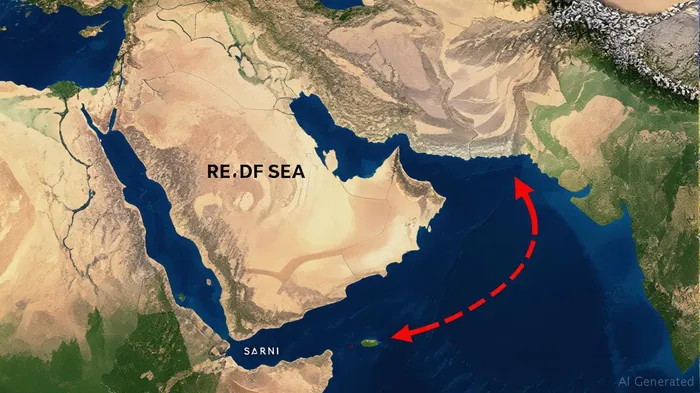
The Middle East remains the epicenter of oil market instability. Houthi attacks in the Red Sea have forced ships to reroute, adding $300,000–$500,000 per voyage—a cost that filters into global crude prices. Meanwhile, the Strait of Hormuz, through which 20% of global oil flows, faces existential threats from Iran-Israel hostilities. While a full closure is deemed a low-probability event, even the threat of disruption has pushed Brent crude to $80/barrel during flare-ups.
Supply-Demand Dynamics: Scarcity Amid Stagnation
Supply constraints are tightening. OPEC+ has boosted output to 42.21 million b/d, but compliance remains fragile, especially as Saudi Arabia nears its 12.5 million b/d capacity ceiling. Meanwhile, U.S. shale growth has stalled below 200,000 b/d annually due to capital constraints and regulatory hurdles. Against this backdrop, Asian demand—driven by India and Southeast Asia—is projected to rise by 1.4 million b/d in 2025, exacerbating the imbalance.
Policy Impacts: Sanctions, Caps, and Tariffs
Policymakers are weaponizing energy markets. The EU's $45/barrel oil price cap on Russia has slashed Gazprom's stock value by 40% since 2022, forcing Moscow to seek discounted deals with China. However, sanctions evasion persists: 1.6 million b/d of Iranian crude flows to China via shadow fleets, undermining U.S. efforts. Meanwhile, proposed U.S. tariffs on steel and crude imports could drain an additional 0.5–1.0 million b/d from global demand by 2026.
Investment Strategies: Hedging Volatility and Capitalizing on Scarcity
- Defensive Plays:
- Gold (GLD): A classic hedge against geopolitical uncertainty.
- U.S. Treasuries (IEF): For capital preservation during market turmoil.
Short Positions: Consider inverse ETFs like VelocityShares 3x Long Crude (UCL) to profit from price dips during supply shocks.
Growth Opportunities:
- Defense Contractors: Raytheon (RTX) and Kratos (KTUS) are benefiting from regional militarization, with orders for drones and missile defense systems surging 25% YTD.
- Infrastructure ETFs: SPDR S&P Construction (KBE) could profit from post-war reconstruction projects valued at $750 billion.
Energy Majors: ChevronCVX-- (CVX) and ExxonMobil (XOM) thrive in high-price environments, with stable dividends and exposure to OPEC+ production.
Geopolitical Bets:
- Oil ETFs: U.S. Oil Fund (USO) tracks crude prices directly.
- LNG Plays: Cheniere EnergyLNG-- (LNG) benefits from Asia's growing demand for cleaner fuels.
Key Triggers to Watch
- Middle East Ceasefire Talks: A Gaza truce could ease Red Sea risks and lower prices by 5–7%.
- OPEC+ Compliance: Monitor monthly production reports for signs of supply discipline.
- U.S.-Iran Diplomacy: A nuclear deal could unlock Iran's 3 million b/d production potential—but don't hold your breath.
Conclusion: A Volatile, but Rewarding Landscape
The oil market is a geopolitical minefield, but it's also a goldmine for agile investors. The base case sees prices stabilizing at $60–$70/barrel by year-end, but risks like a Strait of Hormuz closure or Russian supply collapse could send prices soaring to $130+.
Actionable Advice:
- Hedge 10–15% of your portfolio with GLD/IEF.
- Go long on RTX and CVX, but avoid shale plays like Pioneer (PVLR) below $65/barrel.
- Track Brent crude via USO and stay vigilant on OPEC+ compliance and ceasefire updates.
The next 90 days will test both nerves and strategy—position yourself to capitalize on the chaos.





Comentarios
Aún no hay comentarios