
The Oil Price War: Why Shale and Credit Markets Are on the Brink—and How to Play It
The clash between geopolitical oil price preferences and market fundamentals is reaching a boiling point. As Goldman SachsAAAU-- warns of systemic risks from prolonged $40-$50 oil, the Trump-era pro-cheap-oil agenda—designed to weaken OPEC and boost consumer spending—threatens to unravel U.S. shale’s financial underpinnings and destabilize energy-linked credit markets. Here’s how investors must position now.
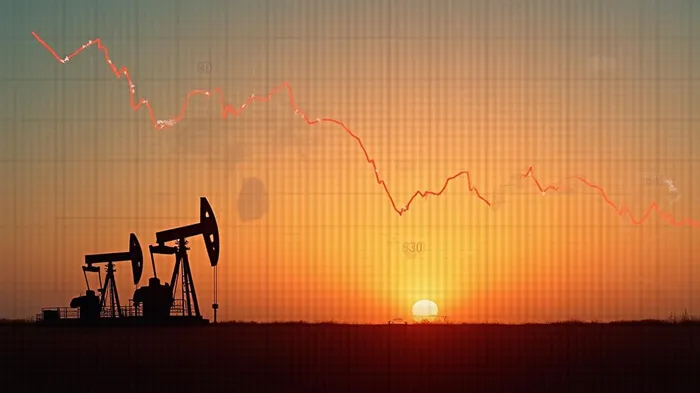
The Breakeven Crisis: Shale’s Financial Lifeline Is Fraying
U.S. shale producers face an existential dilemma. While the Brent crude price currently hovers around $66.63 (as of May 13, 2025), many operators require $55–60/bbl to break even on new wells. At $40–50, the math collapses. Even stalwarts like Diamondback Energy (FANG) have slashed production targets, while smaller players face bankruptcy. The ripple effect? Defaults on $200 billion of energy-linked high-yield bonds, which now constitute over 20% of the junk bond market.
Geopolitics vs. Economics: A Dangerous Dance
The Trump-era mantra of “cheap oil forever” collides with reality. While low prices please consumers and weaken OPEC’s geopolitical clout, they risk triggering a credit crisis. Meanwhile, OPEC+—now led by a resurgent Saudi Arabia—holds the power to stabilize prices via production cuts. Yet U.S. shale’s overhang and China’s post-lockdown demand rebound (now at 5.5% GDP growth) create a volatile equilibrium.
The Playbook: Short Energy, Hedge Debt, Wait for OPEC’s Signal
1. Short Exposure to Energy Equities/ETFs
Avoid the Energy Select Sector SPDR ETF (XLE) and United States Oil Fund (USO). These instruments will amplify losses if prices dip toward $40. Instead, consider inverse ETFs like ProShares UltraShort Oil & Gas (DIG) or shorting individual producers exposed to breakeven risks (e.g., Parsley Energy (PE)).
2. Flee Energy High-Yield Bonds
The iShares iBoxx $ High Yield Energy ETF (HYG) holds the toxic debt of shale operators. Defaults could trigger a selloff, with yields spiking to 9–10% (up from 6.8% in 2024). Proceed with caution—or avoid entirely until credit spreads stabilize.
3. Monitor OPEC+ and the G-20 for a Rebound Signal
Watch for coordinated cuts at OPEC’s June meeting or a surprise announcement from the G-20 in July. If prices stabilize at $65–70/bbl, consider re-entering via United States Oil Fund (USO) or long-dated call options on the S&P 500 Energy Sector (XLE).
The Bottom Line: Act Now, but Stay Nimble
The $40–50 oil scenario isn’t just a theoretical threat—it’s a countdown to financial contagion. Shale’s survival hinges on OPEC’s discipline and China’s demand, while U.S. credit markets face a reckoning. Position defensively now, but keep eyes on geopolitical catalysts. When OPEC acts, investors who’ve hedged can pivot to capture the rebound—ideally at $65–70/bbl, where shale’s pain turns to profit.
The oil market’s next chapter is being written. Will you be ready when the plot flips?





Comentarios
Aún no hay comentarios