
Oil Price Volatility in the Shadow of Geopolitical Uncertainty: Trump's Russia-Ukraine Peace Talks and Market Implications
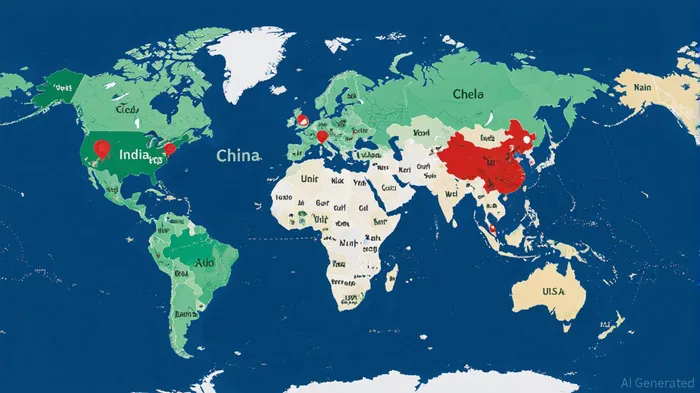
The energy sector in Q4 2025 is navigating a minefield of geopolitical and economic crosscurrents. At the center of this turbulence lies the Trump administration's dual-track strategy: leveraging tariffs to pressure Russian oil buyers while pursuing high-stakes peace talks with Moscow and Kyiv. For investors, the interplay of these dynamics—sanctions relief, tariff threats, and shifting demand—creates both risks and opportunities. Let's dissect the forces at play and map a path through the volatility.
The Trump-Putin Pivot: Diplomacy Over Sanctions
President Trump's August 2025 summit with Vladimir Putin in Alaska marked a stark departure from the Biden-era playbook. While the U.S. had previously weaponized tariffs and sanctions to isolate Russia's war economy, Trump now prioritizes diplomatic engagement. This shift includes:
- Postponing new tariffs on China and India, two of Russia's largest oil buyers.
- Proposing a trilateral summit with Zelensky and Putin to broker a peace deal, potentially easing sanctions in exchange for territorial concessions.
- Suspending threats of “severe consequences” for failing to achieve a ceasefire, instead advocating for a long-term peace agreement.
The immediate effect? A pause in the escalation of economic pressure on Russia. However, this pivot has left European allies and Ukraine wary. European leaders, including German Chancellor Friedrich Merz and French President Emmanuel Macron, have reiterated that sanctions will persist until a “just and lasting peace” is achieved. Meanwhile, Zelensky has warned that Russia could exploit the diplomatic window to consolidate gains in the Donbas.
Tariff Threats: A Double-Edged Sword
The U.S. has maintained a 50% tariff on Indian imports, accusing New Delhi of acting as a “global clearinghouse” for Russian oil. India, however, has defended its purchases as a necessity for energy security, arguing that global market conditions—not political alignment—drive its decisions. This standoff highlights the limitations of tariffs as a coercive tool:
- India's resilience: Despite tariffs, India continues to import 36% of its crude oil from Russia in 2024, leveraging discounted prices to bolster its energy reserves.
- China's wildcard role: As Russia's largest oil buyer (13.5% of its crude imports in 2024), China remains a critical variable. U.S. Senator Marco Rubio has warned that imposing tariffs on China could backfire, as refined Russian oil re-enters global markets, potentially spiking prices.
The EU's 19th sanctions package, set to impose a dynamic cap of $47.60 per barrel on Russian crude, adds another layer of complexity. While this measure aims to curb Moscow's revenue, it could also create a fragmented pricing structure, with Russian oil trading at a discount in non-Western markets.
Demand Dynamics: A Fragile Equilibrium
Global oil demand in 2025 remains a balancing act. Russia's exports of 7 million barrels per day (5% of global consumption) are critical to market stability. If peace talks succeed and sanctions ease, Russia could flood the market with discounted crude, depressing prices. Conversely, a breakdown in negotiations or renewed hostilities could trigger a supply shock, pushing prices above $90 per barrel.
Investment Implications: Navigating the Volatility
For energy investors, the key is to hedge against both extremes. Here's a strategic framework for Q4 2025 and beyond:
- Short-Term (Q4 2025–Q1 2026): Defensive Positioning
- Energy ETFs: Consider broad exposure via ETFs like XLE (Energy Select Sector SPDR) to capture sector-wide gains if prices spike due to renewed conflict.
- Natural Gas Producers: With oil prices tied to gas prices in Europe, companies like Cheniere EnergyLNG-- (LNG) could benefit from a prolonged energy crisis.
Hedging with Options: Use put options on oil stocks (e.g., ExxonMobil, Chevron) to protect against a price drop if sanctions relief materializes.
Medium-Term (Q2 2026–Q3 2026): Capitalizing on Diversification
- Renewables as a Safe Haven: A post-conflict world may accelerate the energy transition. Solar and wind stocks (e.g., First SolarFSLR--, Vestas Wind Systems) could outperform if oil prices stabilize.
Emerging Market Energy Firms: India's reliance on Russian oil may spur investments in domestic refining and renewables. Companies like Reliance Industries (RIL) could see growth.
Long-Term (2027+): Structural Shifts
- Geopolitical Resilience Plays: Invest in companies with diversified supply chains and low exposure to Russian oil. For example, BPBP-- and ShellSHEL-- are pivoting toward African and U.S. shale.
- Storage and Logistics: If oil prices remain volatile, firms managing storage infrastructure (e.g., Magellan Midstream Partners) could see increased demand.
The Bottom Line: Patience and Precision
The energy sector in 2025 is a chessboard of geopolitical gambits and market forces. Trump's peace talks may yet reshape the landscape, but investors must remain agile. The key is to avoid overexposure to any single outcome—whether a sudden price spike or a prolonged slump. By diversifying across sectors, hedging against volatility, and keeping a close eye on diplomatic developments, energy investors can turn uncertainty into opportunity.
As the world watches whether Zelensky and Putin will meet in a trilateral summit, one thing is clear: the oil market will remain a barometer of global stability. For now, the best strategy is to stay informed, stay flexible, and let the data guide your moves.





Comentarios
Aún no hay comentarios