
Oil Price Surge and Geopolitical Risks: Strategic Asset Allocation in Volatile Markets
The global oil market finds itself at a crossroads. Geopolitical tensions between Iran and Israel, OPEC+ production decisions, and weakening demand from major economies have created a volatile backdrop for energy prices. Oxford Economics' scenarios—from a $66-per-barrel base case to a $130-per-barrel “breaking point”—highlight the fragility of this equilibrium. For investors, navigating this uncertainty requires a dual focus: assessing near-term risks and positioning portfolios to weather potential shocks. Below, we dissect the key risks, inflationary implications, and actionable strategies to preserve capital and capitalize on opportunities.
Assessing Near-Term Oil Price Risks: Baseline vs. Catastrophic Scenarios
Oxford Economics' base-case forecast for 2025 envisions Brent crude ending the year at $66/barrel, driven by subdued global demand and rising supply from OPEC+ (which plans to add 411,000 barrels per day in July). However, the firm's extreme disruption scenario—a temporary closure of the Strait of Hormuz—could send prices soaring to $130/barrel, a level it deems a “breaking point” for the U.S. economy. Such a shock would disrupt 20 million barrels of daily oil transit, triggering panic buying and supply-chain chaos.
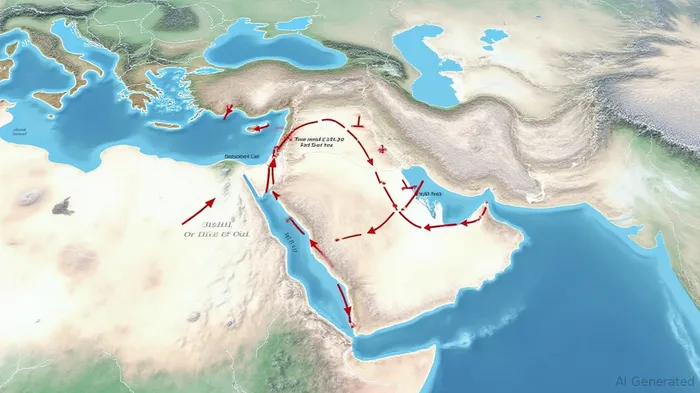
While the probability of a full Strait closure remains low (AMP estimates a 35% chance of significant supply disruptions), markets are already pricing in heightened geopolitical risk. Current Brent prices hover around $69.54, reflecting a premium for instability. Investors must weigh this risk premium against the likelihood of OPEC+ overproduction or a demand collapse in China and the U.S., which could cap prices.
Inflation Implications: When Oil Shocks Meet Monetary Policy
The $130/barrel scenario would not only disrupt energy markets but also ignite inflation. Oxford models suggest U.S. consumer inflation could near 6%, while the Eurozone might see prices climb to 4%, exceeding central bank targets. Such spikes would force the Federal Reserve and European Central Bank to delay interest-rate cuts, exacerbating financial conditions. Even in milder scenarios—like a $90/barrel oil price from reduced Iranian exports—inflation could peak at 4.5% by early 2026, squeezing consumer spending and corporate margins.
The Fed's June 2025 projections, however, paint a more moderate picture, with core PCE inflation expected to fall to 3.0% by year-end. This divergence underscores the gamble of relying solely on base-case models. Investors must prepare for both gradual disinflation and sudden shocks.
Portfolio Hedging Strategies: Balancing Risk and Reward
To navigate this volatility, portfolios should prioritize diversification and risk mitigation across three pillars:
1. Energy Equities: Ride the Upside, but Stay Selective
Energy stocks (e.g., XLE, ExxonMobil, Chevron) typically outperform when oil prices rise. However, prolonged geopolitical turmoil could lead to short-term volatility. Focus on dividend-paying majors with low debt and exposure to U.S. shale production, which can scale up quickly if prices stabilize.
2. Inflation-Linked Bonds: Protect Against Second-Round Effects
U.S. Treasury Inflation-Protected Securities (TIPS) and inflation-linked ETFs (TIP, IEF) provide a hedge against rising prices. These assets adjust principal value with CPI changes, shielding investors from eroded purchasing power. For example, a $10,000 TIPS investment would grow if inflation hits 6%, while traditional bonds risk negative real returns.
3. Safe-Haven Currencies: Dollar Dominance, Swiss Franc Stability
The U.S. dollar typically strengthens during energy crises due to its status as a global reserve currency. The DXY index often rises with oil prices, benefiting holders of USD-denominated assets. Meanwhile, the Swiss franc (CHF) and Japanese yen (JPY) offer diversification against geopolitical panic, as investors flock to low-risk havens.
4. Caution in Equities: Avoid Overexposure to Consumer Staples
A sustained oil price surge could crimp consumer discretionary spending, hurting sectors like retail and travel. Avoid overconcentration in equities without energy or inflation hedges. Instead, tilt toward value stocks with strong cash flows and reduce exposure to growth-oriented tech or consumer discretionary names.
Conclusion: Navigating the Gray Zone
The oil market's future hinges on geopolitical calculus and OPEC+ discipline. While the $130/barrel scenario is extreme, its potential impact—6% inflation, delayed rate cuts, and regional economic divergence—demands preparedness. Investors should:
- Allocate 5–10% of portfolios to energy equities,
- Hold 10–15% in inflation-linked bonds, and
- Use 5–8% in USD/CHF exposure as a buffer.
Avoid complacency in equities, as a demand collapse in China or the U.S. could amplify oil-driven headwinds. By balancing these strategies, investors can mitigate risk while capitalizing on asymmetric opportunities in this precarious landscape.







Comentarios
Aún no hay comentarios