
U.S. Oil Policy and Geopolitical Risks in the Post-Pandemic Energy Landscape
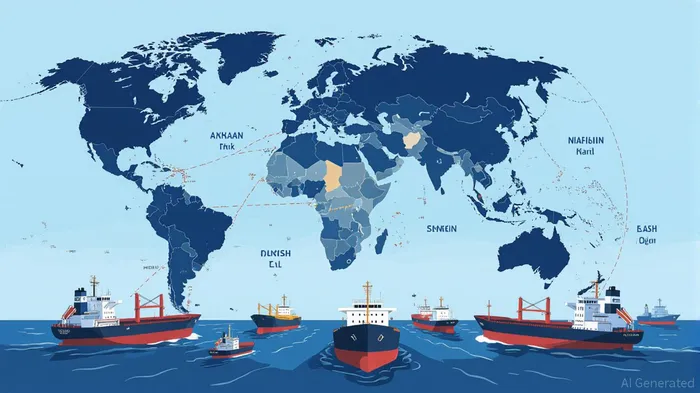
The post-pandemic energy landscape is being reshaped by two seismic forces: the Trump administration's aggressive tariff policies and the lingering geopolitical aftershocks of the Russia-Ukraine war. These factors are not only altering crude oil pricing dynamics but also forcing investors to rethink traditional strategies for managing risk and opportunity in a fractured global market.
The Trump Tariff Regime: A Double-Edged Sword for Oil Markets
The Trump administration's 2025 tariff strategy, including a 25% surcharge on countries importing Venezuelan oil and the revocation of the de minimis exemption for low-value energy imports, has created a volatile environment. These measures, framed as tools for domestic energy security, have inadvertently exacerbated global supply chain disruptions. By raising the average effective U.S. tariff rate to 17%—a 70% increase from pre-2025 levels—the administration has introduced uncertainty that dampens long-term demand for energy-intensive sectors.
J.P. Morgan Research projects that these tariffs will drive Brent crude prices to $66/barrel in 2025 and $58/barrel in 2026, a bearish trajectory fueled by reduced demand from manufacturing and automotive industries. For example, the 50% tariffs on copper, steel, and aluminum have increased costs for energy infrastructure projects, indirectly slowing demand for oil. Meanwhile, the transshipment penalties and strict enforcement of IEEPA-related tariffs have further complicated trade flows, creating a climate where even minor policy shifts can trigger market jitters.
The Russia-Ukraine War: A Geopolitical Wild Card
The Russia-Ukraine war has introduced another layer of complexity. A TVP-VAR analysis by Imandojemu et al. (2025) reveals that the Russia-Ukraine War Index (RUindex) accounts for the largest portion of forecast error variance in oil prices, surpassing even exchange rate fluctuations. This volatility is compounded by the shadow fleet of tankers—82% more since 2023—that circumvent Western sanctions by transporting Russian oil at discounted prices.
While the EU's $47.60/barrel price cap on Russian crude initially reduced Moscow's revenues by EUR 34 billion in its first year, the resilience of the shadow fleet and the rise of alternative buyers like China and India have limited its effectiveness. OPEC+'s decision to increase production by 547,000 barrels per day in September 2025 further underscores the bearish outlook, as the cartel shifts from price stability to revenue maximization.
Investment Strategies in a Fractured Market
For investors, the interplay of these forces demands a nuanced approach:
Diversification and Hedging: Given the heightened volatility from geopolitical events and trade policy shifts, portfolios should prioritize diversification across energy sectors. Energy infrastructure firms, such as pipeline operators and renewable energy developers, may benefit from lower oil prices, which reduce input costs. Conversely, oil producers like ExxonMobil and ChevronCVX-- could face margin compression if prices fall below $50/barrel.
Geopolitical Risk Mitigation: Investors should incorporate tools like futures contracts and options to hedge against sudden price swings. The TVP-VAR model's emphasis on the RUindex as a volatility driver highlights the need for real-time monitoring of conflict dynamics and sanctions enforcement.
Long-Term Positioning: The Trump administration's focus on lowering energy costs to curb inflation may lead to further deregulation and tax cuts for energy firms. However, this could also accelerate the shift toward renewables, creating opportunities in solar and wind energy infrastructure.
Sanctions Arbitrage: The rise of the shadow fleet and discounted Russian oil exports presents a paradox: while sanctions aim to weaken Russia's war effort, they also create a parallel market where oil is traded at lower prices. Investors with access to this market—such as those in India and China—may gain short-term advantages, though long-term risks remain tied to geopolitical instability.
Conclusion: Navigating the New Normal
The convergence of Trump's tariff-driven trade policy and the Russia-Ukraine war's geopolitical fallout has created a landscape where oil prices are more sensitive to policy shifts and geopolitical events than ever before. For investors, the key lies in balancing short-term gains with long-term resilience. By diversifying portfolios, hedging against volatility, and staying attuned to the evolving interplay of tariffs and sanctions, investors can navigate this turbulent era with strategic clarity.
In this new normal, the mantra is clear: adapt or be left behind. The energy markets of 2025 are not just about oil—they're about the intricate dance between policy, politics, and profit.





Comentarios
Aún no hay comentarios