
Oil Poised for Weekly Loss Amid Trump's Energy Plans, OPEC Remarks
Generado por agente de IATheodore Quinn
sábado, 25 de enero de 2025, 5:58 am ET3 min de lectura
AENT--
Oil prices are expected to fall this week, as investors digest the implications of Trump's energy plans and OPEC's recent remarks on production cuts and supply management. The U.S. Energy Information Administration (EIA) forecasts that benchmark Brent crude oil prices will fall from an average of $81 per barrel (b) in 2024 to $74/b in 2025 and $66/b in 2026, as strong global growth in production of petroleum and other liquids and slower demand growth put downward pressure on prices (EIA, 2025).
Trump's energy plans, particularly his focus on U.S. production growth, are expected to have a significant impact on global oil supply and demand dynamics in the long term. By promoting a pro-oil agenda and encouraging increased domestic production, Trump aims to establish a new era of U.S. "energy dominance." This focus on U.S. production growth is likely to lead to several key developments in the global oil market:
1. Increased U.S. crude oil production: Trump's policies are expected to boost U.S. crude oil production, which has already been on the rise in recent years. According to the U.S. Energy Information Administration (EIA), U.S. crude oil production is forecast to reach an all-time high in 2025, averaging 13.5 million barrels per day (b/d), and slightly increasing to 13.6 million b/d in 2026. This growth in U.S. production is likely to continue under Trump's administration, further solidifying the U.S.'s position as a major global oil producer.
2. Changes in global oil supply dynamics: The increase in U.S. production is expected to offset reduced production from OPEC+ members, who have agreed to cut output to stabilize prices. In 2024, OPEC+ members reduced production by an estimated 1.3 million barrels per day (b/d), while production by countries outside the group increased by 1.8 million b/d. This trend is likely to continue, with production growth outside of OPEC+ remaining strong in 2025 before waning in 2026. The U.S. is expected to lead this growth, with a combined increase in total liquids production of 1.1 million b/d in 2024, along with Canada, Guyana, and Brazil.
3. Impact on global oil prices: The increased U.S. production is likely to put downward pressure on global oil prices, as production outpaces consumption, increasing global oil inventories. The EIA forecasts that benchmark Brent crude oil prices will fall from an average of $81 per barrel (b) in 2024 to $74/b in 2025 and $66/b in 2026. This decline in prices is expected to reduce drilling activity and investment in U.S. production of crude oil and other liquids, leading to a small increase in production in 2026.
4. Geopolitical implications: Trump's focus on U.S. production growth may also have geopolitical implications, as it could potentially reduce the influence of OPEC+ members on global oil markets. The U.S. has been highly sensitive to changes in crude oil prices, and a small difference in prices compared to the EIA's forecast would alter the growth or decline of U.S. production. This increased U.S. production could lead to a shift in global oil supply dynamics, potentially reducing the market share of OPEC+ members.
OPEC's recent remarks on production cuts and supply management also have significant implications for global oil prices and market stability. OPEC+ has decided to delay the beginning of the gradual easing of the cuts to April 2025 and extend the collective group cut by one year until the end of 2026. This means that the supply additions will be pushed back by three months, and the restrictions will last for an additional year. This decision was largely expected by the market but could still be interpreted as OPEC and OPEC+ acknowledging that weaker-than-expected demand growth cannot absorb all the supply returning in 2025 (Bakr, 2025).
Following the reports of the three-month delay to the unwinding of the cuts and the additional year of restrictions, both WTI Crude and Brent Crude turned negative. This indicates that the market is concerned about the potential impact of these decisions on oil prices and market stability (Paraskova, 2025). The delay in supply additions and the extended cuts suggest that OPEC+ is concerned about maintaining a balance between supply and demand. This could indicate that the alliance believes that the current level of production is sufficient to meet global demand without causing a glut in the market. However, these decisions could also lead to increased market volatility and uncertainty.
In conclusion, oil prices are expected to fall this week as investors digest the implications of Trump's energy plans and OPEC's recent remarks on production cuts and supply management. The increase in U.S. production, driven by Trump's focus on domestic growth, is likely to put downward pressure on global oil prices, while OPEC's decision to delay supply additions and extend cuts suggests a concern for maintaining a balance between supply and demand. However, the geopolitical landscape, including U.S.-Russia relations and sanctions on Iran, could also influence oil prices and investment decisions in the energy sector. Investors should closely monitor these developments and their potential impact on global oil markets.
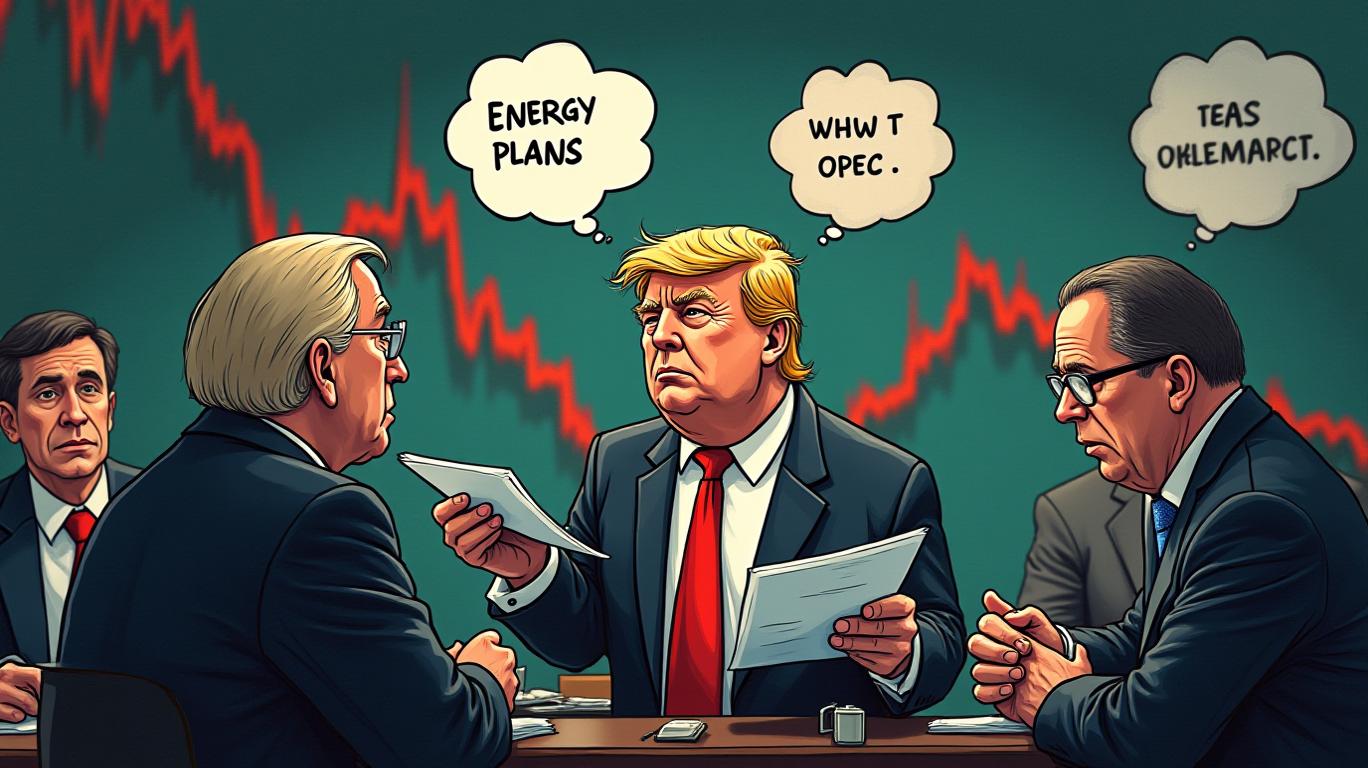
Oil prices are expected to fall this week, as investors digest the implications of Trump's energy plans and OPEC's recent remarks on production cuts and supply management. The U.S. Energy Information Administration (EIA) forecasts that benchmark Brent crude oil prices will fall from an average of $81 per barrel (b) in 2024 to $74/b in 2025 and $66/b in 2026, as strong global growth in production of petroleum and other liquids and slower demand growth put downward pressure on prices (EIA, 2025).
Trump's energy plans, particularly his focus on U.S. production growth, are expected to have a significant impact on global oil supply and demand dynamics in the long term. By promoting a pro-oil agenda and encouraging increased domestic production, Trump aims to establish a new era of U.S. "energy dominance." This focus on U.S. production growth is likely to lead to several key developments in the global oil market:
1. Increased U.S. crude oil production: Trump's policies are expected to boost U.S. crude oil production, which has already been on the rise in recent years. According to the U.S. Energy Information Administration (EIA), U.S. crude oil production is forecast to reach an all-time high in 2025, averaging 13.5 million barrels per day (b/d), and slightly increasing to 13.6 million b/d in 2026. This growth in U.S. production is likely to continue under Trump's administration, further solidifying the U.S.'s position as a major global oil producer.
2. Changes in global oil supply dynamics: The increase in U.S. production is expected to offset reduced production from OPEC+ members, who have agreed to cut output to stabilize prices. In 2024, OPEC+ members reduced production by an estimated 1.3 million barrels per day (b/d), while production by countries outside the group increased by 1.8 million b/d. This trend is likely to continue, with production growth outside of OPEC+ remaining strong in 2025 before waning in 2026. The U.S. is expected to lead this growth, with a combined increase in total liquids production of 1.1 million b/d in 2024, along with Canada, Guyana, and Brazil.
3. Impact on global oil prices: The increased U.S. production is likely to put downward pressure on global oil prices, as production outpaces consumption, increasing global oil inventories. The EIA forecasts that benchmark Brent crude oil prices will fall from an average of $81 per barrel (b) in 2024 to $74/b in 2025 and $66/b in 2026. This decline in prices is expected to reduce drilling activity and investment in U.S. production of crude oil and other liquids, leading to a small increase in production in 2026.
4. Geopolitical implications: Trump's focus on U.S. production growth may also have geopolitical implications, as it could potentially reduce the influence of OPEC+ members on global oil markets. The U.S. has been highly sensitive to changes in crude oil prices, and a small difference in prices compared to the EIA's forecast would alter the growth or decline of U.S. production. This increased U.S. production could lead to a shift in global oil supply dynamics, potentially reducing the market share of OPEC+ members.
OPEC's recent remarks on production cuts and supply management also have significant implications for global oil prices and market stability. OPEC+ has decided to delay the beginning of the gradual easing of the cuts to April 2025 and extend the collective group cut by one year until the end of 2026. This means that the supply additions will be pushed back by three months, and the restrictions will last for an additional year. This decision was largely expected by the market but could still be interpreted as OPEC and OPEC+ acknowledging that weaker-than-expected demand growth cannot absorb all the supply returning in 2025 (Bakr, 2025).
Following the reports of the three-month delay to the unwinding of the cuts and the additional year of restrictions, both WTI Crude and Brent Crude turned negative. This indicates that the market is concerned about the potential impact of these decisions on oil prices and market stability (Paraskova, 2025). The delay in supply additions and the extended cuts suggest that OPEC+ is concerned about maintaining a balance between supply and demand. This could indicate that the alliance believes that the current level of production is sufficient to meet global demand without causing a glut in the market. However, these decisions could also lead to increased market volatility and uncertainty.
In conclusion, oil prices are expected to fall this week as investors digest the implications of Trump's energy plans and OPEC's recent remarks on production cuts and supply management. The increase in U.S. production, driven by Trump's focus on domestic growth, is likely to put downward pressure on global oil prices, while OPEC's decision to delay supply additions and extend cuts suggests a concern for maintaining a balance between supply and demand. However, the geopolitical landscape, including U.S.-Russia relations and sanctions on Iran, could also influence oil prices and investment decisions in the energy sector. Investors should closely monitor these developments and their potential impact on global oil markets.

Divulgación editorial y transparencia de la IA: Ainvest News utiliza tecnología avanzada de Modelos de Lenguaje Largo (LLM) para sintetizar y analizar datos de mercado en tiempo real. Para garantizar los más altos estándares de integridad, cada artículo se somete a un riguroso proceso de verificación con participación humana.
Mientras la IA asiste en el procesamiento de datos y la redacción inicial, un miembro editorial profesional de Ainvest revisa, verifica y aprueba de forma independiente todo el contenido para garantizar su precisión y cumplimiento con los estándares editoriales de Ainvest Fintech Inc. Esta supervisión humana está diseñada para mitigar las alucinaciones de la IA y garantizar el contexto financiero.
Advertencia sobre inversiones: Este contenido se proporciona únicamente con fines informativos y no constituye asesoramiento profesional de inversión, legal o financiero. Los mercados conllevan riesgos inherentes. Se recomienda a los usuarios que realicen una investigación independiente o consulten a un asesor financiero certificado antes de tomar cualquier decisión. Ainvest Fintech Inc. se exime de toda responsabilidad por las acciones tomadas con base en esta información. ¿Encontró un error? Reportar un problema


SOBRE NOSOTROS
Nuestra historiaAutores de noticiasBase de conocimientosPolítica de privacidadTérmino de usoDescargo de responsabilidad de corretaje de tercerosTérminos de uso de AIMEDivulgaciones de riesgos de AInvest AICarrerasCONTÁCTENOS
Email: support@ainvest.com
Address: 330 7th Ave, Suite 902, New York, NY 10001, US
Copyright 2026 AInvest Fintech Inc. All rights reserved.


Comentarios
Aún no hay comentarios