
Oil's Perfect Storm: Sell Now Before the Deluge!
The oil market is at a crossroads. OPEC+ has cranked the supply tap wide open, while U.S. tariff deadlines loom like a fiscal guillotine. This combination of strategic overproduction and policy uncertainty is primed to create a short-term oversupply crisis that could send Brent crude plummeting toward $60 a barrel by early 2026. Investors who fail to heed this warning risk getting crushed in what could be the biggest oil sell-off since 2015. Let's break down why this is happening and how to profit from the chaos.
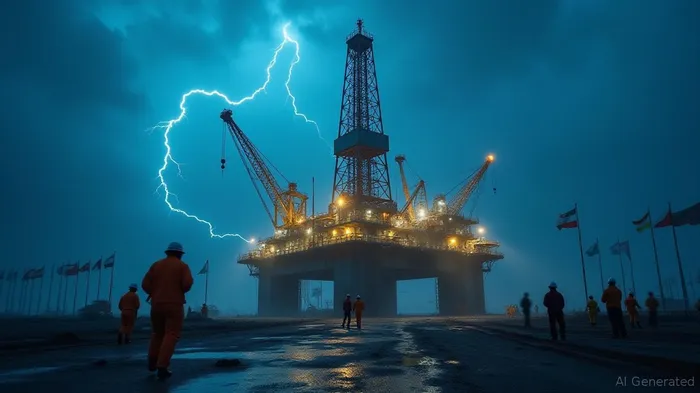
The Supply Tsunami
OPEC+'s June output hike of 411,000 barrels per day (bpd) isn't a typo. This group – including Saudi Arabia, Russia, and the UAE – is executing a coordinated supply surge that adds 1.78 million bpd to global markets this year. That's equivalent to over 1.5% of global demand. And get this: they're planning another 411,000 bpd increase in August. The goal? To reclaim market share from U.S. shale producers and test the limits of storage capacity.
This isn't just about oil. It's a geopolitical chess move. By flooding the market now, OPEC+ aims to weaken U.S. shale's economic viability while keeping Iran's potential exports to China at bay. But here's the rub: every barrel added to storage today is a bullet aimed at tomorrow's prices.
The Tariff Trap
Now let's talk about the U.S. tariffs. The July 9 deadline is a ticking bomb. If Washington slams tariffs on imports back to 50%, it'll hit everything from steel to semiconductors – including the very equipment U.S. drillers need to keep pumping. Already, 42% of large oil firms have slashed 2025 drilling plans. Small producers are even more vulnerable: 8–10% cost hikes from steel tariffs are forcing marginal wells into the red.
This isn't just about costs. The threat of higher tariffs is freezing investment decisions. If prices stay below $60, 46% of producers will cut output drastically. That creates a Catch-22: OPEC+ is pumping more, but U.S. producers might be forced to pump less. But the lag time here matters – the oversupply shock will hit before demand rebounds.
The Bear Case: $60 by Early 2026
Morgan Stanley isn't kidding when it forecasts Brent at $60 by early 2026. Here's why:
1. Oversupply math: Even if global demand grows by 1.5 million bpd next year, OPEC+'s 1.78 million bpd increase alone creates a 280,000 bpd surplus. Add in Iran's potential 500,000 bpd exports to China? Game over.
2. Storage limits: Cushing, Oklahoma's storage tanks are already 70% full. When they hit 90%, prices will crater.
3. U.S. shale's breaking point: At $60 oil, 61% of producers will cut output. But the lag between price drops and production cuts means the pain won't register until 2026.
Action Plan: Short Now, Wait for the Bottom
This is a classic “sell the news” scenario. Here's how to position:
1. Short oil ETFs: Bet against U.S. Oil Fund (USO) or United States Brent Oil Fund (BNO).
2. Avoid exploration stocks: Companies like Pioneer Natural Resources (PVLA) or Diamondback EnergyFANG-- (FANG) are leveraged to oil prices.
3. Hedge with puts: Buy put options on ExxonXOM-- (XOM) or ChevronCVX-- (CVX) to limit downside.
But don't write off oil forever. The contrarian play comes in early 2026:
- If OPEC+ curtails production in response to falling prices.
- If U.S.-China trade deals delay tariff hikes, easing supply chain bottlenecks.
- If Middle East tensions (think Iran-Saudi proxy wars) disrupt exports.
Final Warning: This Is a Timing Game
The key is to exit now before the oversupply avalanche hits. The July 6 OPEC meeting and July 9 tariff deadline are critical pivot points. If OPEC+ pauses its hikes and tariffs are delayed, prices could stabilize around $70. But bet on the downside: the structural overhang is too massive.
Remember: In markets, fear beats greed when fundamentals are this stacked against you. Sell now, and wait for the panic-driven bottom to buy the next cycle's winners.
Jim's Bottom Line: Short oil now – the storm's coming, and it's going to be a tempest.





Comentarios
Aún no hay comentarios