
The Oil Oversupply Dilemma: Navigating a Volatile Market in 2026
The global oil market is poised for a seismic shift in 2026, as supply growth outpaces demand, creating a surplus that threatens to destabilize energy prices and investor returns. With projections of a 2.0 million barrel-per-day (b/d) oversupply according to EIA data and Brent crude prices averaging $55 per barrel according to market analysis, energy sector portfolios face unprecedented volatility. This analysis explores the drivers of the oversupply dilemma and outlines strategic risk management frameworks for investors to navigate the turbulence.
The 2026 Oversupply: A Perfect Storm of Supply and Demand
Global oil supply is forecast to grow by 2.1 million b/d in 2026, far outstripping demand increases. Non-OPEC producers are leading this surge, with Brazil, Guyana, and Argentina driving output growth through offshore projects and shale development according to oil price reports. The U.S. Energy Information Administration (EIA) highlights U.S. domestic production as a key contributor, with output rising amid expanded shale operations according to EIA analysis. Meanwhile, OPEC+-once a stabilizing force-has shifted its focus from price to market share, accelerating production returns and exacerbating the imbalance.
OPEC+ has responded by pausing further production increases in Q1 2026 according to shipping industry reports and introducing a new framework to reassess sustainable production capacities. However, these measures may prove insufficient as non-OPEC supply growth accelerates. The EIA forecasts non-OPEC production to rise by 0.6 million b/d according to EIA projections, while OPEC+ crude demand remains flat at 43 million bpd according to Reuters reporting. This divergence underscores a critical risk: the market's inability to absorb excess supply without sustained price declines.
Strategic Risk Management in Energy Portfolios
For investors, the 2026 oversupply dilemma demands a recalibration of risk management strategies. Here are three pillars to consider:
Diversification Across Energy Sources
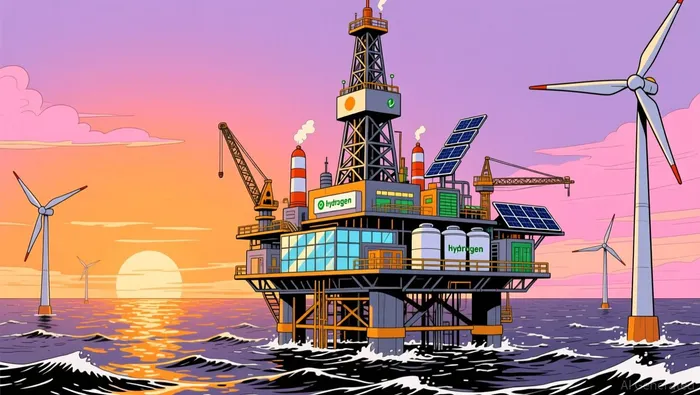
The oversupply in oil does not negate long-term energy demand. Investors should diversify portfolios to include renewable energy infrastructure, hydrogen, and battery storage. These sectors offer insulation from oil price volatility while aligning with decarbonization trends. For example, Brazil's pre-salt projects and Argentina's Vaca Muerta shale highlight regional energy transitions that can be leveraged for geographic diversification.Hedging Against Price Volatility
Derivatives such as futures and options can mitigate exposure to falling oil prices. Given the EIA's $55 Brent forecast according to market analysis, energy firms with strong balance sheets and low debt-to-EBITDA ratios are better positioned to withstand price shocks. Investors should prioritize companies with hedging strategies that lock in minimum revenue thresholds, as seen in OPEC+'s own production adjustments.Scenario Planning for Upside Risks
While the bearish outlook dominates, upside risks such as Russian oil supply disruptions due to sanctions could temporarily prop up prices. Portfolios should allocate a portion to high-conviction plays in geopolitical hotspots, balancing short-term volatility with long-term resilience.
Conclusion: Proactive Adaptation in a Shifting Landscape
The 2026 oil oversupply is not a temporary blip but a structural challenge requiring proactive adaptation. By diversifying energy sources, hedging price risks, and preparing for upside shocks, investors can transform volatility into opportunity. As OPEC+ recalibrates its strategy according to energy market analysis and non-OPEC producers reshape the market, the energy sector's winners will be those who anticipate change rather than react to it.







Comentarios
Aún no hay comentarios