
Oil Market Volatility: Navigating the Risks of U.S. Tariffs and OPEC+ Output Hikes
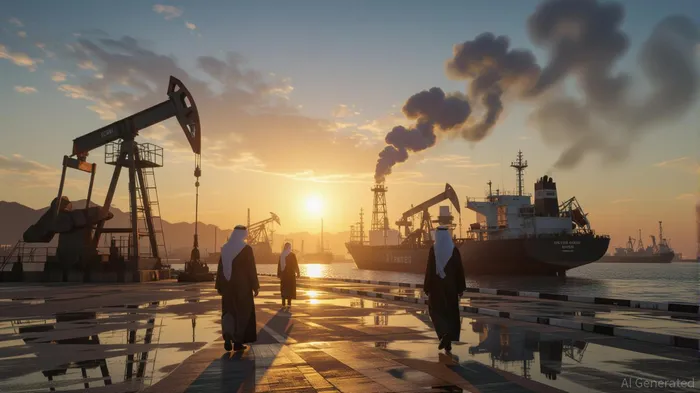
The global oil market in 2025 is a volatile theater of forces: U.S. trade policies, OPEC+ production strategies, and geopolitical tensions are colliding to create a high-stakes environment for investors. For those seeking short-term opportunities, the key lies in understanding how these factors interact and how to position portfolios to mitigate risks while capitalizing on market dislocations.
U.S. Tariffs: A Double-Edged Sword
The Trump administration's aggressive trade agenda has introduced a new layer of uncertainty. Tariffs on energy-related products—ranging from 10% to 50% on imports from non-North American countries—have already triggered a 12% drop in oil prices since early 2025. While these tariffs aim to protect domestic industries and enforce geopolitical alignment (e.g., secondary sanctions on Russian oil buyers), they have also disrupted global trade flows and dampened demand.
For example, the threatened 50% tariff on copper, set to take effect in August, has driven speculative buying, pushing copper prices to record highs. Similarly, the 25% tariff on aluminum and steel has forced refineries and manufacturers to recalibrate supply chains, creating ripple effects across energy infrastructure. Investors should monitor the outcomes of pending legal battles, such as the appeal of the Court of International Trade ruling on “fentanyl” and reciprocal tariffs, which could further destabilize the market.
OPEC+ Output Hikes: A Race for Market Share
OPEC+ has responded to U.S. trade-driven uncertainty and rising non-OPEC production by prioritizing market share over price stability. In July 2025, the group accelerated its production unwind, adding 548,000 bpd in August—a 34% increase from previous hikes. This surge, combined with record U.S. output (13.47 million bpd in April 2025), has pushed global oil into a potential 500,000–600,000 bpd surplus by year-end.
The immediate impact has been mixed. While Brent crude briefly rebounded to $69.58/bbl after a $67.22 low, the long-term outlook is bearish. Goldman SachsGS-- predicts sub-$60 prices for Brent and WTIWTI-- in the second half of 2025, with smaller producers like Iraq and Algeria (fiscal breakeven at $75–$80/bbl) at risk of production cuts. For investors, this underscores the importance of hedging against price declines.
Energy Equities: Balancing Resilience and Exposure
Energy stocks are caught in a tug-of-war between U.S. tariffs and OPEC+ dynamics. The S&P 500 Energy sector has seen a correlation of 0.9 with broader equities, reflecting its shift from an inflation hedge to a growth-sensitive asset. However, not all energy equities are created equal:
- OPEC+ Exposure: Producers like Saudi Aramco (2120.SE) and ADNOC (ADNOC) are well-positioned to weather volatility due to disciplined production and strategic reserves. Their stock valuations, supported by $55–$65/bbl price floors, offer defensive appeal.
- U.S. Shale: Companies like Pioneer Natural Resources (PXD) and OccidentalOXY-- (OXY) face margin pressures from tariffs but could benefit from short-term rebounds if OPEC+ compliance falters.
- Energy Infrastructure: Midstream and refining assets (e.g., Enterprise Products PartnersEPD-- (EPD)) provide steady cash flows less sensitive to geopolitical shocks.
Commodity Hedges: Gold, Copper, and the Green Transition
As oil's role as a hedge diminishes, alternative commodities are stepping into the spotlight:
- Gold: A 26% surge in 2025, driven by central bank demand and U.S. dollar weakness, has made gold a critical diversifier. With 76% of central bankers planning to increase reserves, the metal's appeal as a geopolitical hedge remains intact.
- Copper: The “new oil” is trading near record highs, fueled by pre-tariff buying and industrial demand. Its role in data centers and green energy infrastructure makes it a compelling short-term play.
- Oil Futures: For tactical traders, WTI options offer opportunities to exploit volatility from geopolitical events (e.g., Strait of Hormuz disruptions). However, strict stop-loss rules are essential.
Geopolitical Risks: The Wild Card
The U.S.-Iran-Israel conflict in June 2025 briefly spiked oil prices to $81.40/bbl before a ceasefire triggered a 23% correction. While the Strait of Hormuz remains a critical chokepoint, the likelihood of a full closure is low. Still, investors must prepare for shocks:
- Scenario Planning: Allocate a portion of portfolios to gold and copper to hedge against supply disruptions.
- Macro Diversification: Offset energy equity risks with bonds or defensive sectors like utilities.
- Short-Term Trades: Use oil futures to capitalize on geopolitical spikes, but avoid overexposure.
Conclusion: A Dynamic Approach for Uncertain Times
The oil market in 2025 is defined by duality: aggressive U.S. tariffs and OPEC+ production hikes are creating both headwinds and opportunities. For short-term investors, the key is to balance high-yield energy equities with robust commodity hedges while staying agile in the face of geopolitical and regulatory shifts.
Action Steps for Investors:
1. Overweight OPEC+ Exposure: Position in Saudi Aramco and ADNOC for disciplined production and price resilience.
2. Hedge with Gold and Copper: Allocate 10–15% of energy portfolios to gold and copper to offset volatility.
3. Monitor Legal and Geopolitical Developments: Track the August 12 tariff suspension expiration and Strait of Hormuz tensions.
In this environment, the $60–$70/bbl range offers a tactical sweet spot for energy equities, while commodity hedges provide the insurance needed to navigate the storm. As the market evolves, adaptability—not complacency—will be the hallmark of successful investors.





Comentarios
Aún no hay comentarios