
Oil Market Stabilization Amid Geopolitical Turmoil: Assessing Russian Supply Dynamics and Investment Risks
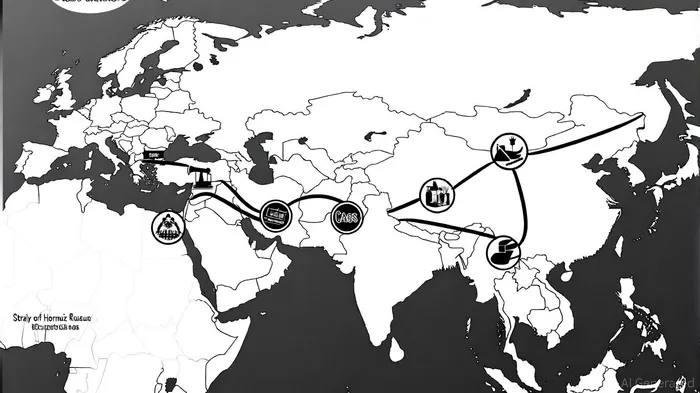
The global oil market in 2025 remains a battleground of geopolitical risk and economic adaptation, with Russian supply dynamics and Western sanctions shaping investment landscapes. As tensions in the Middle East and Eurasia collide with evolving sanctions regimes, energy investors face a complex calculus of volatility, resilience, and strategic recalibration.
Geopolitical Hotspots and Market Volatility
Recent escalations in the Middle East have underscored the fragility of global oil infrastructure. Israeli airstrikes on Iranian nuclear facilities in June 2025 triggered a 7–11% spike in Brent crude prices, though the market quickly stabilized as no physical disruptions to the Strait of Hormuz occurred [1]. This incident highlights a critical shift: oil prices are now more sensitive to threats against specific production or transit sites rather than broad regional instability [5]. The Strait, through which 20% of global crude flows, remains a flashpoint, with Iranian lawmakers threatening to close it—a move analysts warn could push prices to $120–$150 per barrel if sustained [3].
Meanwhile, OPEC+ has played a stabilizing role, extending production cuts to manage supply and temper price swings [4]. However, the interplay of Middle Eastern tensions and Russian supply adjustments has created overlapping risks. For instance, while Russian Deputy Prime Minister Alexander Novak claims Middle East tensions are "largely priced into the market," the reality is that Brent crude remains volatile, oscillating between $70–75 per barrel amid persistent uncertainty [1].
Russian Supply Resilience and Sanctions Evasion
Russian oil exports have demonstrated remarkable adaptability despite Western sanctions. The G7's $60/bbl price cap on Russian crude and $100/bbl on refined products initially constrained Moscow's revenue, but a "shadow fleet" of non-sanctioned tankers enabled continued exports to China and India [2]. By March 2025, China accounted for 47% of Russian crude exports, while India absorbed 38%—a 41% month-on-month increase for the latter [2].
The U.S. Treasury's January 2025 sanctions targeting 183 tankers—42% of Russia's seaborne oil exports—aimed to disrupt this shadow fleet, reducing Russian exports by 150,000 bpd by late Q3 2025 [3]. Yet, Russia has diversified further, exporting refined products to Europe via third countries like India, with EU imports of Russian-origin oil products reaching $9 billion between December 2022 and December 2023 [1]. Even as the EU phased out direct imports, exemptions for Hungary and Slovakia via pipelines ensured continued economic ties [2].
OPEC+ Coordination and Global Supply Management
OPEC+'s strategic production cuts have been pivotal in balancing supply amid geopolitical shocks. By mid-2025, the alliance extended cuts to stabilize prices, countering both Russian export resilience and Middle Eastern volatility [4]. However, the market's focus has shifted to potential supply increases from Libya and Saudi Arabia, which could offset risks from the Strait of Hormuz [1]. This underscores a broader trend: while geopolitical tensions create headline risks, non-OPEC production and strategic reserves act as buffers against extreme price spikes [5].
Investment Implications for the Energy Sector
For energy investors, the current landscape demands a nuanced approach. First, the resilience of Russian oil exports—despite sanctions—suggests that energy markets are less insulated from geopolitical risks than previously assumed. Companies with exposure to Russian supply chains, particularly in shipping and refining, face heightened regulatory and operational risks [6]. Conversely, firms involved in U.S. shale or alternative energy may benefit from reduced European reliance on Russian oil and the global push for energy diversification [2].
Second, the volatility of freight and insurance costs for oil transport—exacerbated by Middle Eastern tensions—adds a layer of complexity. A 2025 surge in Very Large Crude Carrier (VLCC) rates and insurance premiums highlights the need for hedging strategies in logistics-heavy investments [6].
Third, the EU's continued imports of Russian energy—albeit at reduced levels—reveal the limits of sanctions. Investors should monitor how geopolitical pressures interact with economic dependencies, particularly in countries like Hungary and Slovakia, which rely on pipeline imports [2].
Conclusion
The oil market's stabilization in 2025 hinges on a delicate balance between geopolitical risks and adaptive supply strategies. While Russian exports have found new pathways through Asia and shadow fleets, Western sanctions and OPEC+ coordination continue to shape market dynamics. For investors, the key lies in diversifying portfolios to account for both short-term volatility and long-term structural shifts, such as the rise of U.S. shale and renewable energy. As the year progresses, the interplay of sanctions, sanctions evasion, and regional tensions will remain central to energy sector risk assessments.







Comentarios
Aún no hay comentarios