
The Oil Market Oversupply Crisis: A Looming Perfect Storm for Energy Stocks?
The global oil market in 2025 is teetering on the edge of a perfect storm. While demand growth remains robust-forecast to rise by 830 kb/d in 2025 and 860 kb/d in 2026-supply-side disruptions have created a volatile landscape. OPEC+ production has plummeted to 43.25 mb/d in November 2025, driven by sanctions on Russia and Venezuela, unplanned outages in Kuwait and Kazakhstan, and unwinding production cuts by some OPEC+ members. This imbalance has pushed Brent crude to near four-year lows, averaging $55 per barrel in early 2026, with WTI crude falling to $55.53 per barrel in late 2025. For energy investors, the question is no longer if the market will correct but how to position portfolios in a bearish environment.
Supply-Demand Imbalances: A Double-Edged Sword
The oversupply crisis is rooted in a paradox: while global oil supply is projected to grow by 3 mb/d in 2025 and 2.4 mb/d in 2026, rising inventories are already exerting downward pressure on prices. Non-OPEC+ nations, including the U.S. and Brazil, have added to the glut, while China's inventory-building efforts have only partially offset the oversupply according to EIA data. This dynamic creates a self-reinforcing cycle: lower prices curb upstream investment, yet persistently high supply ensures price floors remain weak.
OPEC+'s fragmented response exacerbates the problem. Russia's oil exports, for instance, dropped by 420 kb/d in November 2025, yet some members have quietly increased output to offset losses from sanctions. This lack of coordination undermines the cartel's ability to stabilize prices, leaving markets vulnerable to further volatility.
Energy Stocks: Winners and Losers in a Bear Market
The energy sector's performance in 2025 has been starkly divergent. Exploration & Production firms have seen valuations crater as oil prices fall 20% year-over-year. These companies, reliant on high commodity prices for profitability, are particularly exposed to prolonged bearish conditions.
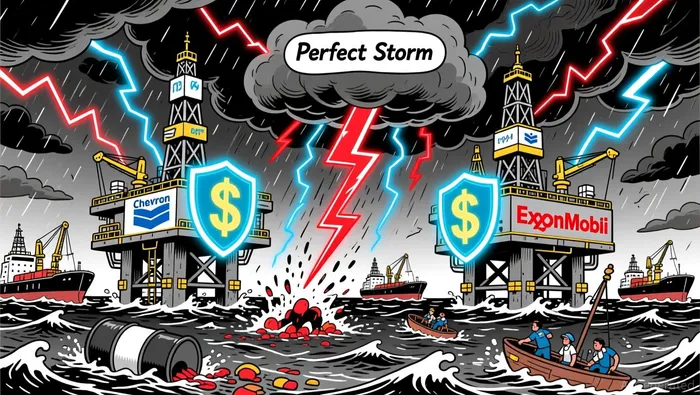
In contrast, large-cap integrated oil giants like ChevronCVX-- and ExxonMobilXOM-- have demonstrated resilience. Their downstream operations-refining and retail-generate stable cash flows even when crude prices dip, allowing them to hedge upstream losses. Midstream operators, including Kinder MorganKMI--, have also fared better, thanks to fee-based revenue models that insulate them from price swings.
Investors seeking income in this environment should prioritize high-yield, diversified players. Master limited partnerships offer attractive dividends and inflation hedges. Meanwhile, natural gas and clean energy stocks-driven by AI-related power demand and U.S. export growth-are gaining traction as alternatives to crude according to Morgan Stanley research.
Strategic Positioning: Navigating the Perfect Storm
For 2026, the key to mitigating risk lies in sector diversification and tactical hedging. Here's how investors can position portfolios:
- Prioritize Downstream and Midstream Exposure: As upstream E&P firms face margin compression, downstream and midstream operators offer more predictable returns. Chevron and ExxonMobil's integrated models provide a buffer against price volatility.
- Leverage MLPs and Infrastructure Plays: Energy infrastructure MLPs benefit from long-term contracts and inflation-linked cash flows.
- Diversify into Alternatives: Natural gas, nuclear, and hydrogen are gaining policy and market momentum. These sectors align with long-term energy transitions and offer insulation from crude's cyclical swings.
 Monitor Macro Catalysts: Investors must track three variables: the pace of Chinese reserve building, the effectiveness of Russian sanctions, and industry consolidation trends.
The Road Ahead: A Bear Market with Opportunities
While the EIA forecasts Brent crude to fall below $60 per barrel and WTI to dip into the $50s in early 2026, this bearish outlook isn't without upside. Oversupply-driven price declines could accelerate industry consolidation, creating buying opportunities for resilient firms. Additionally, policy tailwinds for clean energy and AI-related power demand may offset some of the pain in the oil sector.
For now, however, caution is warranted. Energy investors must balance short-term volatility with long-term structural shifts, favoring diversified, cash-flow-driven plays over speculative upstream bets. As the market navigates this perfect storm, strategic positioning will separate the survivors from the casualties.





Comentarios
Aún no hay comentarios