
Oil Market on Edge as Geopolitical Tensions Drive Asymmetric Price Risks Above $100
A rocket attack on a Syrian military base last week is a fresh flare-up in a long-simmering proxy war. Iraqi security forces arrested four suspects in Nineveh province for the strike on the Kharab al-Jir base, a former U.S. coalition site. The suspects were found carrying weapons and IDs linking them to an armed faction, with investigations pointing toward Iranian-backed militias. This follows the dismantling of a six-member intelligence and weapons-smuggling group in Syria suspected of ties to the Popular Mobilization Forces.
The attack fits a clear pattern. Since the Gaza war began in October 2023, pro-Iranian militias have launched over 160 attacks on U.S. forces across Iraq, Syria, Jordan, and the Red Sea. The drone strike that killed three Americans and wounded 34 at a base in Jordan was a major turning point, prompting a U.S. military response that has included airstrikes on militia facilities. The current conflict is broader than past episodes, involving multiple fronts and a potential for a wider regional war.
Historically, similar escalations have triggered oil price spikes. The attacks in 2019-2020, which included strikes on U.S. facilities in Iraq, led to market jitters and price moves. The key difference now is the scale and the involvement of more regional actors. The market's reaction has been volatile, with prices swinging sharply on headlines about potential Saudi and UAE involvement. This suggests the current setup carries more uncertainty than the earlier episodes, where the conflict was more contained.
Market Reaction and Volatility Patterns
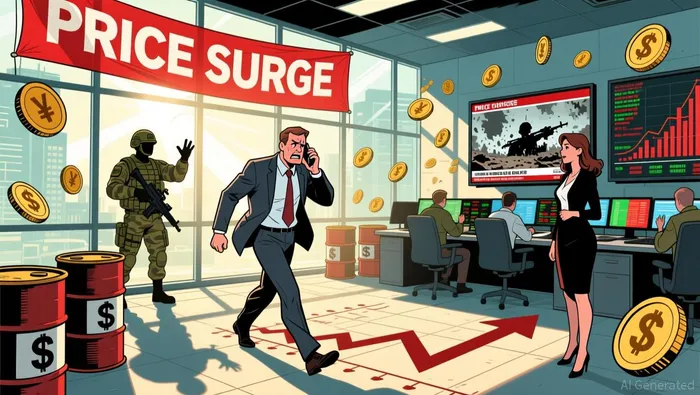
The market's immediate response to this escalation follows a familiar, volatile script. Brent crude prices have surged, hovering around $100 as of midday Tuesday, up nearly 40% since the conflict began. This move echoes the "rockets and feathers" dynamic, where prices climb sharply on fear but fall slowly on relief. The pattern was on full display earlier this week, when oil prices dropped 5.5% following President Trump's ceasefire announcement, illustrating how quickly sentiment can reverse on geopolitical headlines.
This volatility is not just a one-off reaction. Major brokerages have already revised their 2026 forecasts upward in response to the sustained disruptions. Goldman Sachs raised its Brent forecast to $85 a barrel from $77, citing prolonged shipping disruptions and strategic stockpiling. J.P. Morgan expects a second-quarter average of $100 before a pullback. These upward revisions show the market is pricing in a longer period of supply uncertainty, moving beyond the short-term spikes seen in earlier proxy conflicts.
Compared to past episodes, the current setup features a more pronounced and persistent price move. While earlier escalations caused jitters, the sustained climb toward $100 and the significant forecast adjustments indicate a deeper market reassessment. The key structural similarity is the asymmetric price reaction: the climb is steep and rapid, while any decline is likely to be gradual, leaving consumers and businesses exposed to high costs for an extended period.
Forward Scenarios and Key Catalysts
The market's current thesis hinges on a single, volatile catalyst: the resolution of the U.S.-Iran standoff. A swift diplomatic end could trigger a rapid price correction, as seen earlier this week when comments from President Trump raised hopes for a quick end, causing benchmark crude to drop over 10% in a single session. The market's reaction is a classic "relief rally," where sentiment reverses sharply on a headline, illustrating the high degree of speculative positioning priced into the conflict.
The primary risk to this thesis is a major escalation. The most severe scenario would be a ground war or direct attacks on key shipping lanes like the Strait of Hormuz. Such an event would validate the market's deepest fears, likely sustaining prices well above $100 per barrel for an extended period. This would represent a fundamental shift from a geopolitical risk premium to a physical supply disruption, a dynamic that has historically driven multi-year price cycles.
Between these two extremes lies a critical, self-correcting mechanism: the market's pricing of "demand destruction" risk. If prices remain elevated, the economic cost of fuel and energy inputs begins to weigh on global growth. This introduces a cap on the upside, as the very fear of a price spike can trigger a slowdown in oil consumption. The market is already pricing in this uncertainty, with the recent volatility reflecting a struggle to balance supply fears against economic headwinds. The key will be monitoring for signs that the demand curve is bending, which would signal a structural limit to the current rally.







Comentarios
Aún no hay comentarios