
Oil India's Strategic Re-entry into Mozambique LNG: Geopolitical and Energy Transition Positioning
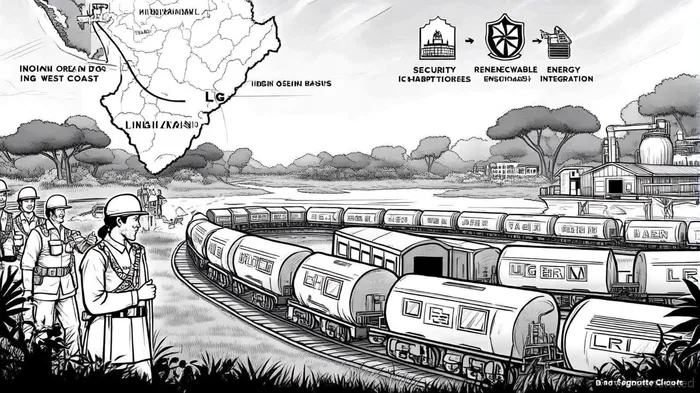
In a pivotal move to bolster energy security and geopolitical influence, Oil India and its partners are poised to restart the $20 billion Mozambique LNG project in the second half of 2025. This development marks a critical juncture for India's energy transition ambitions and its strategic recalibration in Africa. With improved security in CaboCABA-- Delgado, renewed financial backing from the U.S. and UK, and India's urgent need to diversify gas imports, the project's resumption underscores a convergence of economic, environmental, and geopolitical priorities.
Geopolitical Positioning: India's Strategic Calculus in Africa
India's stake in the Mozambique LNG project—held through Oil India (4%), ONGC Videsh (16%), and Bharat PetroResources (10%)—reflects its broader strategy to counterbalance Chinese influence in Africa while securing energy supplies. As stated by a report from 360 Mozambique, the project aligns with India's goal to strengthen its presence in the Indian Ocean region, a corridor critical for its trade and energy imports[1]. The project's proximity to India's west coast, where major LNG terminals are located, further enhances its strategic value by reducing reliance on Middle Eastern suppliers like Qatar, which currently accounts for over 90% of India's natural gas imports[2].
This initiative also aligns with India's “Act East” policy, which seeks to deepen ties with African nations. Union PetroleumUNP-- Minister Hardeep Singh Puri's 2023 visit to Mozambique highlighted the project's role in India's energy sufficiency and its potential to foster economic partnerships[4]. By securing a 30% stake in the Rovuma Area-1 LNG Project, India is not only diversifying its energy sources but also positioning itself as a key player in Africa's emerging LNG market, a space traditionally dominated by Western and Chinese firms[1].
Energy Transition Alignment: LNG as a Bridge Fuel
While LNG is often scrutinized for its carbon footprint, the Mozambique project's integration with renewable energy initiatives positions it as a transitional asset in India's net-zero roadmap. According to Construction Review Online, the project's revenue streams could fund infrastructure upgrades in Mozambique, including electricity access and education, while supporting India's target to increase natural gas's share in its energy mix from 6% to 15% by 2030[1]. This aligns with global trends where LNG is viewed as a bridge fuel to reduce coal dependency, particularly in emerging economies.
Moreover, the project's long-term LNG sales agreements—covering 11.13 million tonnes per annum for Asian and European markets—ensure stable supply for India's industrial and power sectors[1]. With the U.S. Export-Import Bank's $4.7 billion loan now secured, the project's restart is expected to create 16,000 high-paying jobs in the U.S. and catalyze regional development in Mozambique[4]. This financial backing, coupled with improved security, addresses prior risks that had stalled construction since 2021[5].
Financing and Project Resumption: Overcoming Hurdles
The project's resumption hinges on resolving security and financial challenges. TotalEnergiesTTE--, the lead operator with a 26.5% stake, has emphasized that the U.S. loan and UK's anticipated $1 billion contribution have restored confidence in the venture[2]. As noted by Energy Watch, the U.S. Export-Import Bank's support is the largest in its history, signaling a strategic alignment between Washington and New Delhi to stabilize global LNG markets[4].
With a final investment decision (FID) expected by December 2025 and completion slated for July 2028, the project's timeline reflects cautious optimism. Oil India's Chairman, Ranjit Rath, has underscored the project's role in meeting India's gas demand, which is projected to grow at 5% annually[4]. Meanwhile, Mozambique stands to gain $1.5 billion annually in government revenue post-commissioning, enabling investments in healthcare and education[5].
Economic and Regional Impact: A Win-Win Scenario
The project's economic implications extend beyond energy. For Mozambique, the $20 billion investment could transform its economy, creating thousands of jobs and fostering local content development through workforce training programs[3]. For India, the project reduces exposure to geopolitical risks in the Middle East and diversifies supply chains, a priority highlighted during Prime Minister Narendra Modi's emphasis on “energy autonomy.”
However, challenges remain. Security in Cabo Delgado, though improved, requires sustained investment in community engagement and counterinsurgency efforts. Additionally, the project's environmental impact—particularly methane emissions—must be mitigated through carbon capture technologies or offset programs to align with global climate goals.
Conclusion
Oil India's re-entry into Mozambique's LNG sector exemplifies a strategic convergence of energy transition and geopolitical objectives. By securing a foothold in Africa's LNG boom, India is not only diversifying its energy imports but also reinforcing its role as a stabilizing force in the Indian Ocean region. As the project moves toward FID, its success will hinge on maintaining security, leveraging international financing, and integrating sustainable practices. For investors, the Mozambique LNG project represents a high-stakes bet on a cleaner, more diversified energy future—one that could redefine India's energy landscape and its global partnerships.





Comentarios
Aún no hay comentarios