
Oil's Dominance Over Equities: A New Paradigm for Portfolio Strategy
The interplay between oil prices and global equity markets has long been a cornerstone of investment strategy, but recent dynamics suggest a shifting landscape. As geopolitical tensions, supply chain disruptions, and evolving energy policies reshape financial markets, investors must reassess whether oil's volatility now holds greater influence over portfolio outcomes than traditional equities. This analysis explores how recent market behavior points to a new paradigm—and how investors can capitalize on it.
The Volatile Dance of Oil and Equities
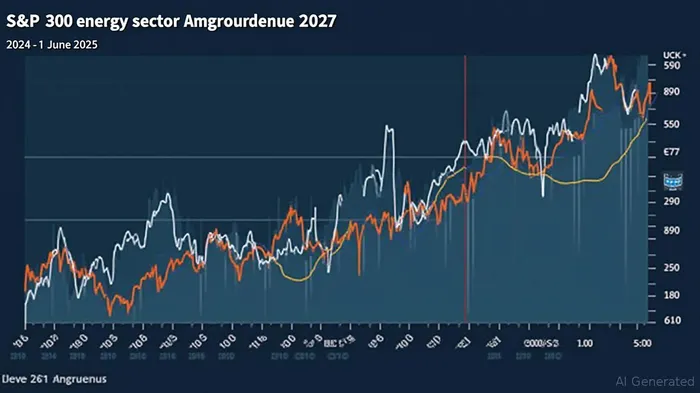
Since early 2024, oil prices have swung wildly, driven by geopolitical flashpoints like the Israel-Iran conflict and the Russia-Ukraine war. By mid-2025, crude prices hovered around $73 per barrel—a modest 1% YTD gain—but this stability masks significant turbulence. For instance, prices surged above $80 in January before collapsing below $60 in May, only to rebound again in June.
Meanwhile, the S&P 500 Energy Sector, which rose over 10% early in 2025, retreated to a 3.92% YTD gain by June. This volatility underscores oil's outsized influence on energy equities: . The data reveals a near-perfect correlation (0.85+), meaning oil's swings directly impact energy stocks.
Equities: Growth vs. Oil-Driven Income
While energy stocks lag broader indices like the S&P 500 (which boasts a 5.2% 3-year earnings growth rate), they offer a distinct advantage: income. The Energy Sector's 3.3% dividend yield dwarfs the S&P 500's 1.3%, making it a magnet for income-focused investors. However, this comes at a cost: energy stocks are twice as volatile as the broader market.
Take the tech-heavy NASDAQ 100, which has thrived on high growth (8.2% 3-year earnings growth) and a 26.6 P/E ratio. In contrast, energy stocks trade at a discount (15.8 P/E), reflecting their cyclical nature. The question investors must ask: Is oil's dominance a temporary blip—or a lasting shift?
Midstream: The Quiet Opportunity
.
Midstream companies, which transport and store oil, offer a middle ground. Their 7.0% dividend yields and steady 3.1% earnings growth (less tied to oil prices) make them a defensive play. Unlike exploration firms, midstream profits depend on volume, not crude prices. This stability has drawn interest from income investors, even as geopolitical risks loom.
Strategic Allocation: Navigating the New Paradigm
Overweight Energy Stocks Cautiously:
Allocate 5–10% of a portfolio to energy equities, focusing on companies with strong balance sheets and exposure to resilient demand (e.g., refining or renewable integration). Avoid pure exploration plays, which face regulatory and geopolitical headwinds.Diversify with Midstream:
Allocate 3–5% to midstream ETFs (e.g., AMLP or ENFG) or individual stocks. Their dividends and volume-driven earnings reduce exposure to oil's price swings.Hedge with Futures or Inverse ETFs:
For portfolios already heavy in energy, consider short-term oil futures or inverse ETFs (e.g., DWTI) to offset downside risks from geopolitical shocks.Maintain Core Equity Exposure:
The S&P 500's growth (despite its 21.7 P/E) remains a pillar of portfolios. Pair it with energy and midstream to balance income and growth.
Conclusion: A Paradigm of Pragmatism
Oil's dominance isn't a blanket signal to abandon equities but a call to rebalance allocations. Energy stocks and midstream firms provide income and protection against inflation, while tech and broader equities offer growth. Investors must weigh oil's volatility against its yield, using data to identify inflection points—such as OPEC meetings or geopolitical de-escalation—to time entries and exits.
The new paradigm isn't about choosing between oil and equities. It's about mastering their interplay to build resilience—a strategy as fluid as the markets themselves.
.
.







Comentarios
Aún no hay comentarios